Science and Industry Culture Cure

So finally, after all the hard work, the event is here!

I was a little nervous – we really had no idea what to expect!

tying the last few ends together at university and then getting a taxi with all the set up with us. We made sure to get there early so we were prepared and had plenty of time to set up and get familiar with the space. This was really important to me as it allowed the pace of the day to run smoothly, and there wasn’t any last minute rush which can be quite stressful.

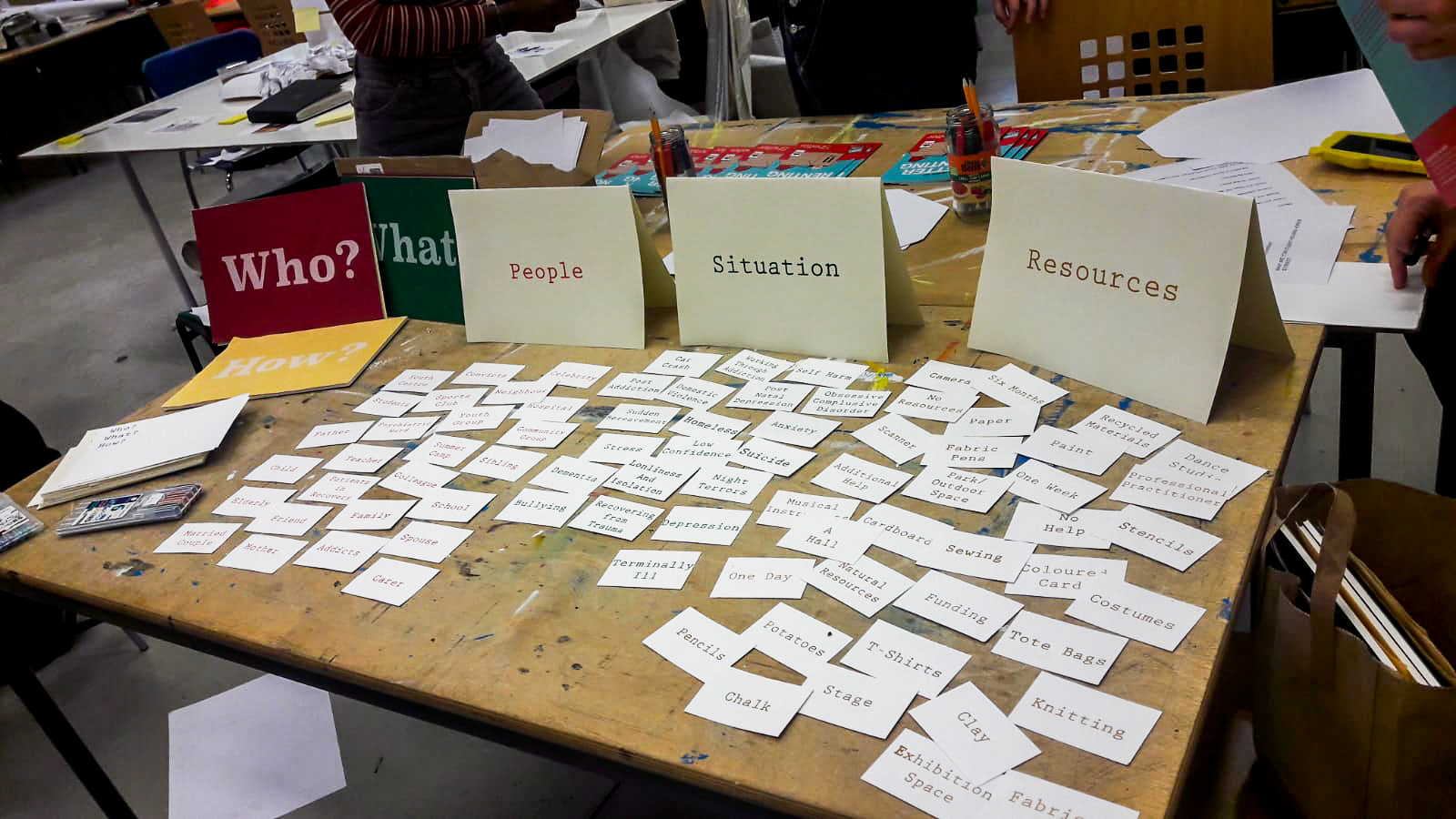
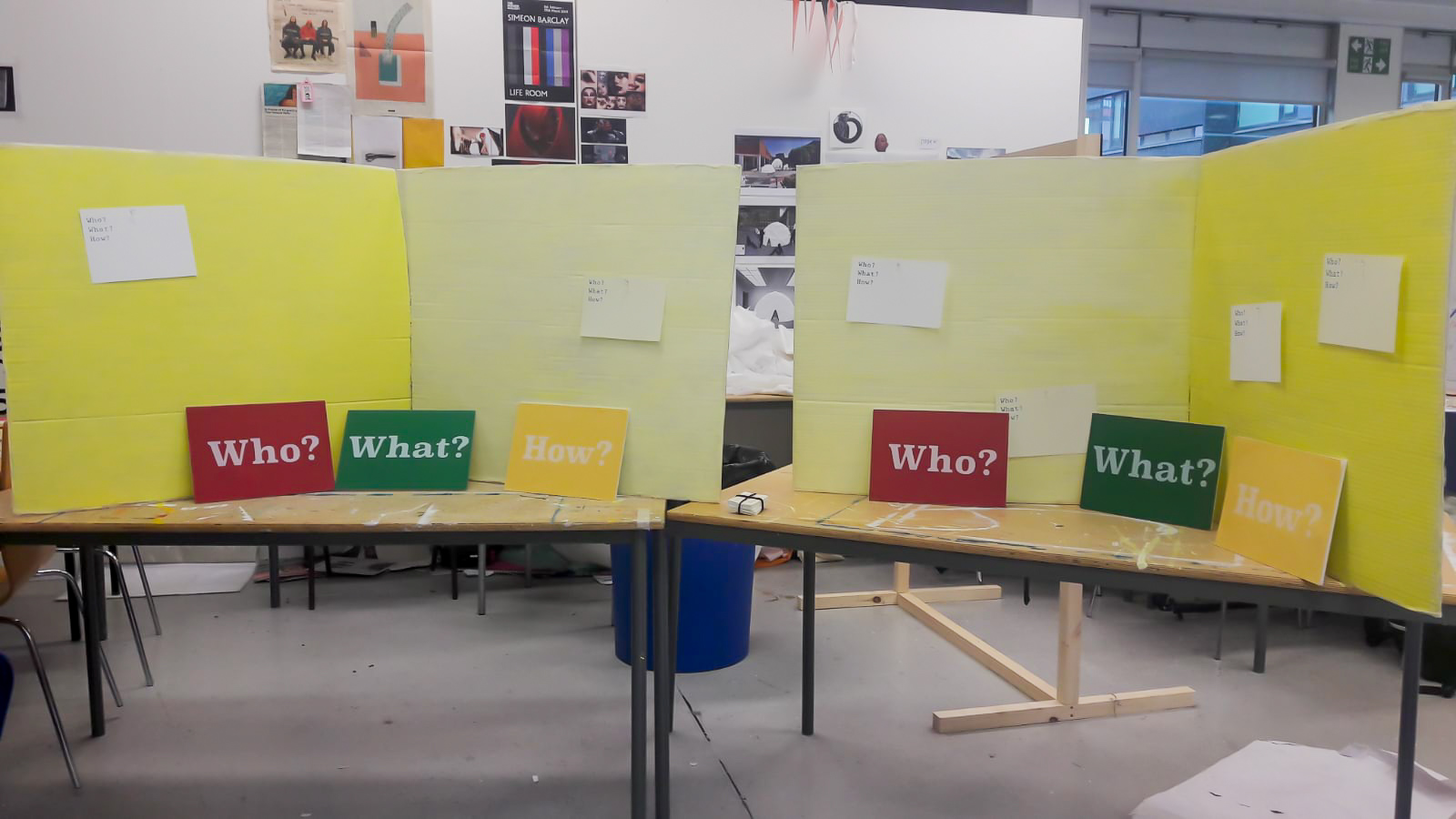
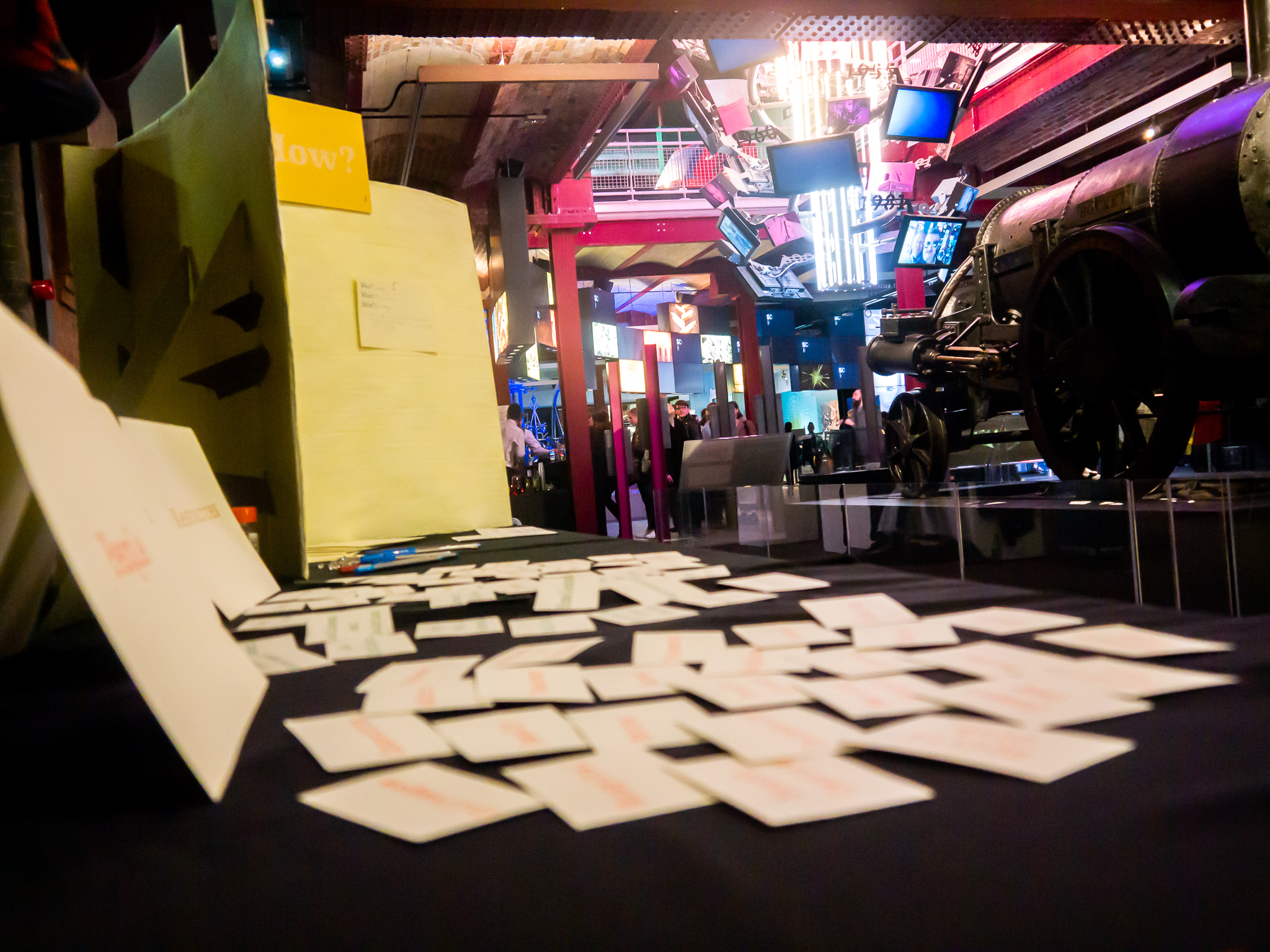
We got our badges, and below you can see a picture of our set up.
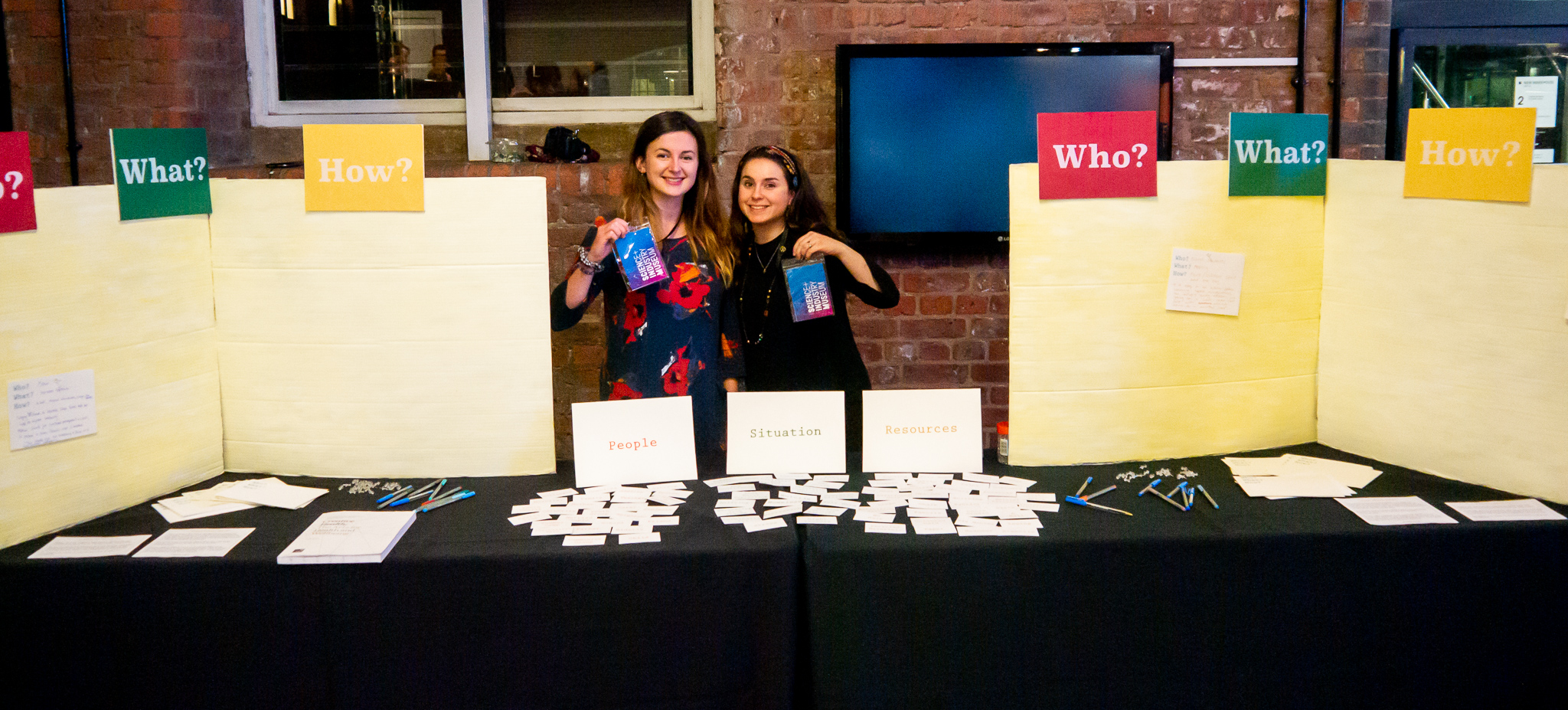
When we applied for the event we had forms to fill in regarding equipment requirement and safety checks etc. Originally we requested 3 tables and 6 chairs. We requested so many so the activity could be spread out so the space was inviting and not squished together. When we arrived there was an issue where the equipment that we had requested wasn’t set out for us, so I had to chase up the events team for extra tables. In the end we were given two, and as you can see in the photographs, everything fits on which is the most important. Ideally with the scale we put together, another table would have spread the display out more and allowed more writing space for participants. We did however receive all the chairs we requested. In the end we realised that we didn’t need chairs for the style of display we had put up. The display we had created was inviting for people to come read other peoples contributions pinned up on the boards, and spend a couple of minutes filling out a card to contribute to the exchange of ideas and conversation on Arts for health. The activity and display designed we realised was not inviting people to sit down. We kept some chairs for us to sit down, and also 2 extras for any participant who may need. This taught me to try be accurate next time when requesting equipment and possibly remind the event organisers about equipment that is needed a couple of days before so there isn’t a mix up like we experienced.
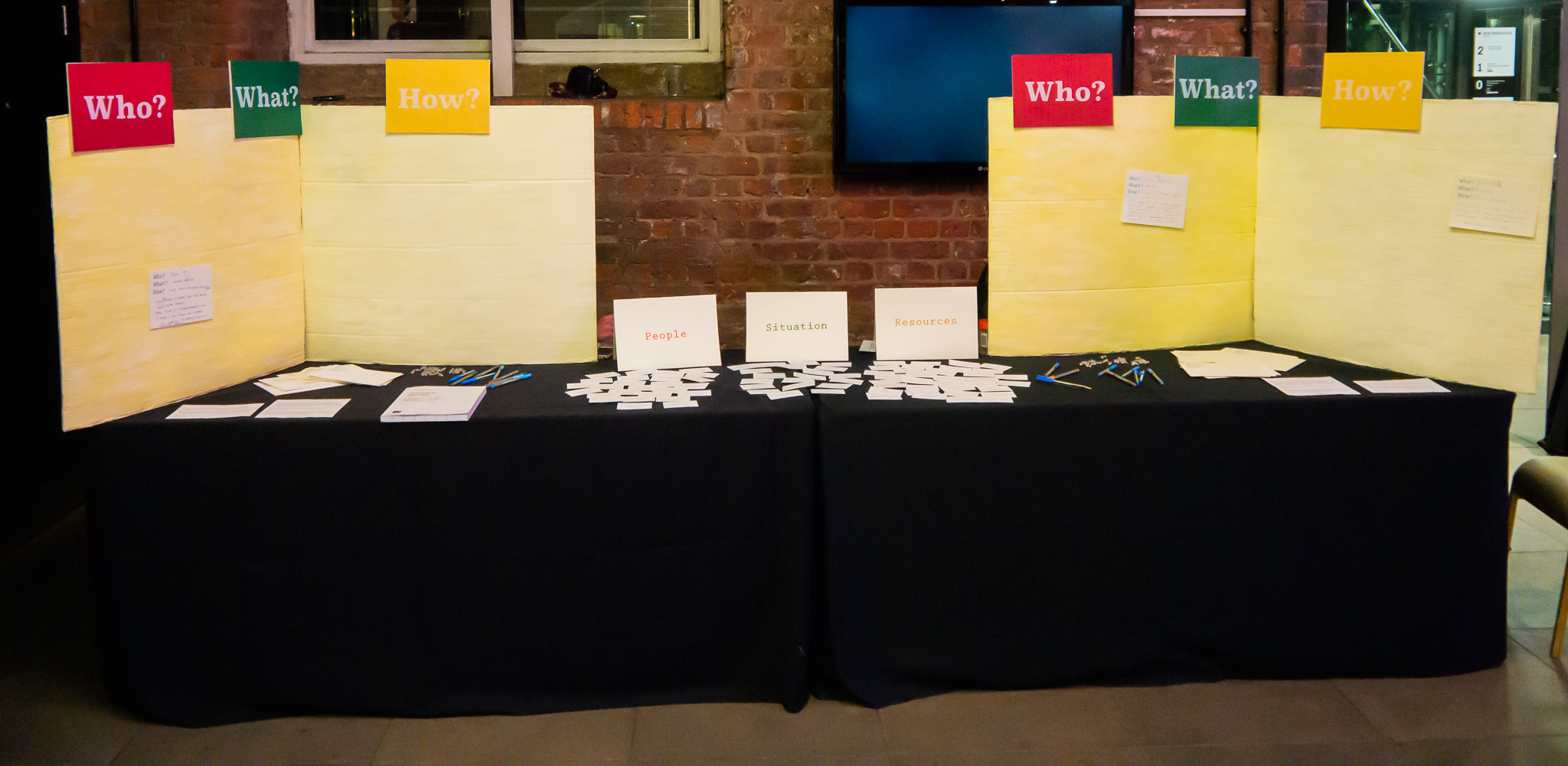
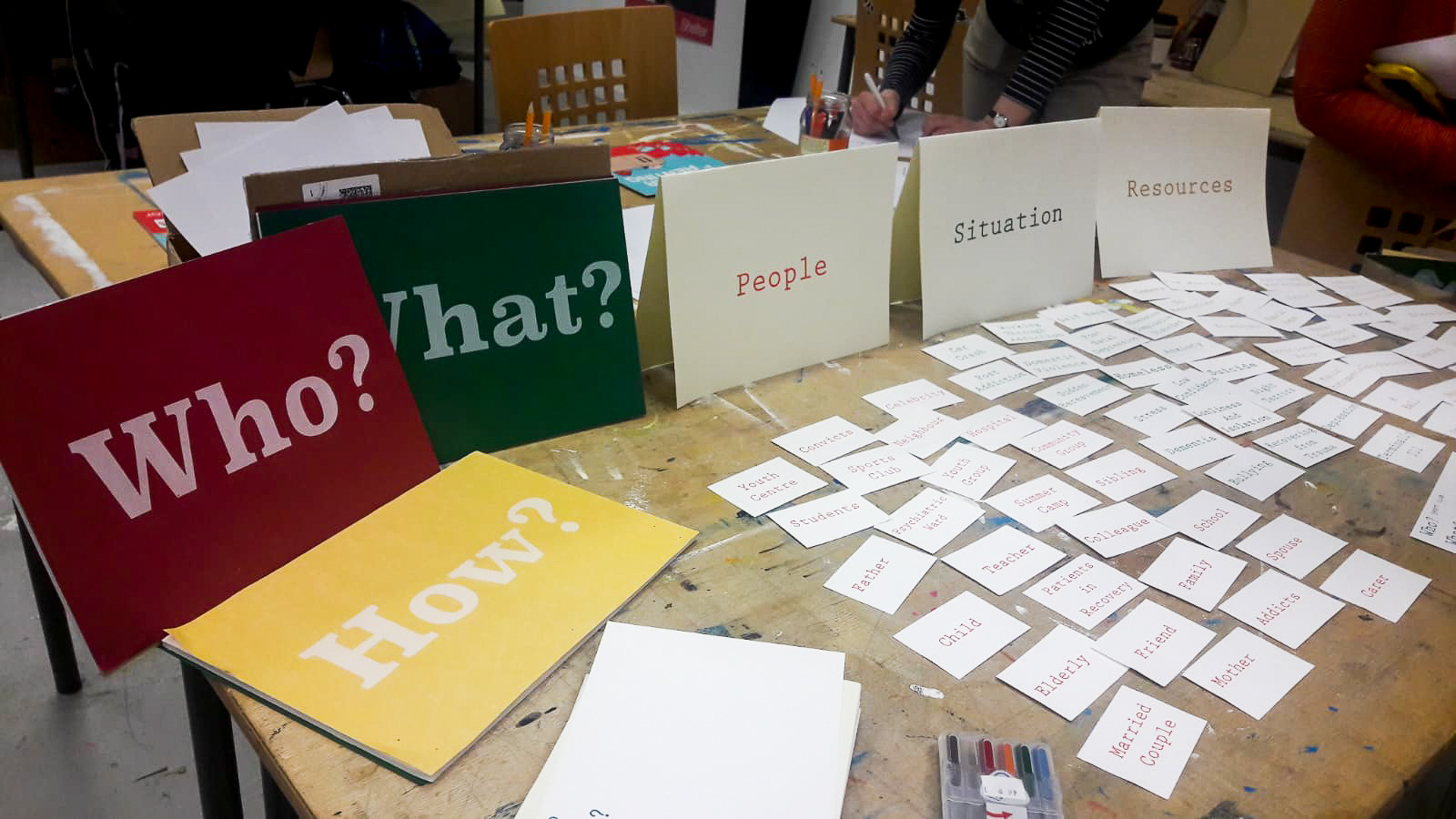
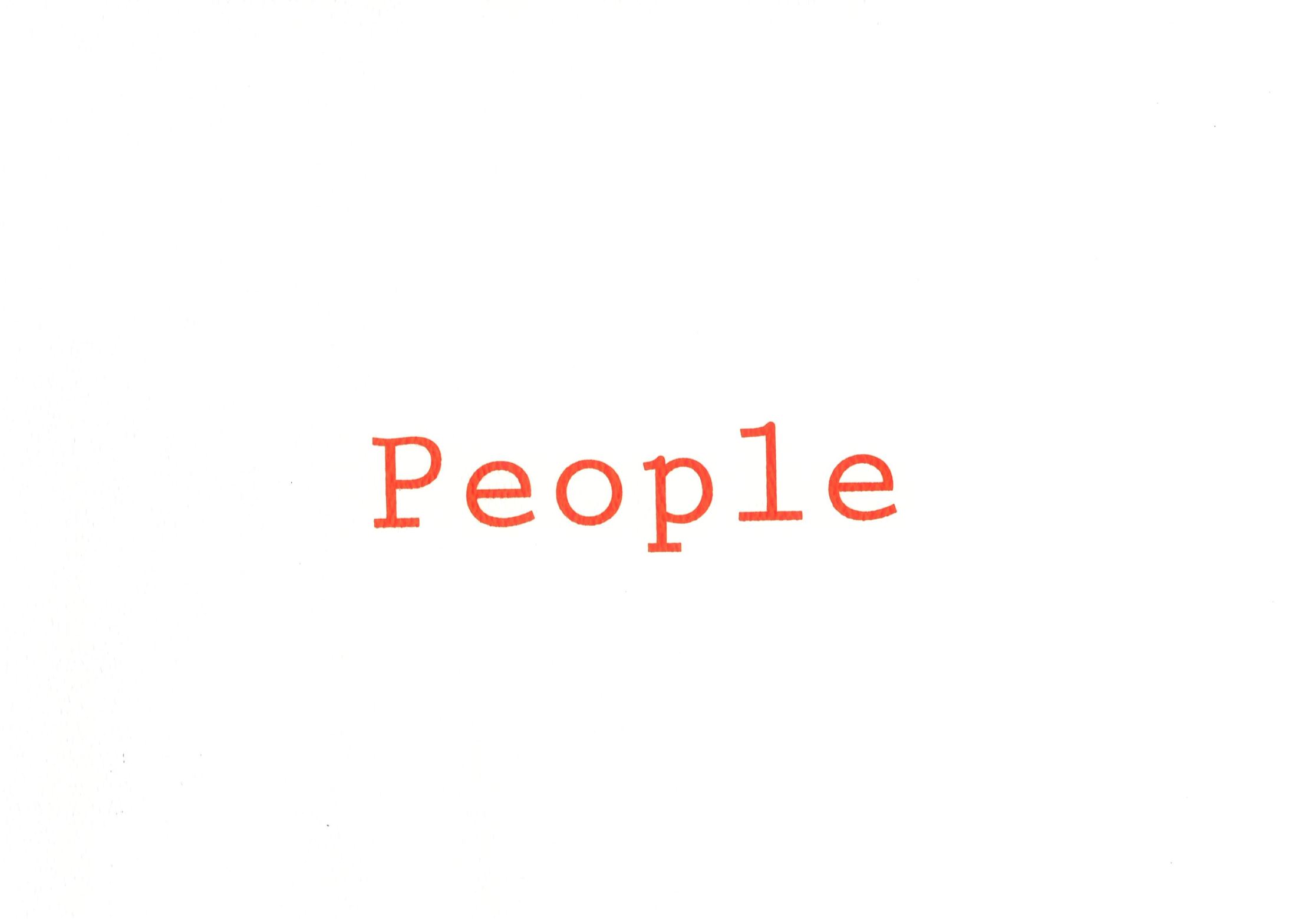
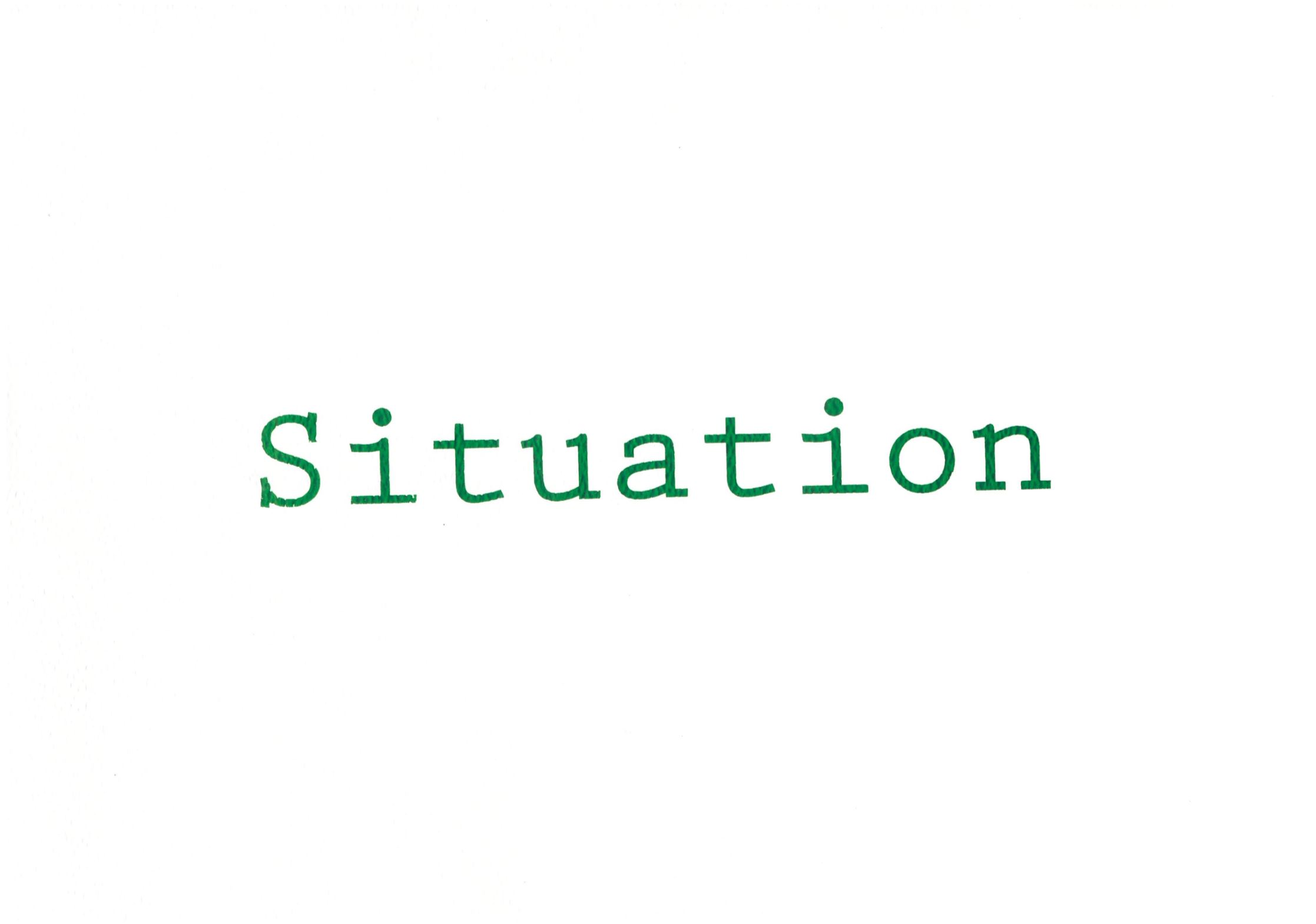
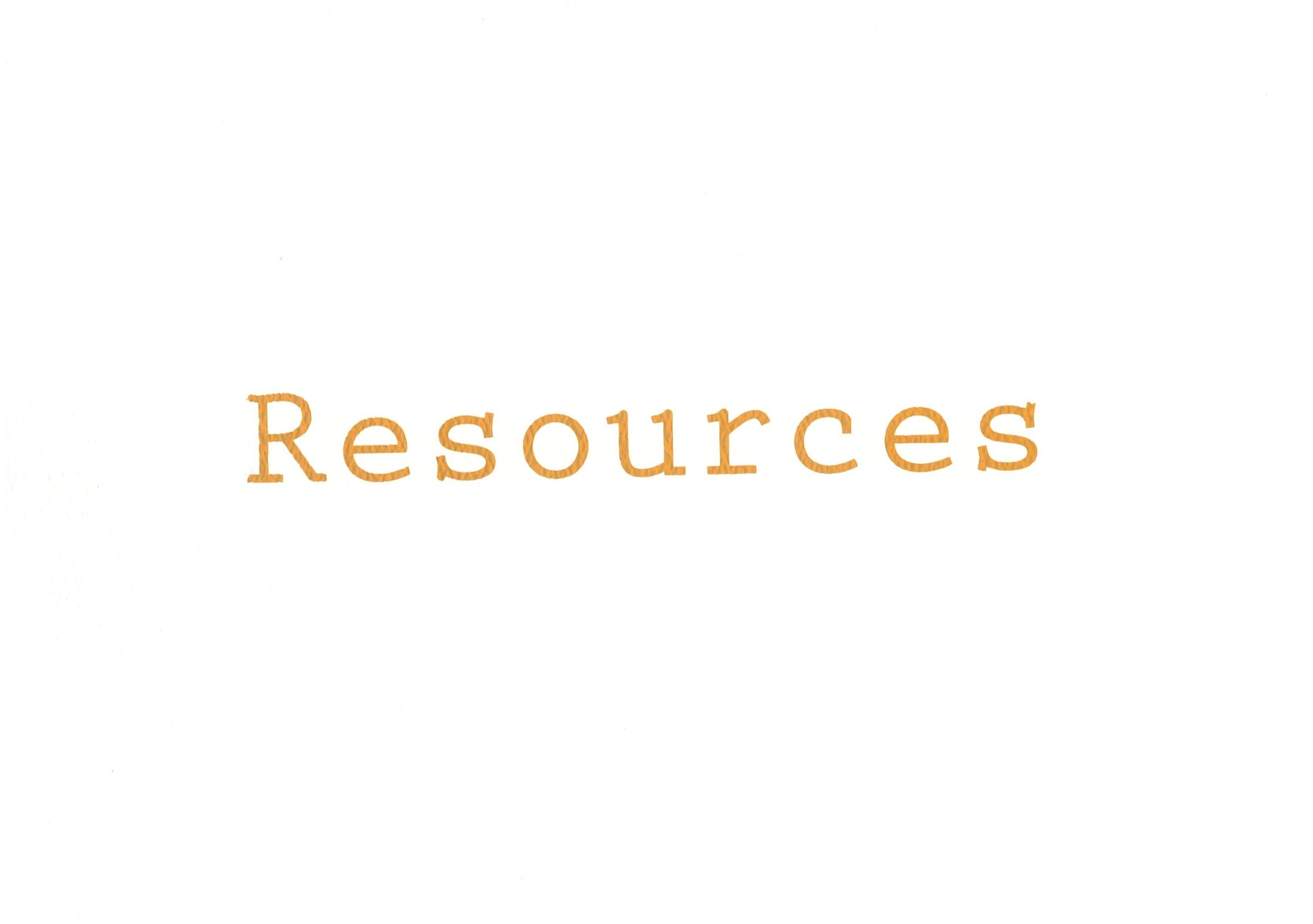
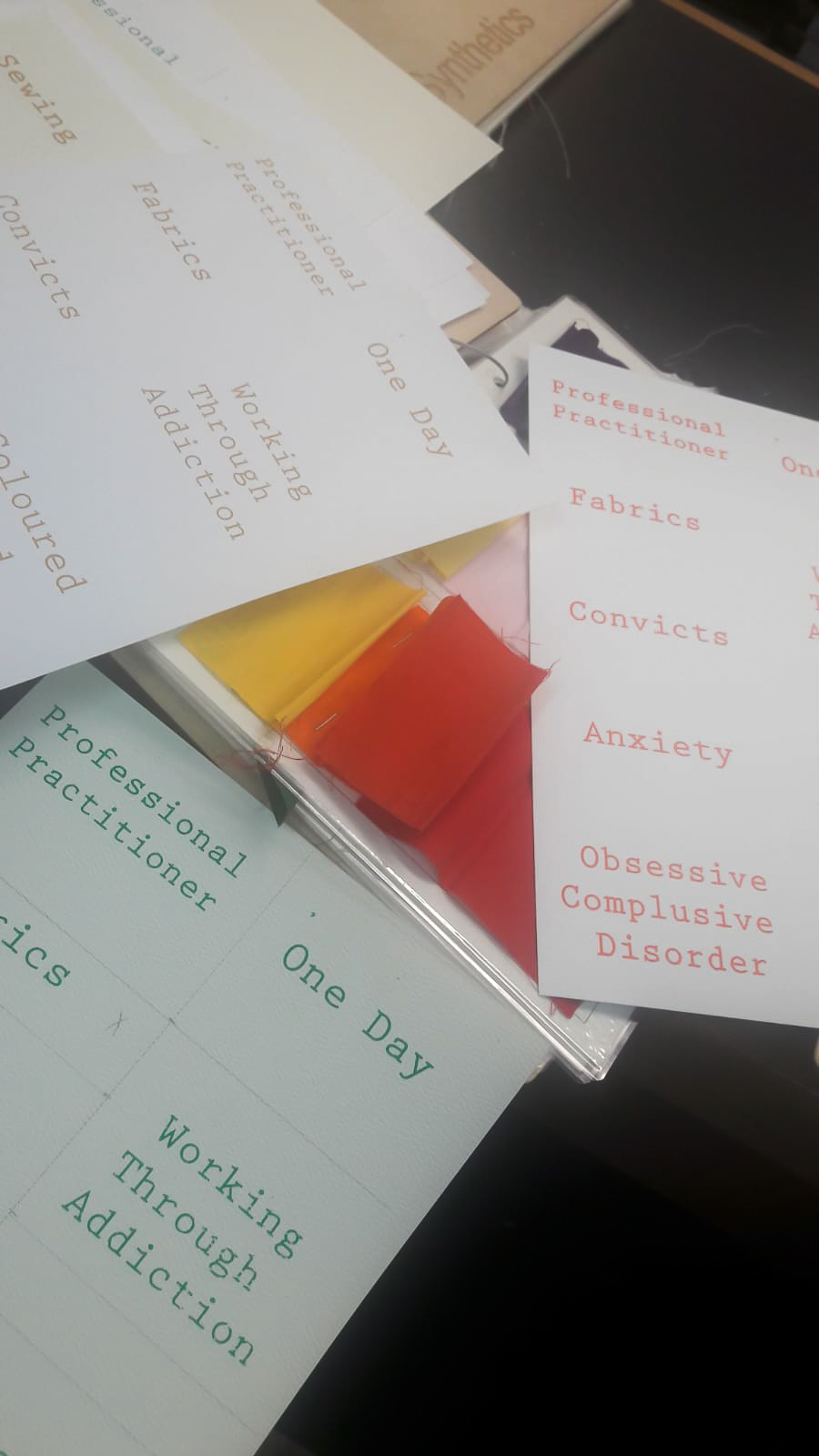
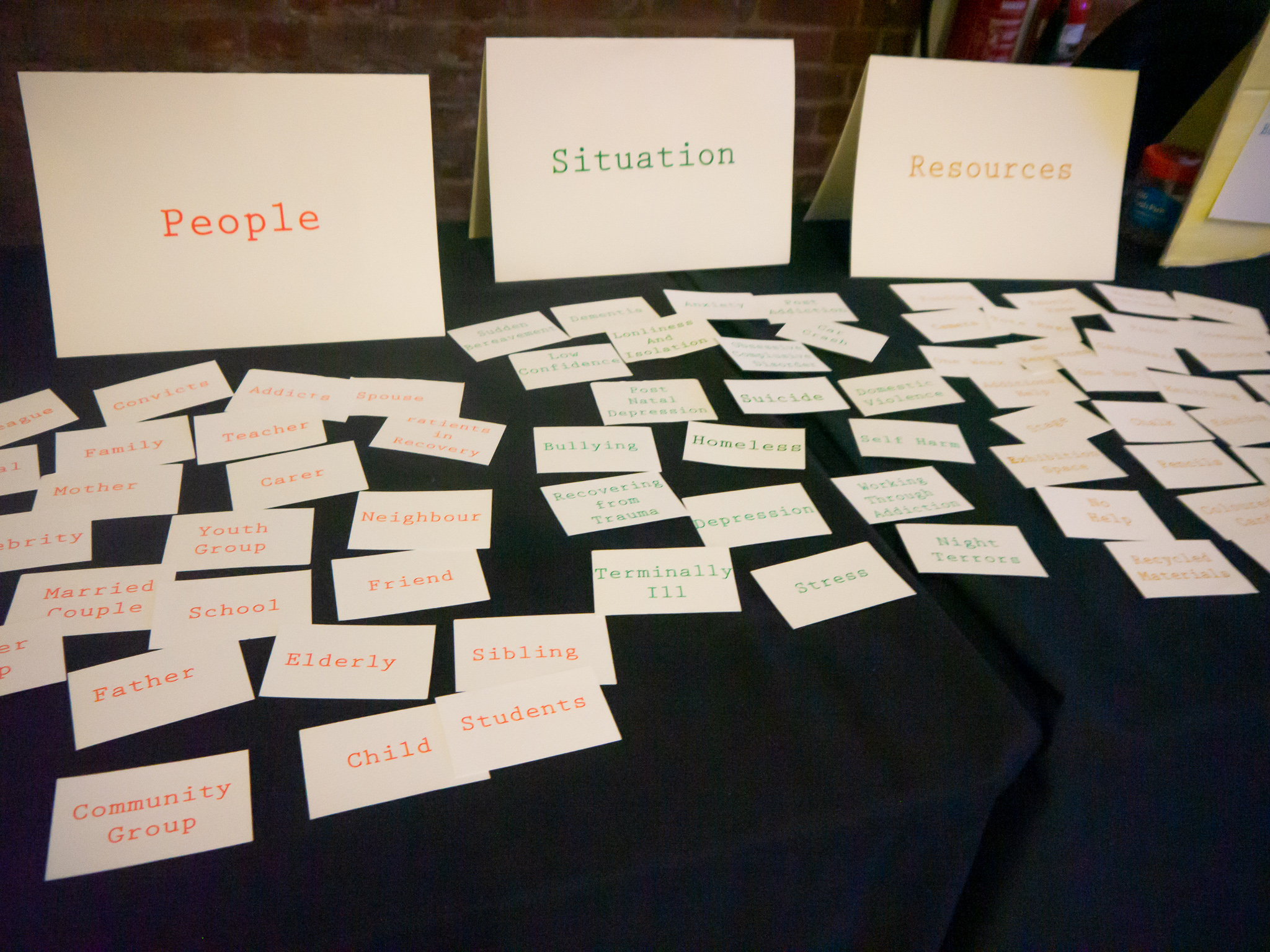
Screen printed title cards to clearly display that cards: People, situation and resources. We have tried our best to design the activity so it is visually easy to follow step by step through the process.
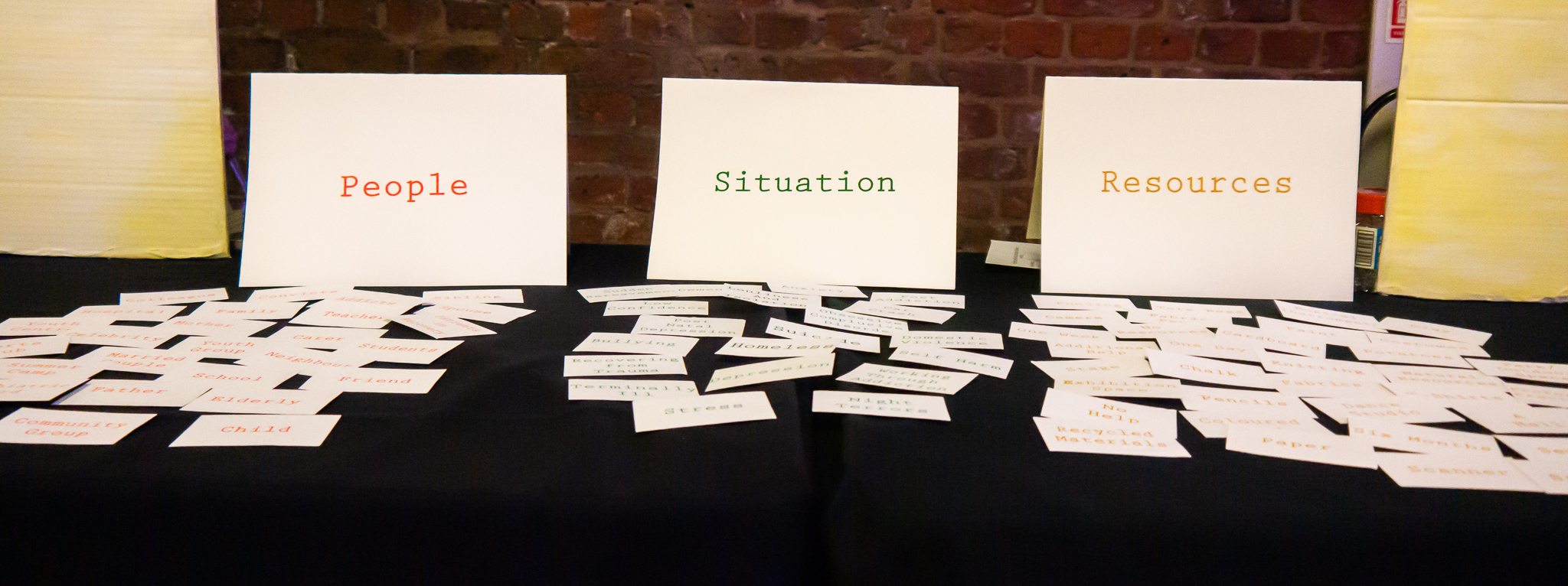
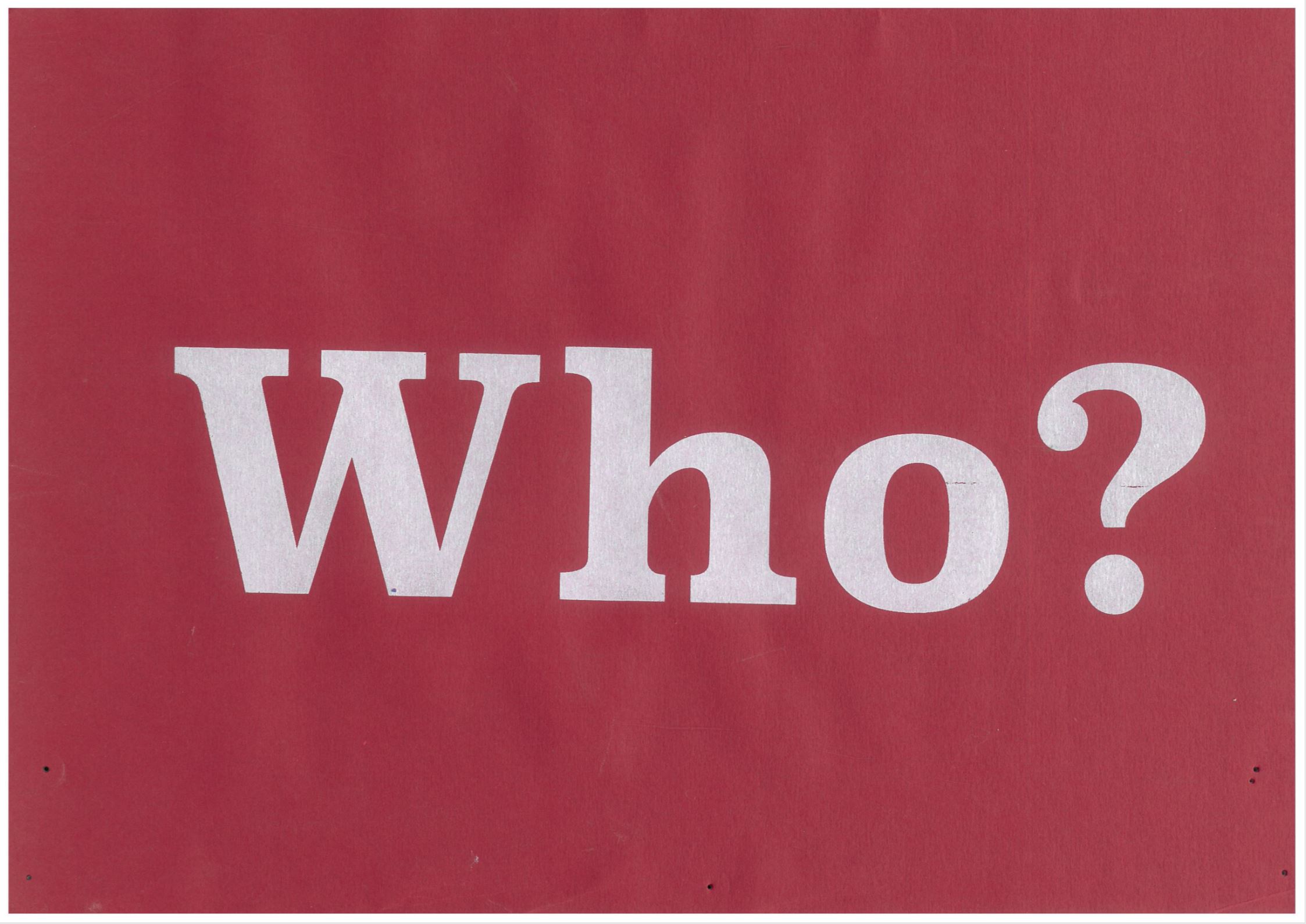
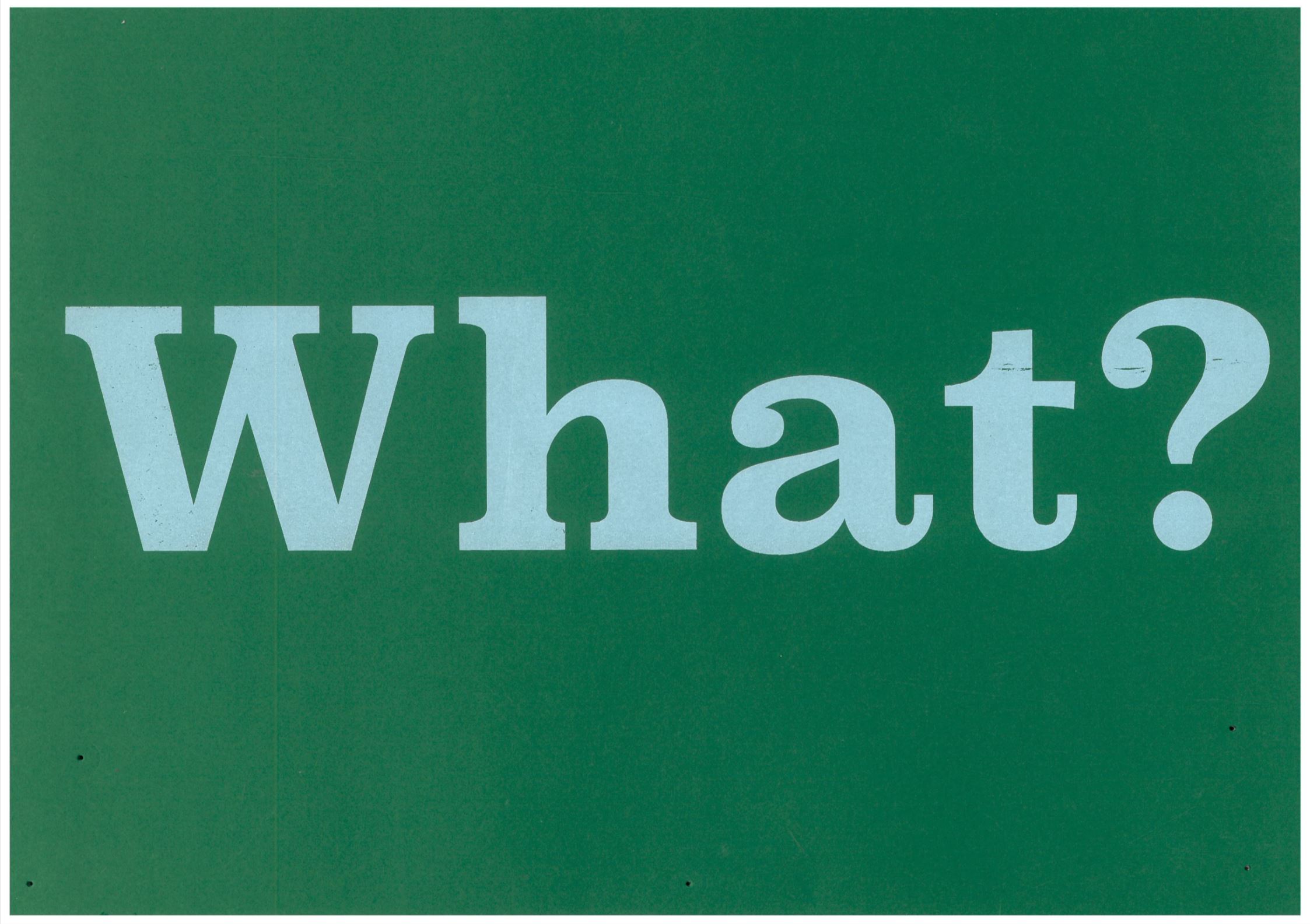
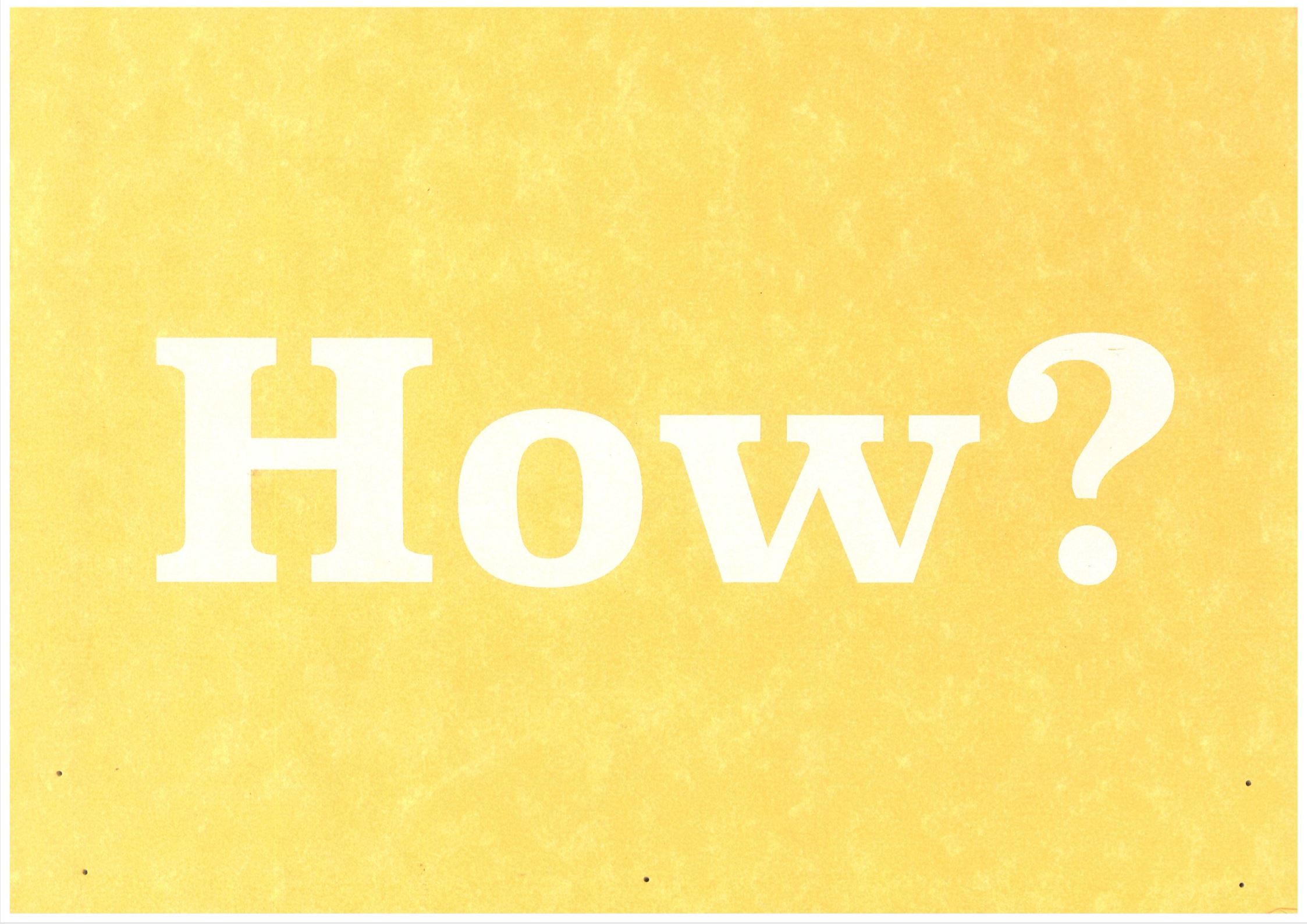
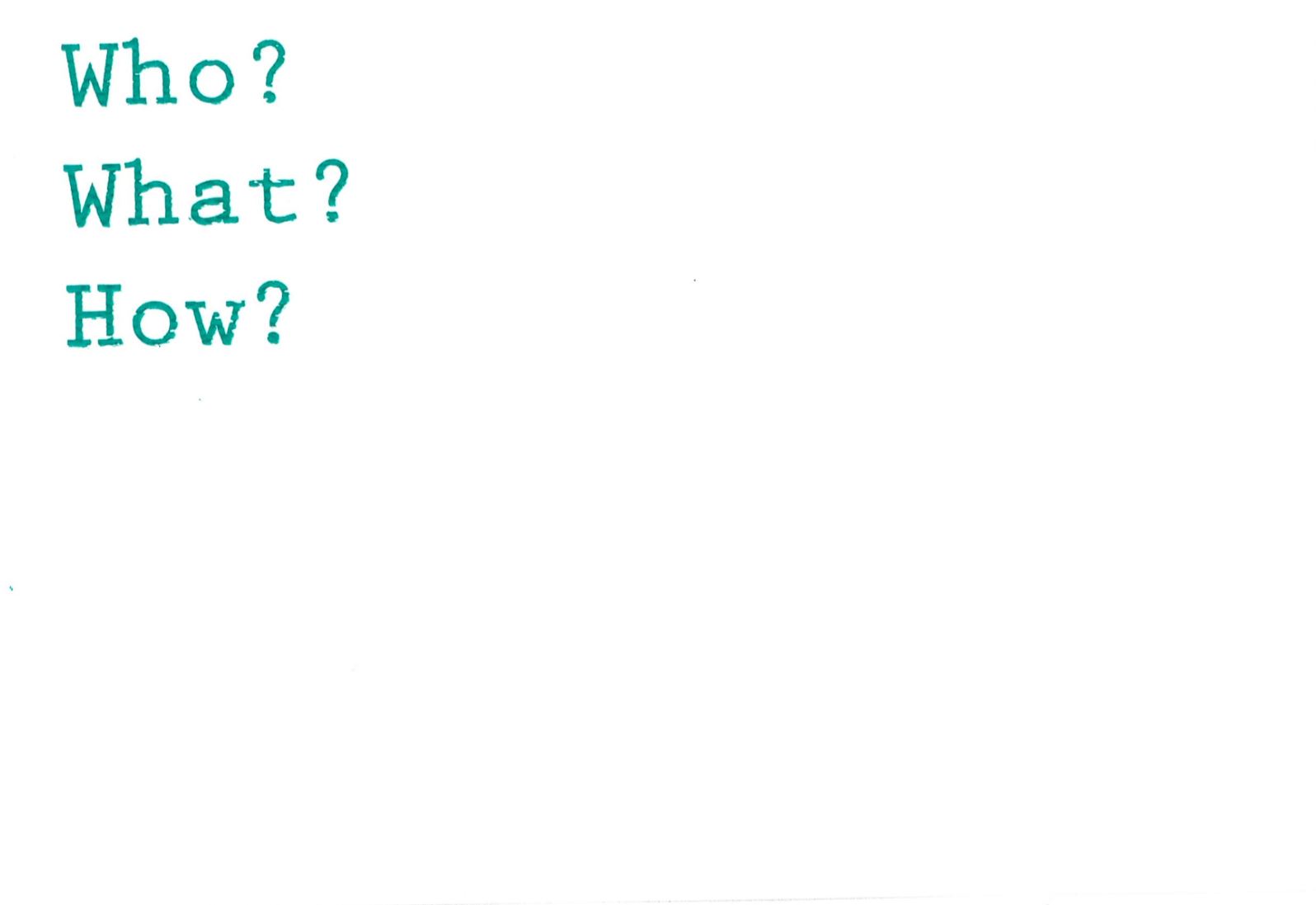
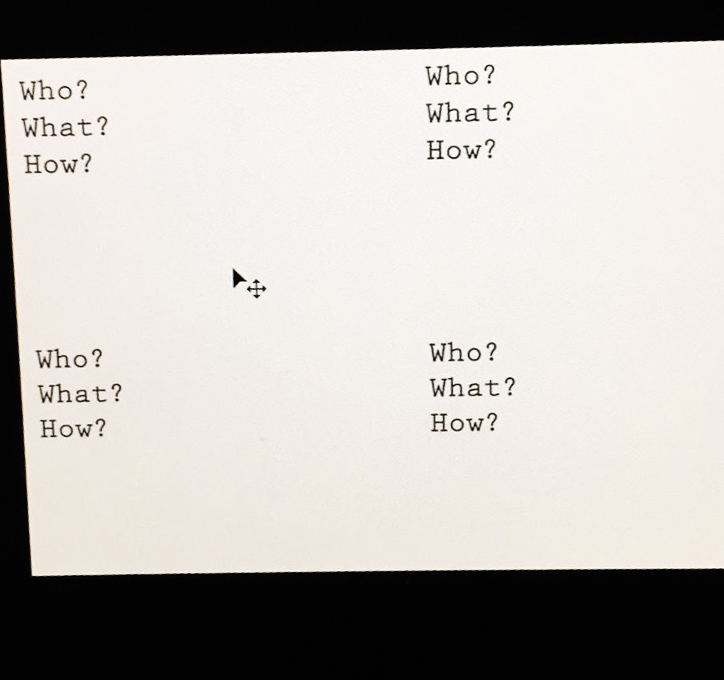
As seen below, we have screen printed answer cards: Who? What? How? where the participant will write down which cards they chose in the scenario they have chosen. Then we have provided pens to write with, and pins to stick up their answers.

We have written a brief description of the project and the activity for participants to read, as well as a short description introducing who we are: Tamara and Freya from MMU.
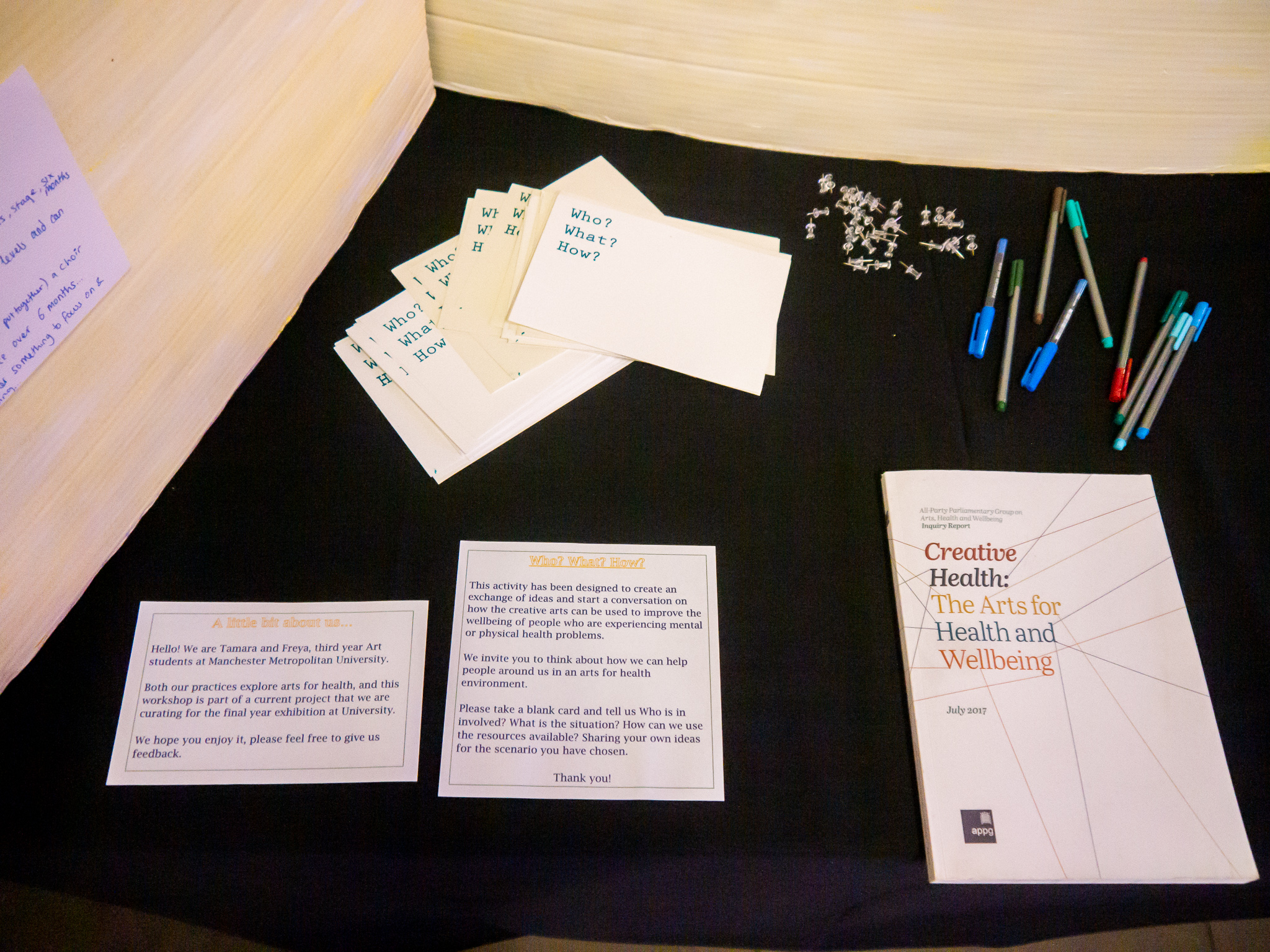
We were placed at the entrance of the Science and Industry museum, which was amazing as it is the point of exit and entry – so you can’t miss us. This was great to get as many people viewing our stand as possible, initiating conversations on Arts for health.

There were many other organisations and groups displaying workshops and projects on the evening based on arts and health.
It was an amazing experience to be a part of the evening and to be amongst everyone else putting on their work.
There were many people asking about the project we were doing, and it was great for me to be put on the spot and really get to the core of what we are doing, and why we are doing it.

The event was also an amazing opportunity to network with other people and their projects. In hindsight I wish I spent more time networking and connecting with other people at the event as it would have been a great opportunity. It was difficult on the night to do this as we only had us 2 to be with the display so we sadly didn’t have a lot of time to explore the rest of the event.
Testing testing 1, 2, 3…

I wanted to test out the workshop and get some feedback from peers, what they think, how it could be improved etc. Getting constructive feedback and criticism I have learnt over the course of my degree, is such a simple and effective way to see the limitations of your thinking and to challenge and push the work further then you could have imagined before.

Here is the workshop activity set up in the studio space.

Originally we had designed the project to be a randomly generated card game- which created limitations in the activity, challenging the participant to think creatively. However through practising the workshop ourselves and many discussions we decided that it would be better to have a more open conversation- where the participants are free to choose any cards from the categories (even multiples if they choose) ‘pick the ingredients’ to their projects, and then map out their thoughts and ideas on the answer cards we provide. This was a better set out for the type of activity it is and the audience it is for. The activity is to spark conversation, which is the main focus- and we agreed that this would be the best way to make the activity as well as keeping it straight forward and inviting. It is important to acknowledge that not all the participants will be from an art background, and may not be familiar with arts for health practice. Having that in mind it is important to keep the activity simple for anyone to be able to engage as in depth as they choose – making sure everyone has equal ‘access’.

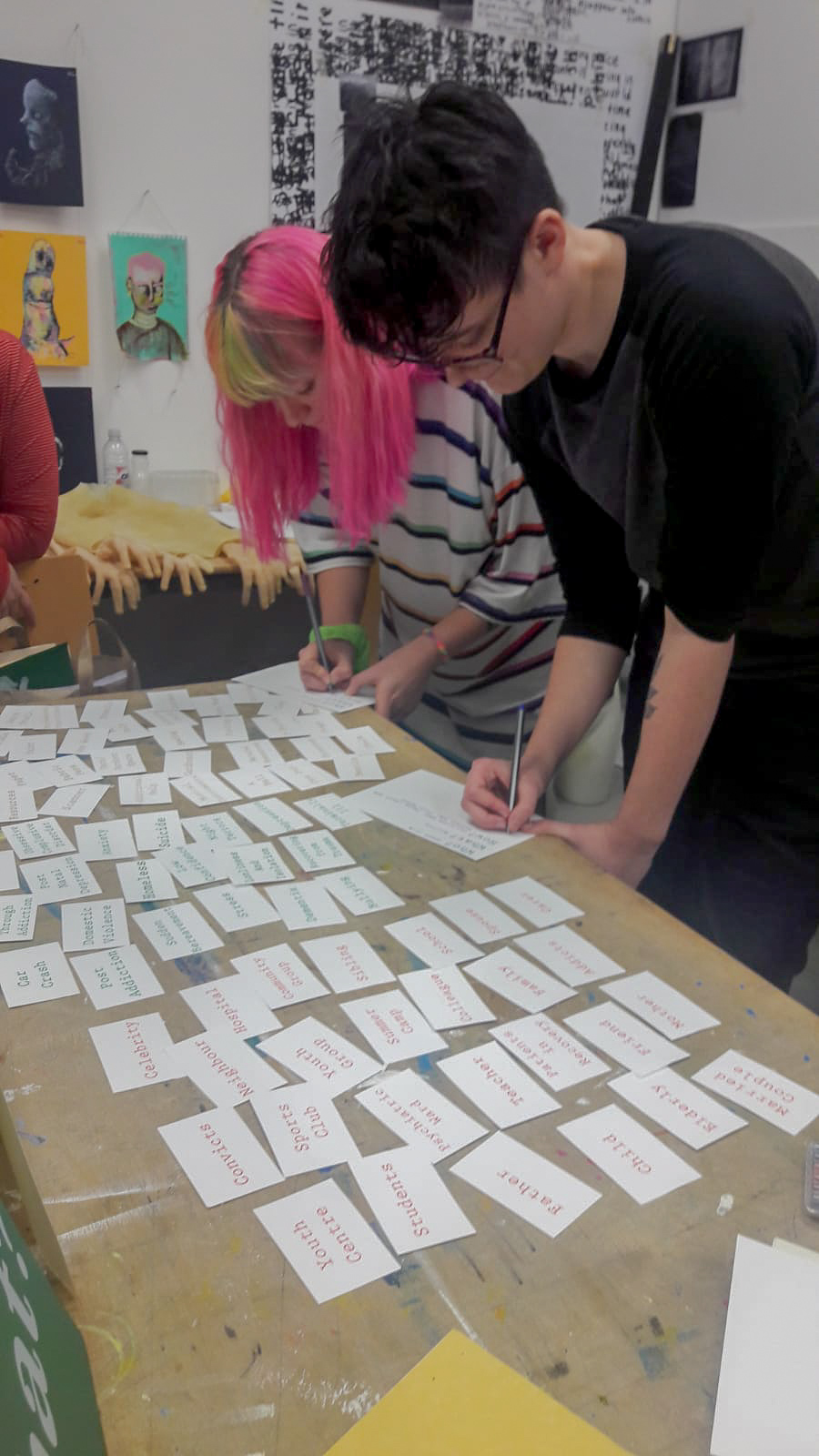
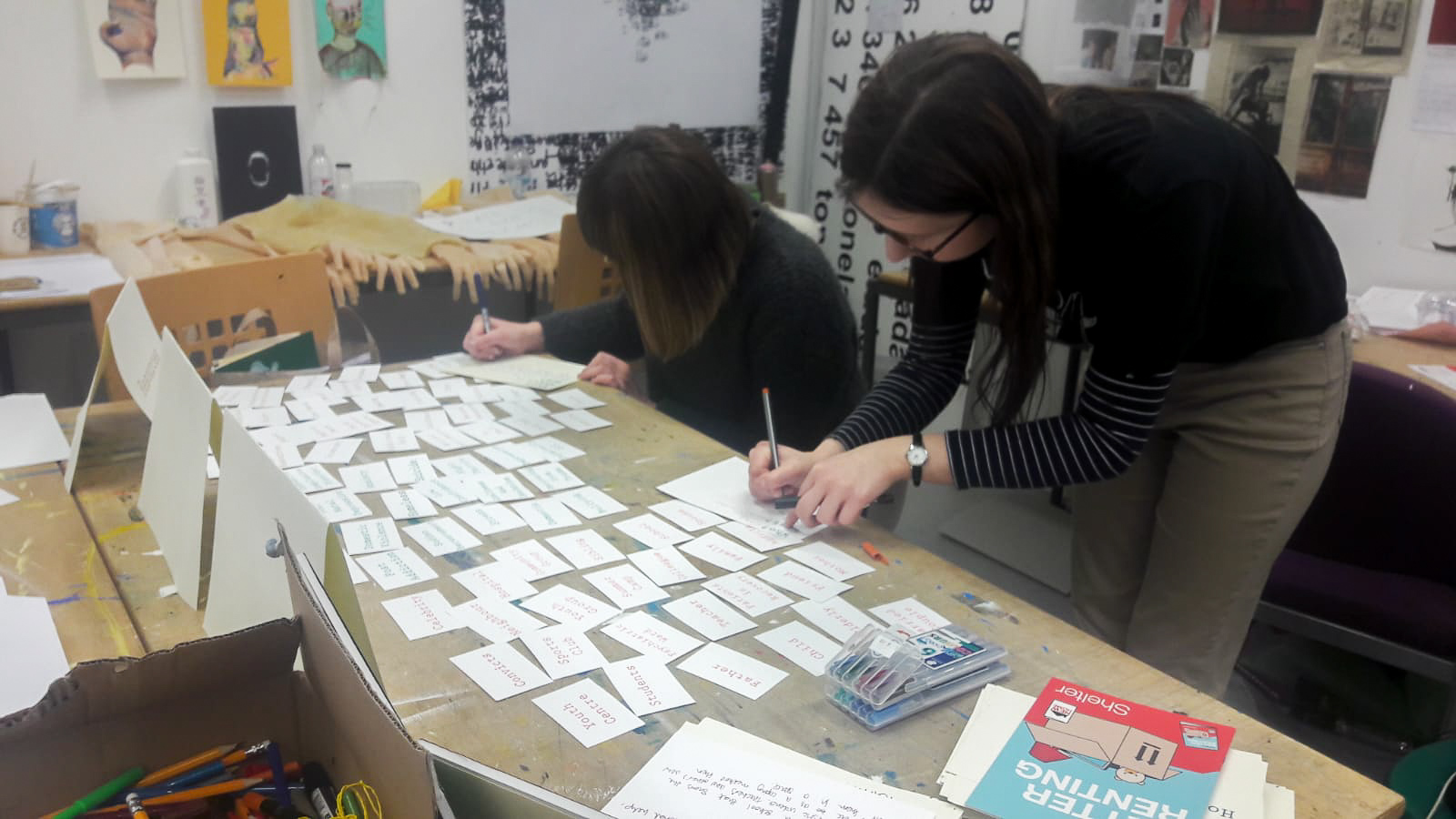
Below are some of the Interactive art having a go at the activity

The feedback overall was really positive and most of the conversation was based on my last point that I stated above.

Testing out the activity was really valuable and allowed me to practice engaging with others and making sure I explain the activity so it is straightforward – this way participants are happy to engage and not put off by complicated instruction.

Exchange our ideas, Start a conversation

Who? What? How?
We designed this activity to engage people in conversations on arts for health and the projects that can take place within it.

AIMS & OBJECTIVES

Aims: To discuss ‘what is arts for health?’ and think about different projects that can take place?

Objectives: Using the categories,
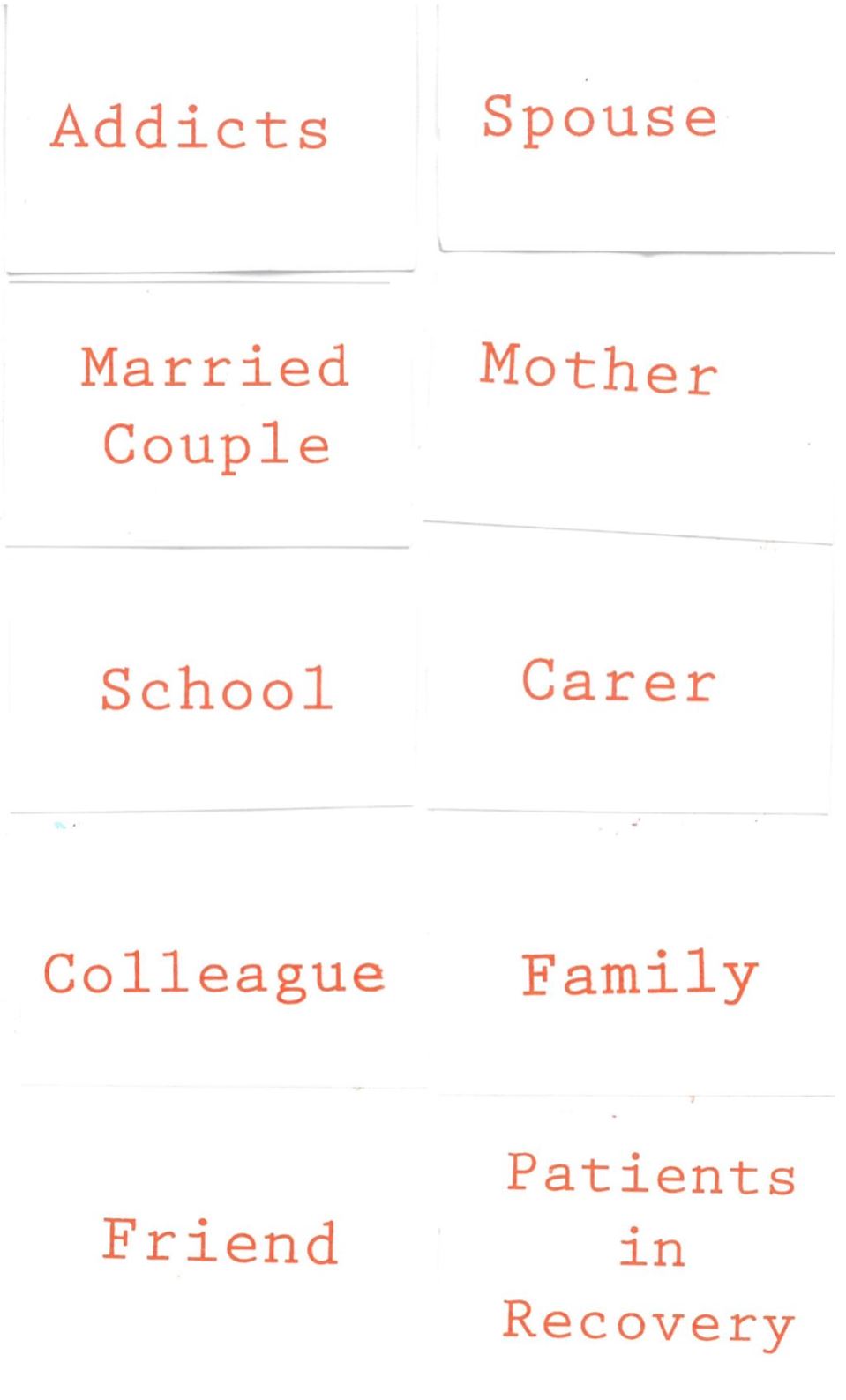
Who: People
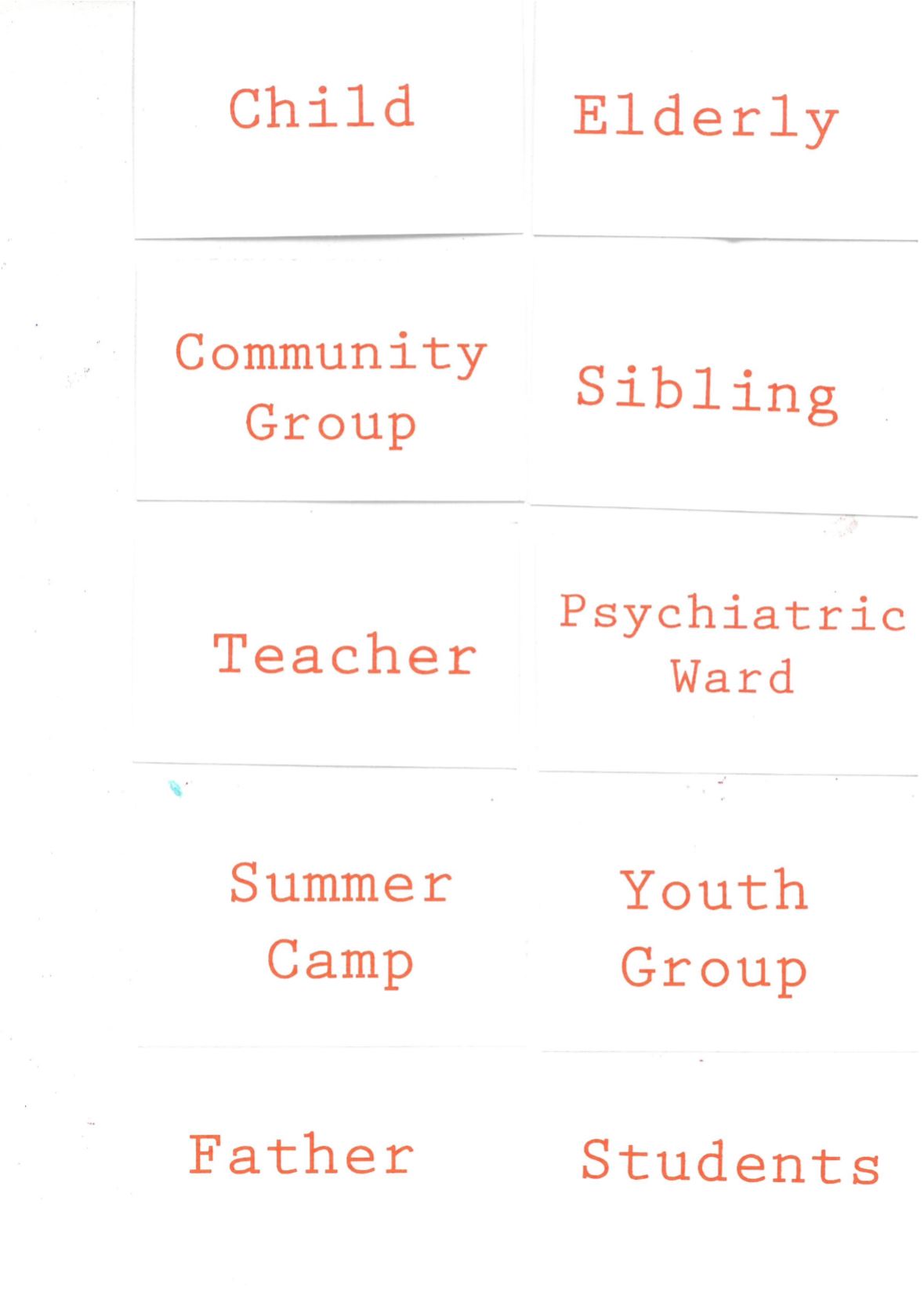
What: situation
How: Resources
The participant taking part in this activity has to choose the different card from the categories, and write down what arts for health project can be created with the resources available to help the individual or group in the situation they are in.

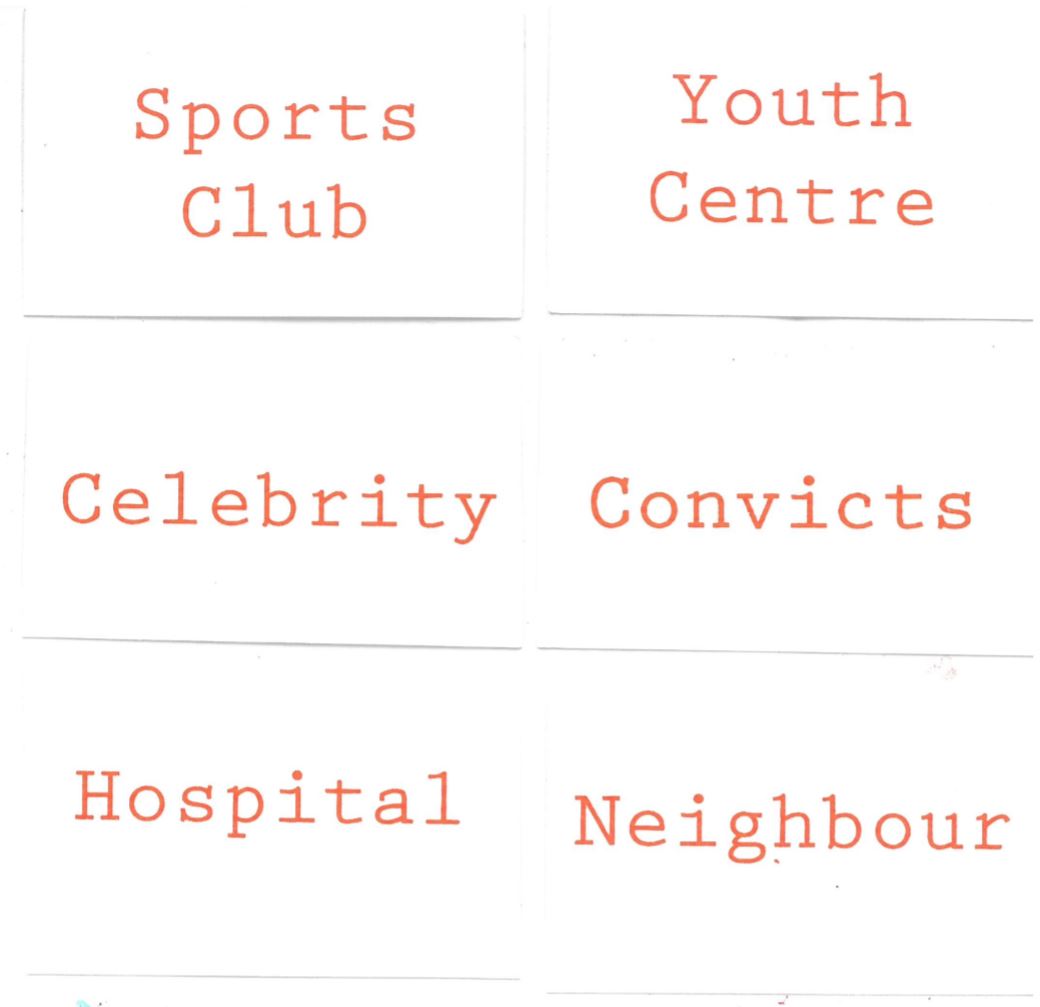
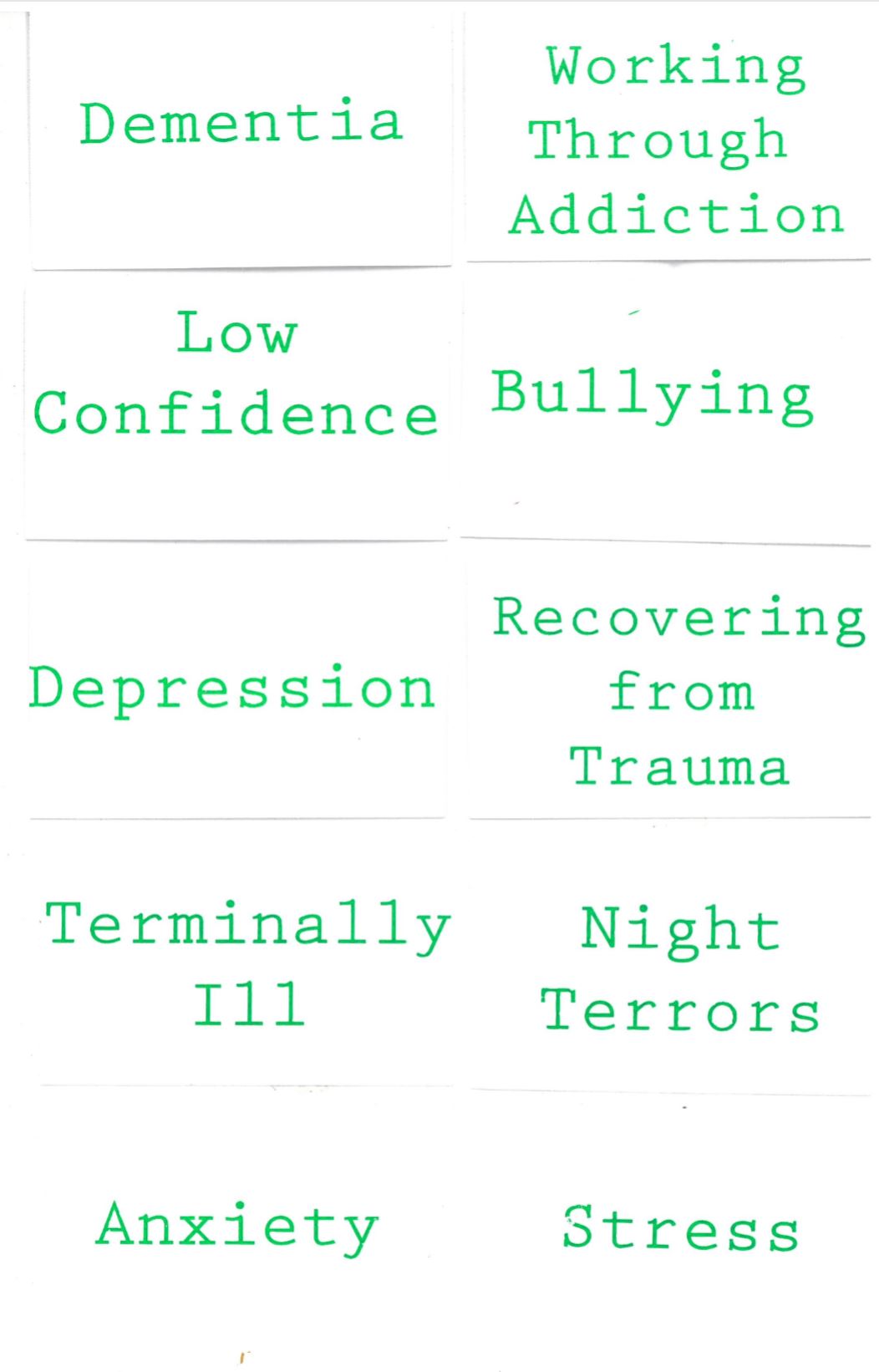
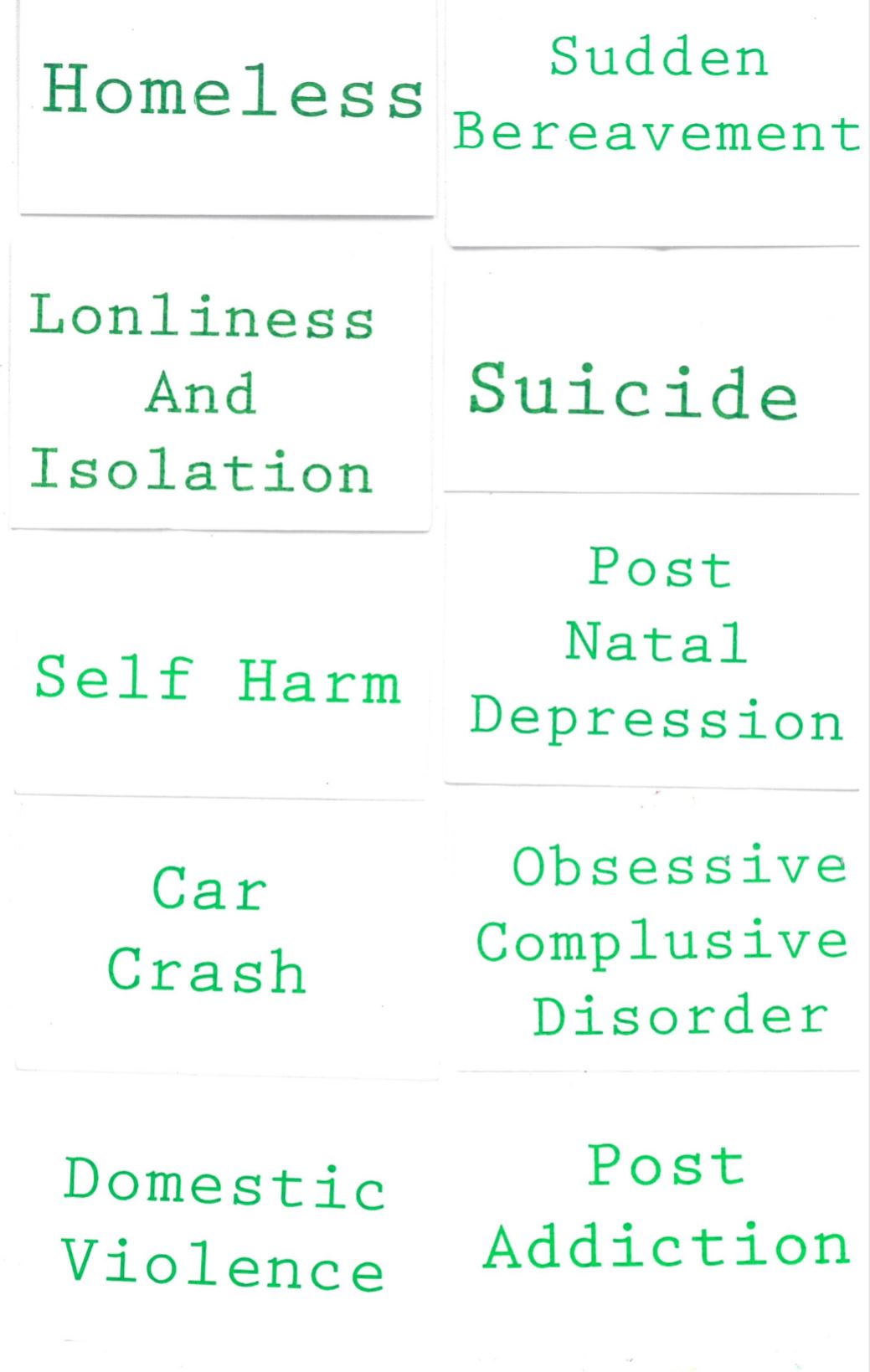
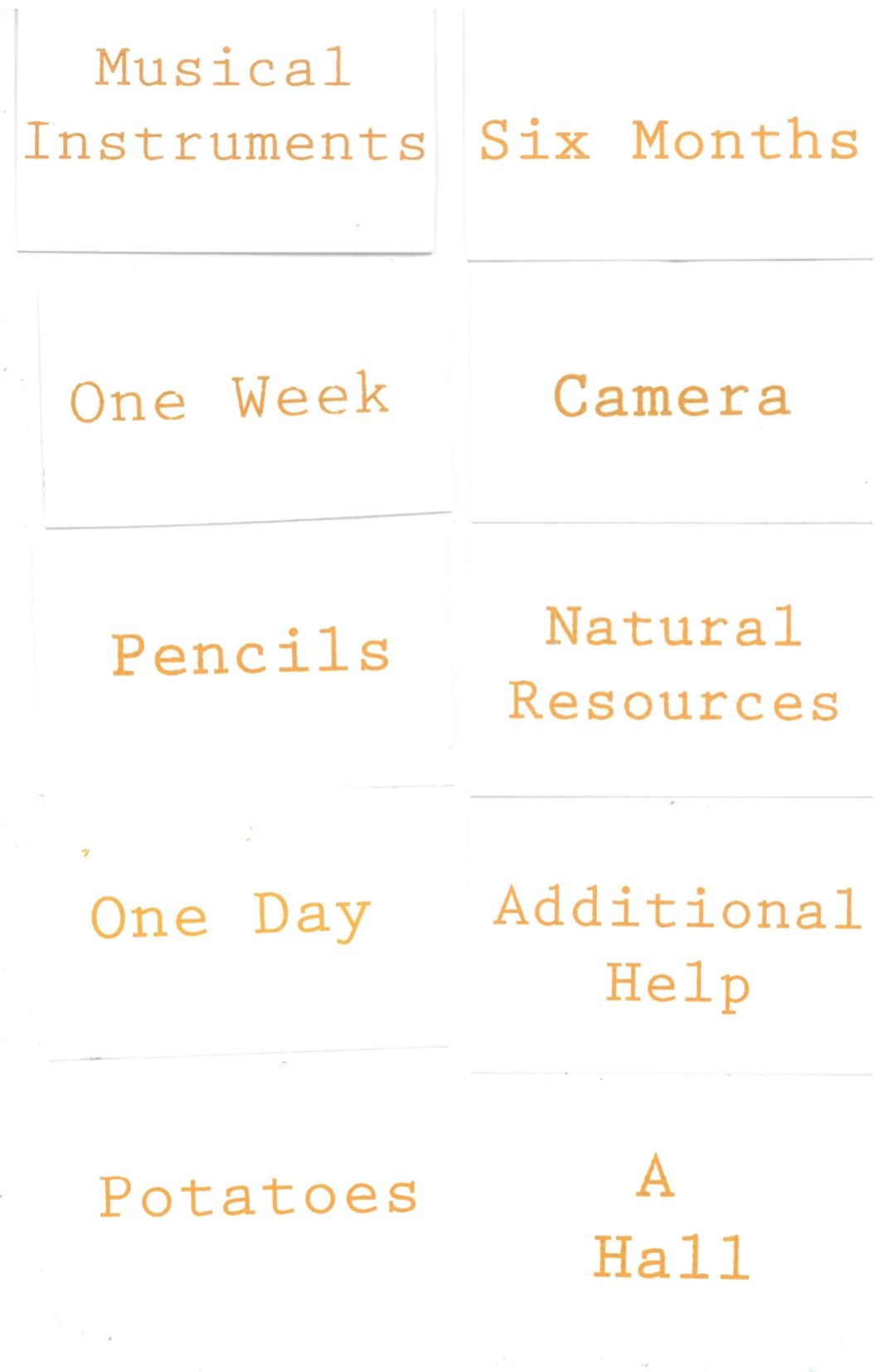
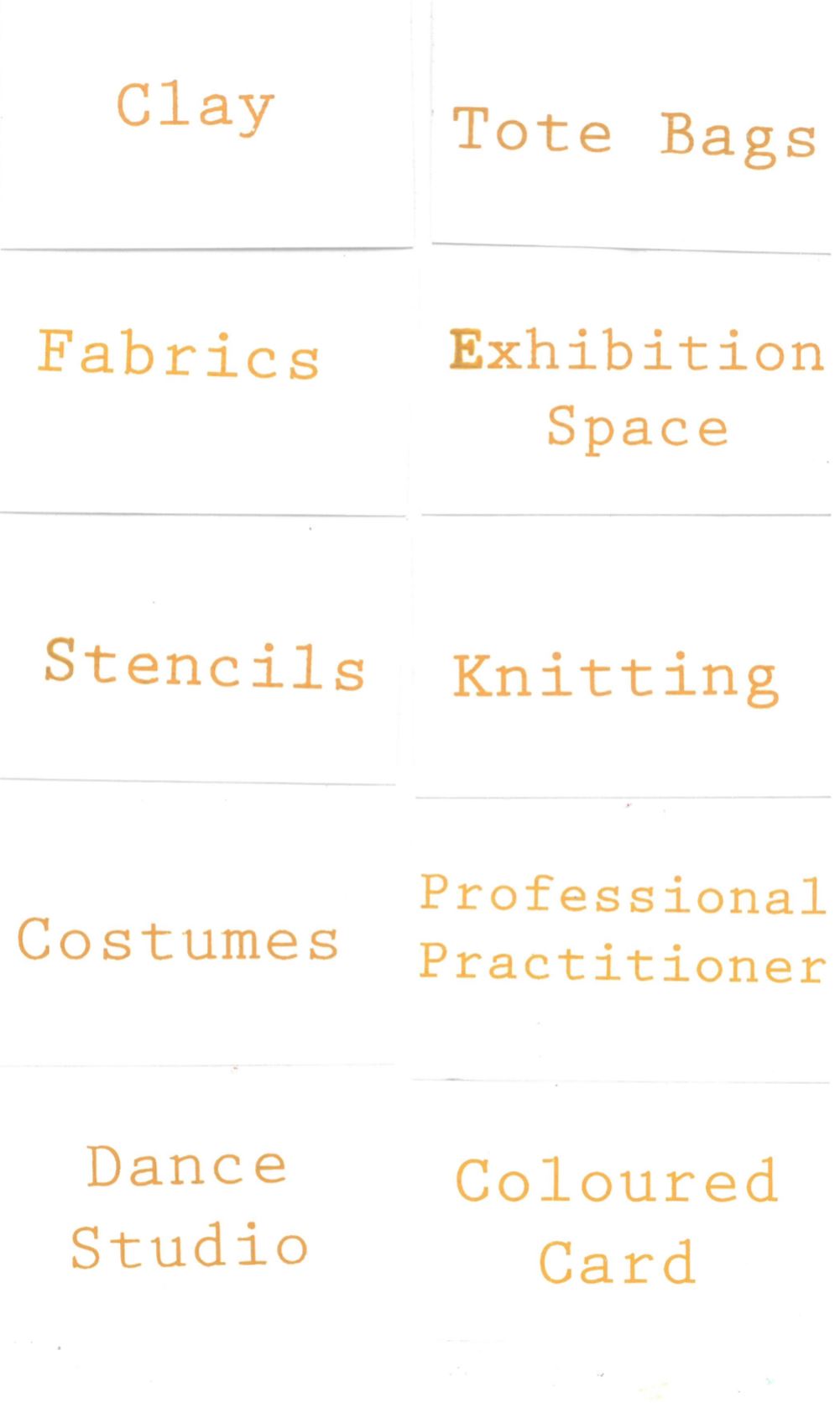
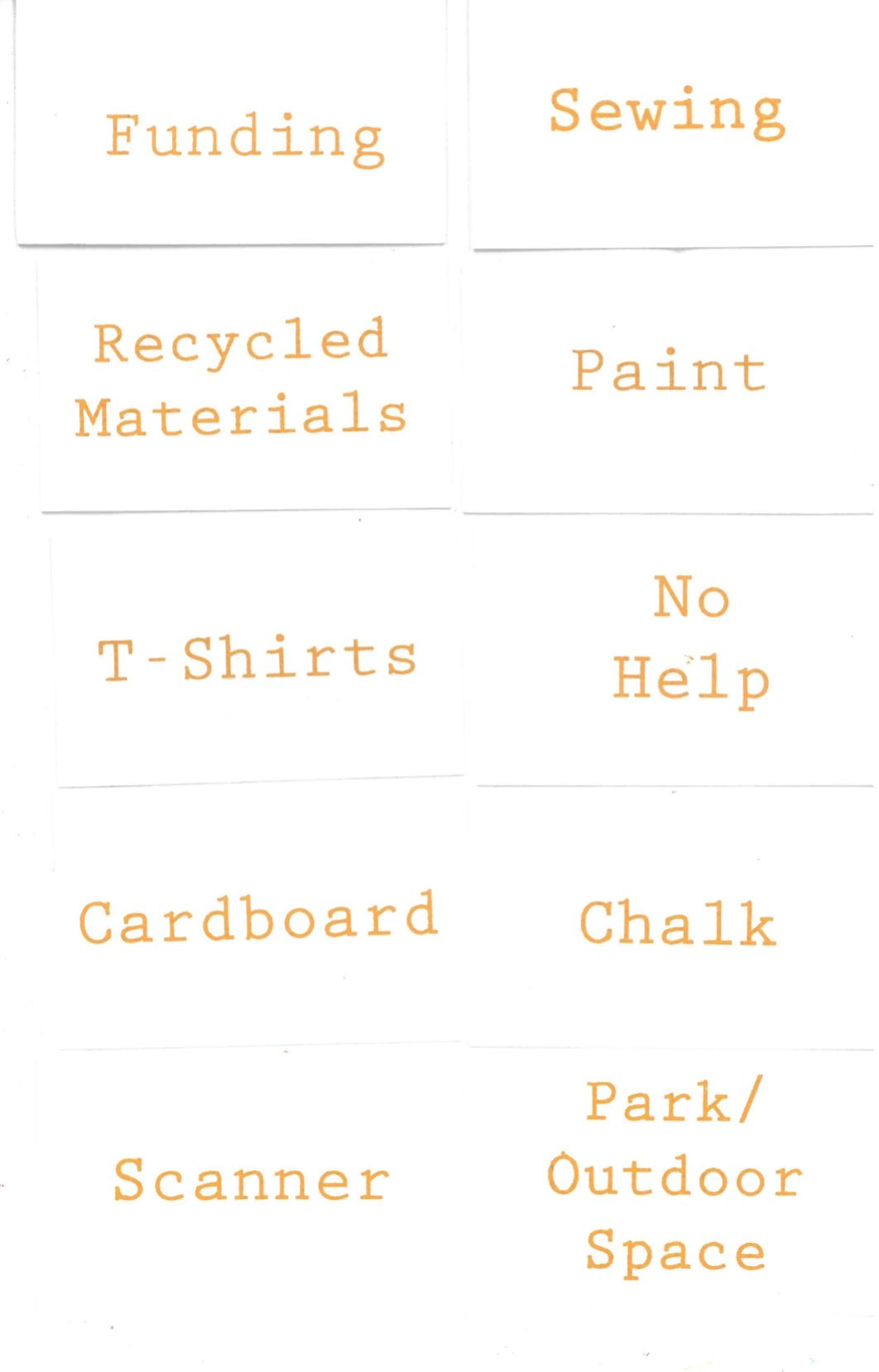
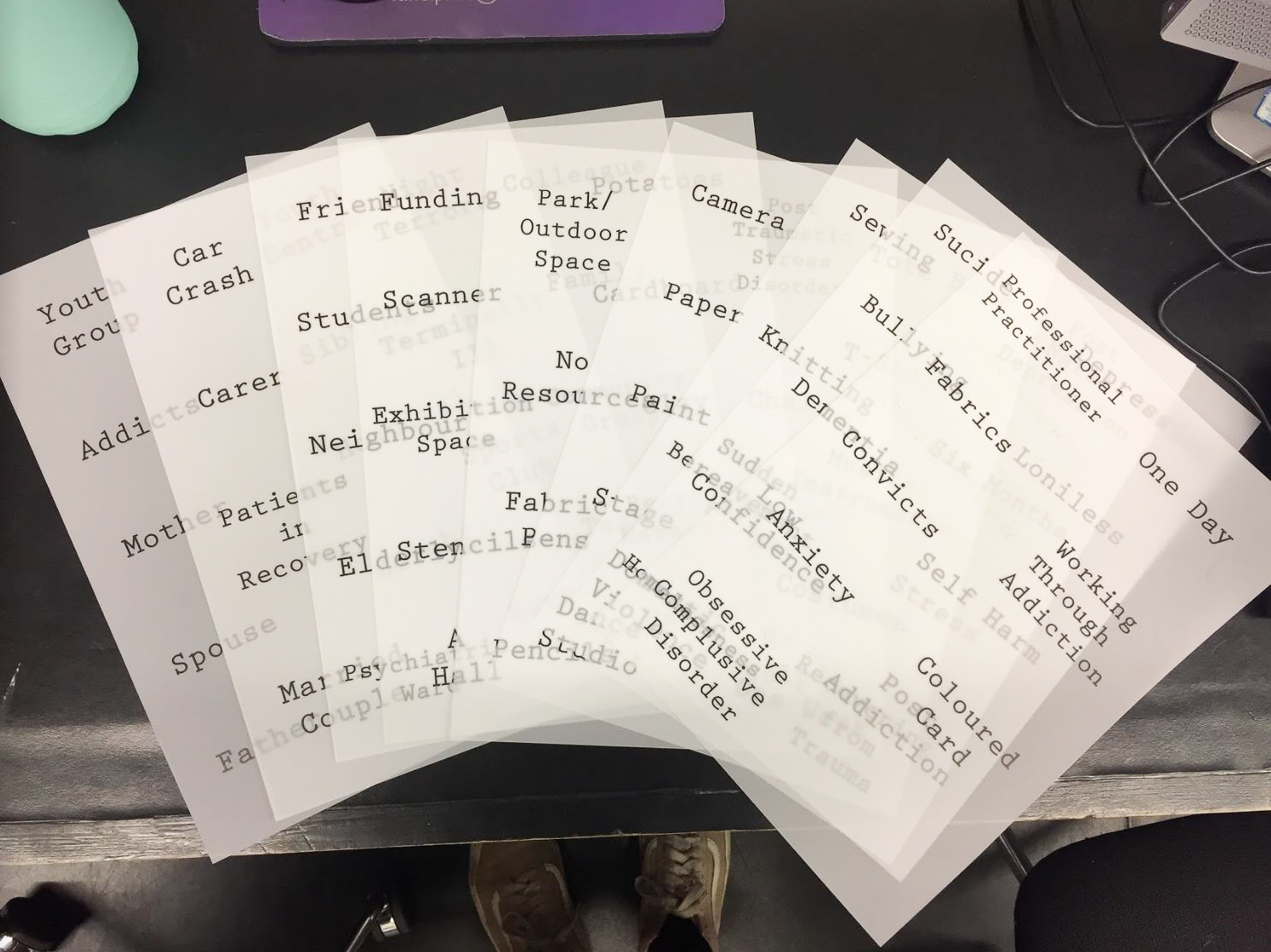
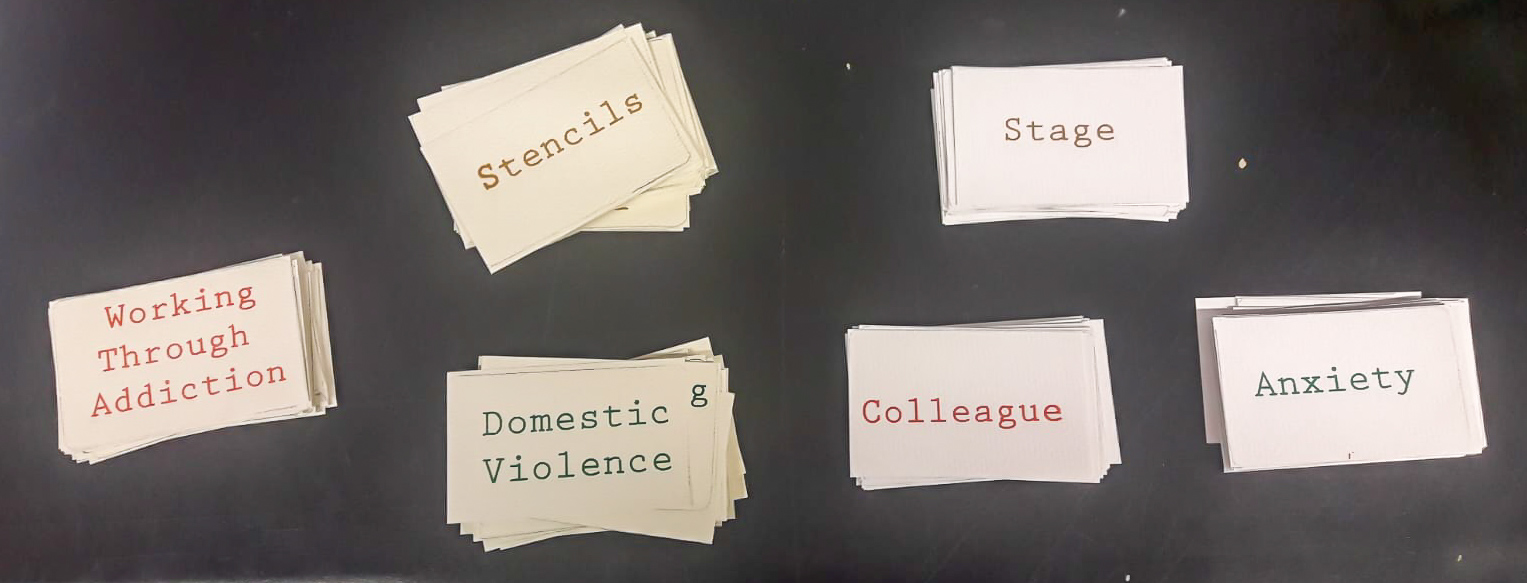
Some of the cards under the categories above (colour coordinated)

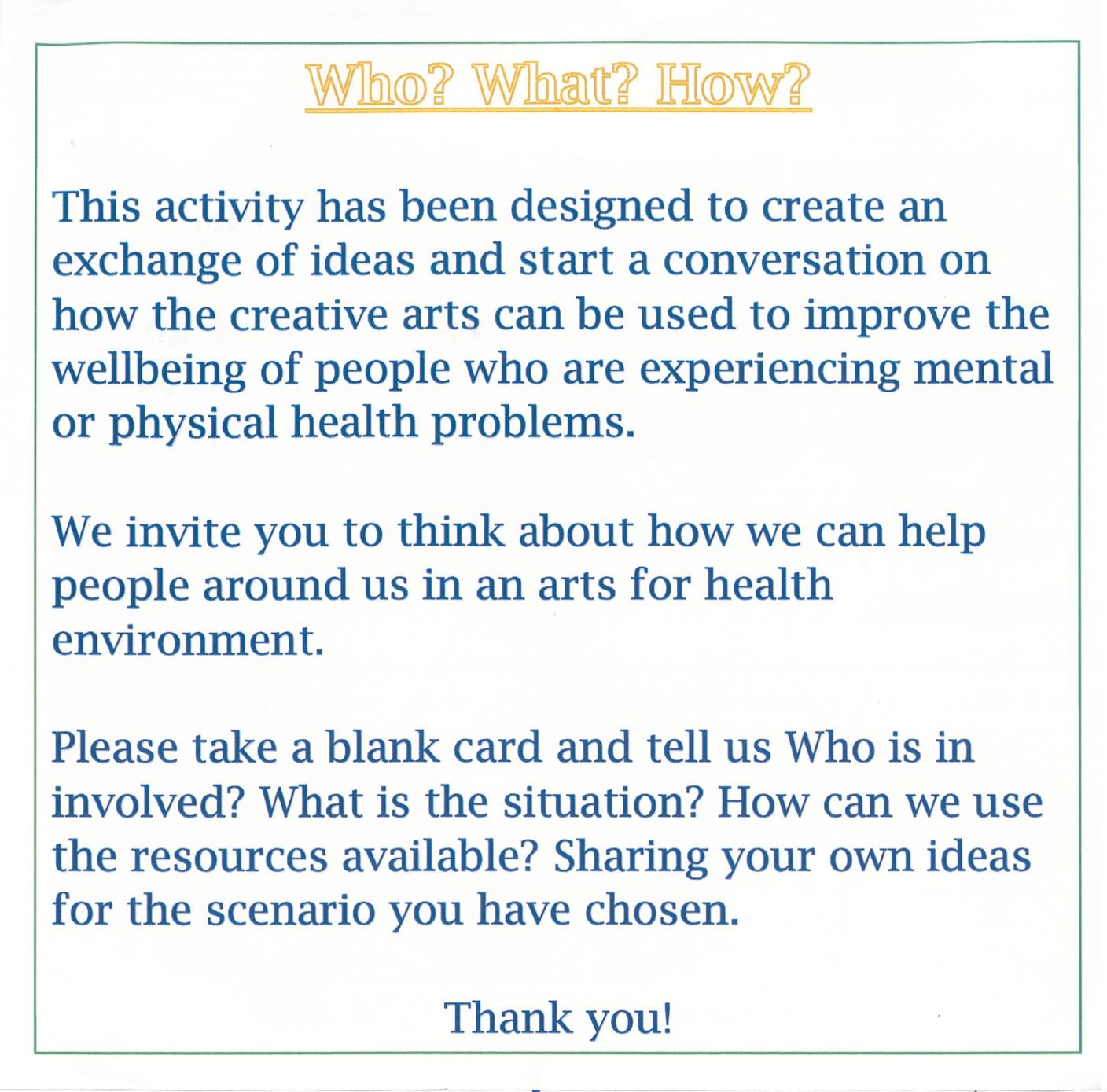
We placed a brief instruction card for people who wanted to try the activity independently without a discussion.

A blank card for people to write down their project ideas and add this to the exchange of ideas for others to engage with:

Interactive display

After making the workshop activity based on Arts for health, we started to think about creating a display that helped to attract participants as well as create an interactive engaging display.

We wanted to have boards standing for participants to stick up their answers and contribution to the activity. This is so we can create an exchange of ideas, and most importantly to start a conversation on Arts for health.

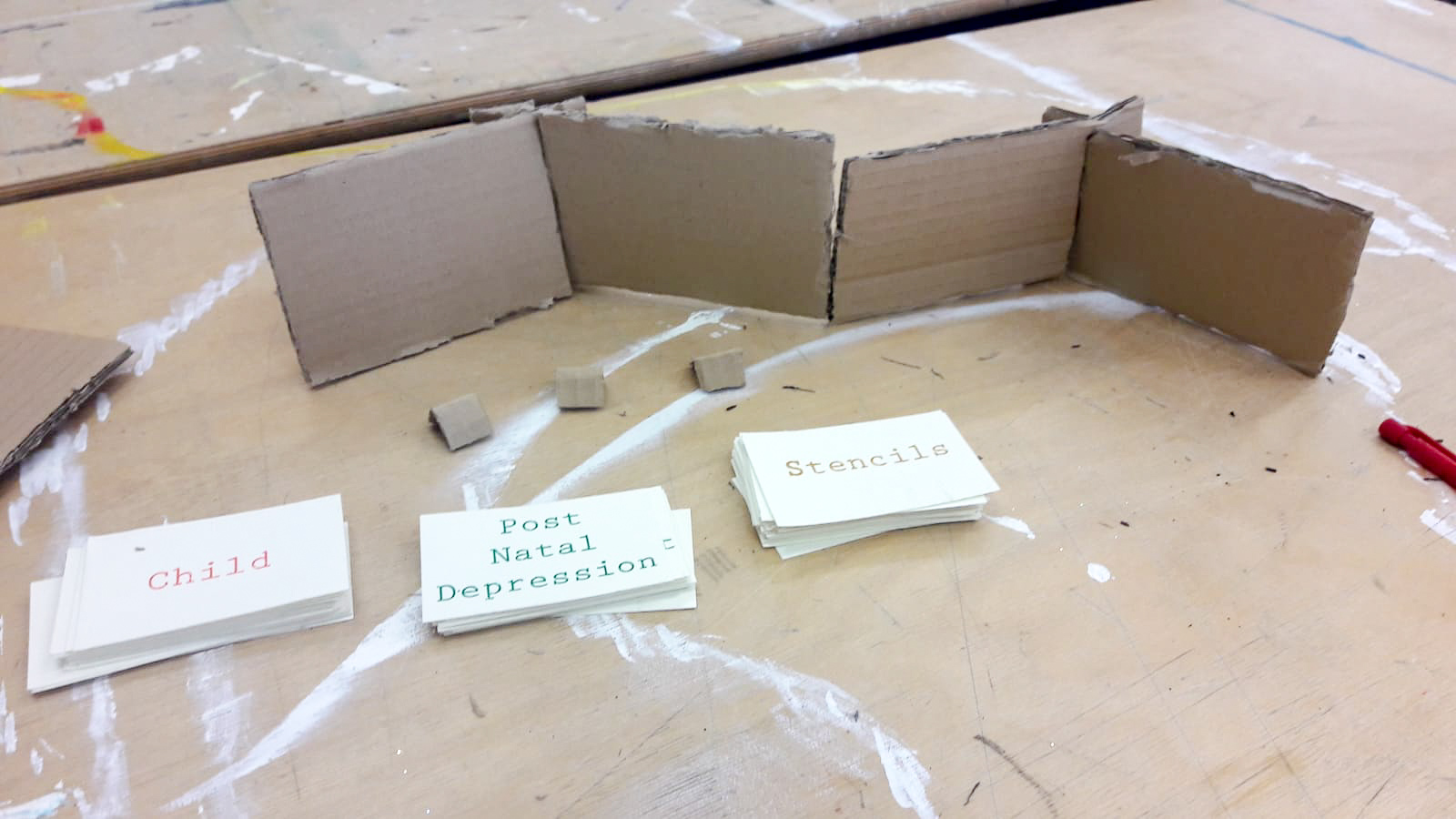
Below is a model that I made to help visualise our ideas.

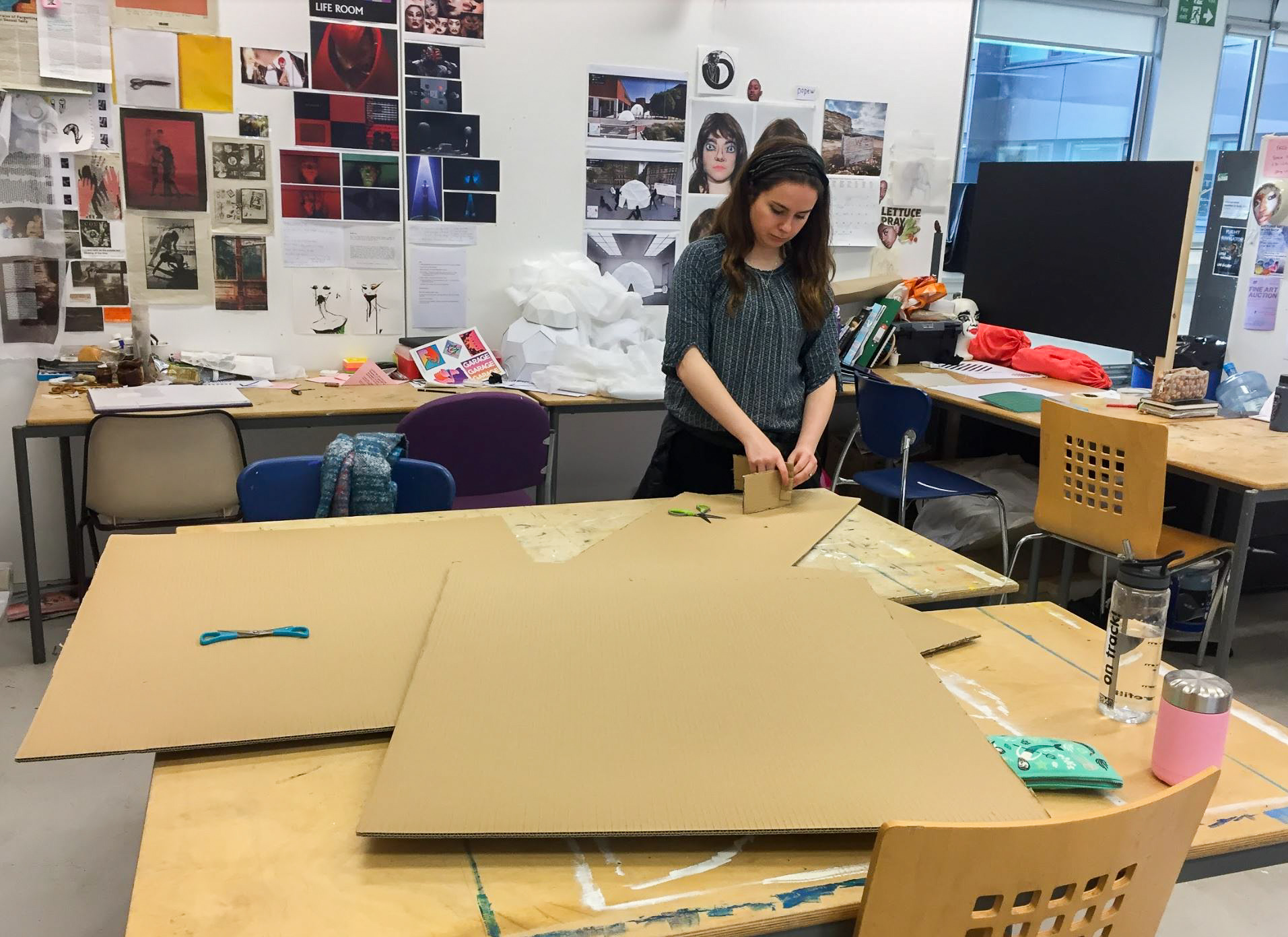
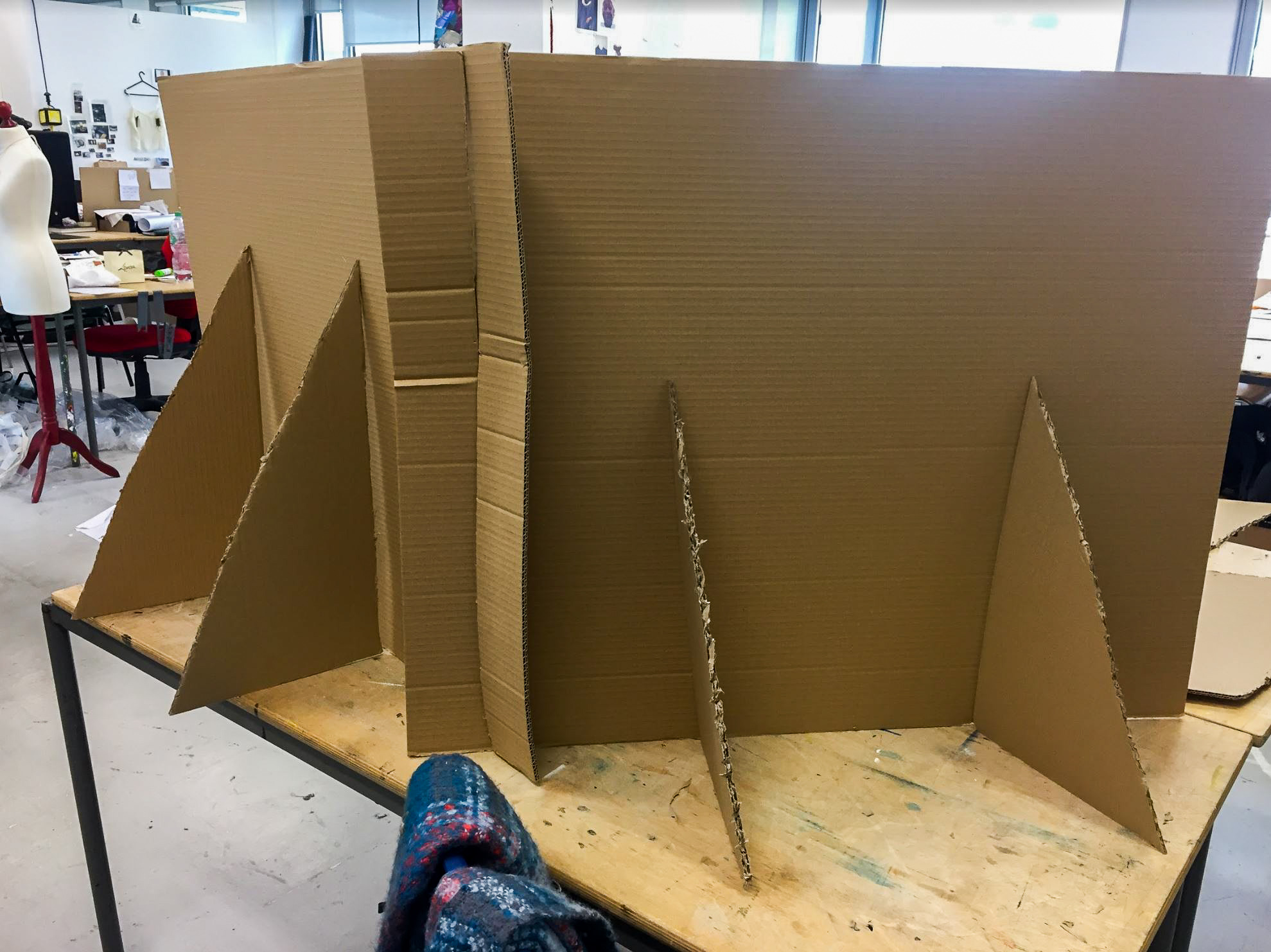
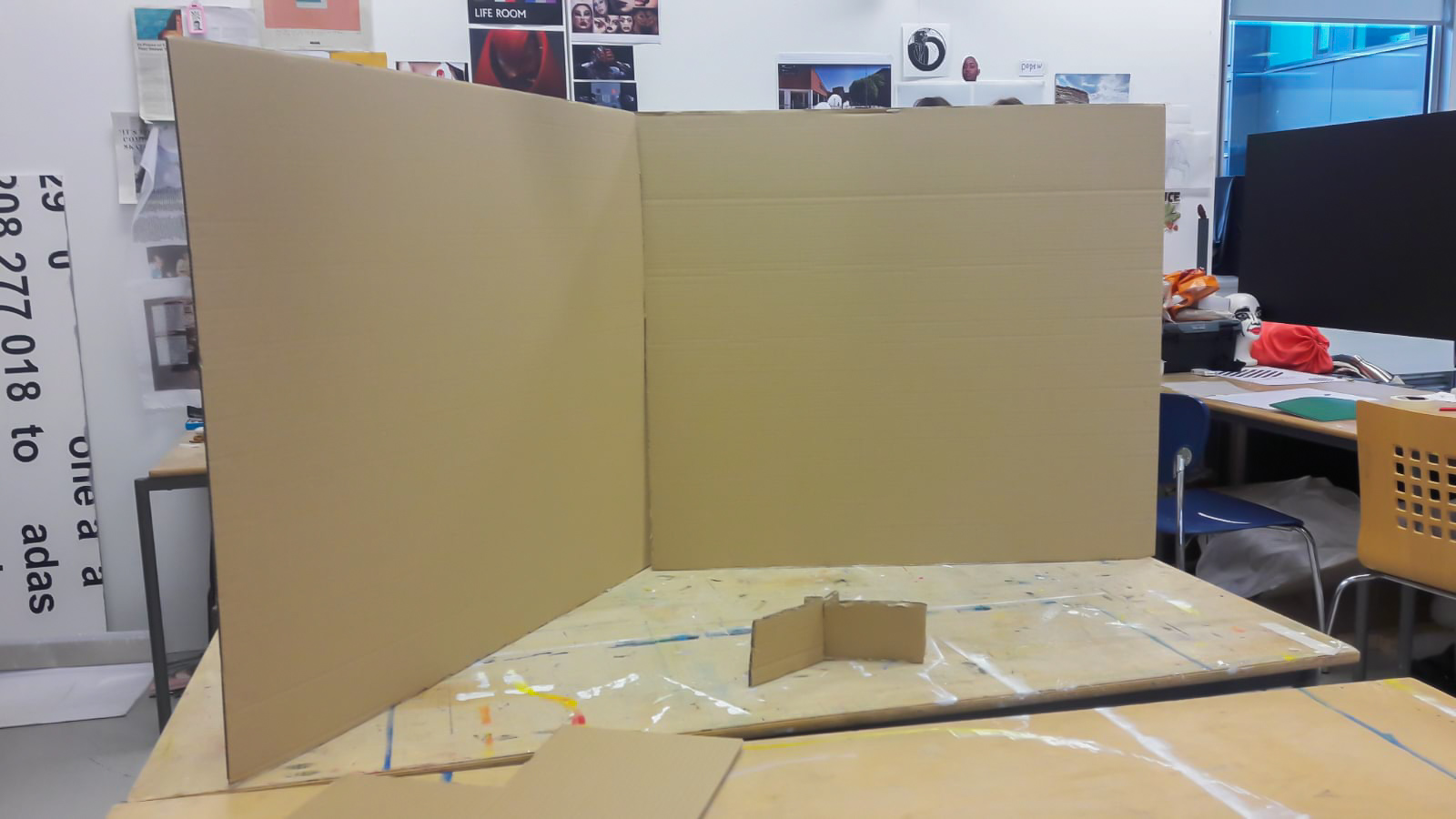
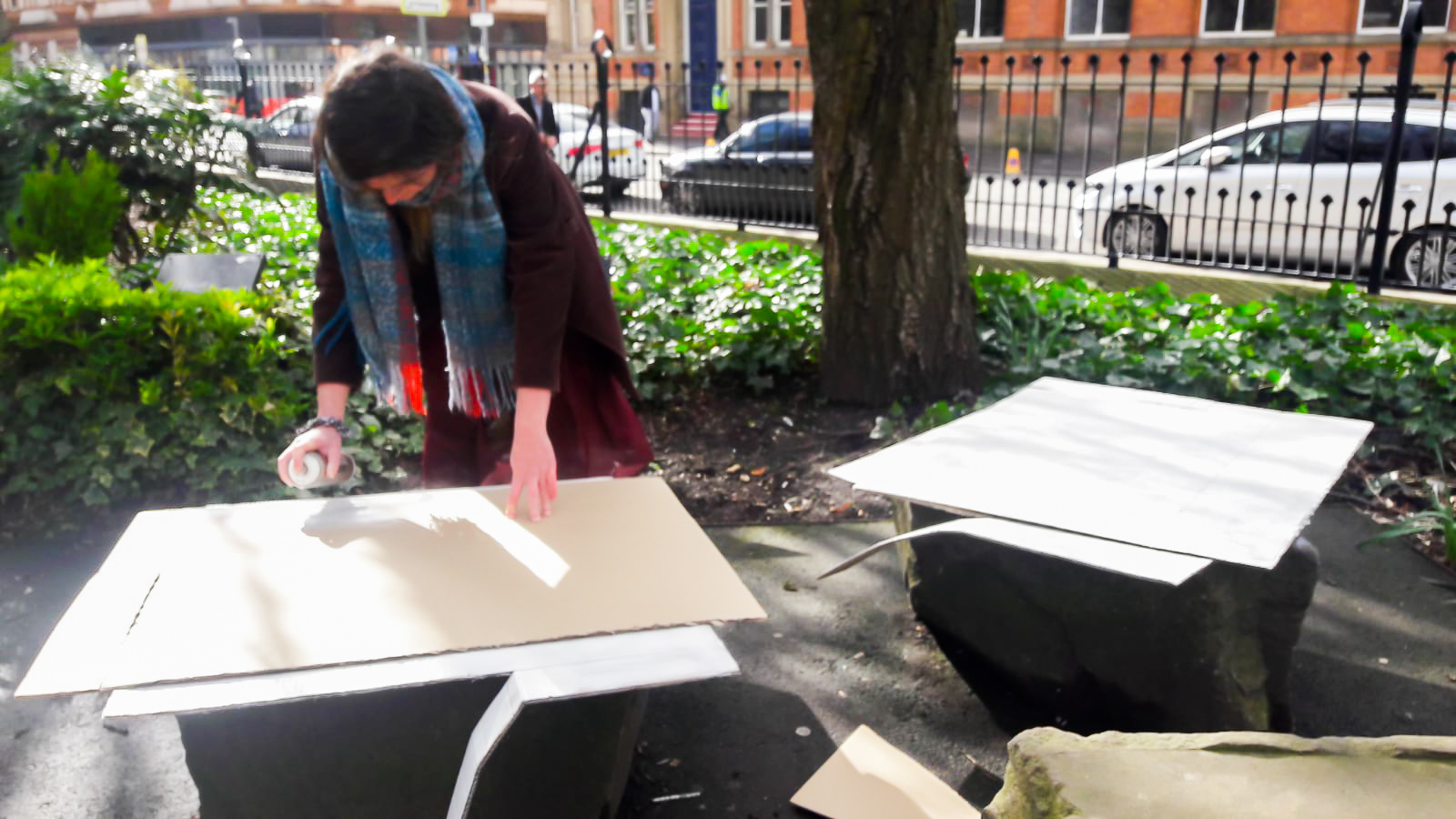
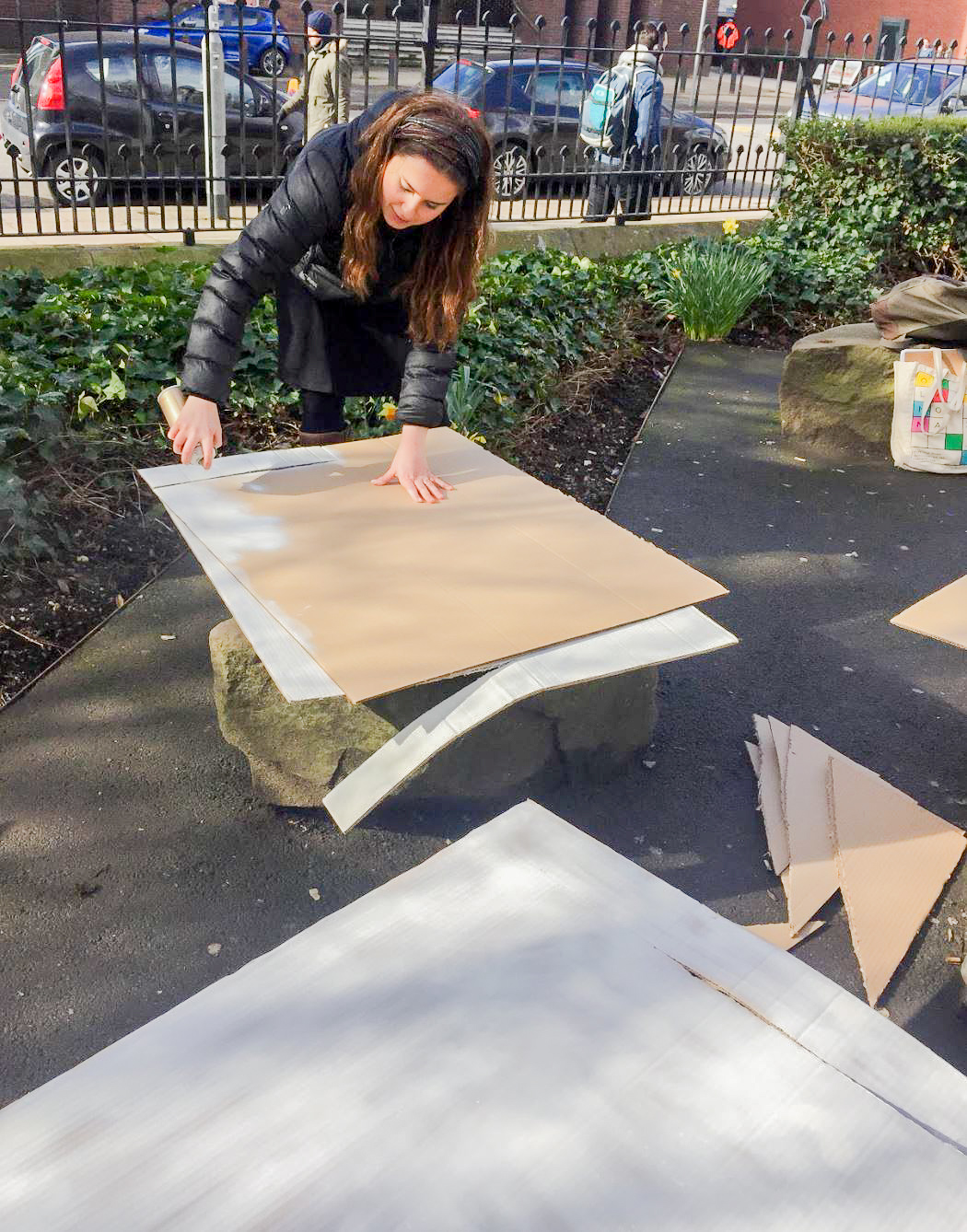
We wanted to try out this model on a large scale. Best and cheapest material to work with is cardboard. We needed to think logistically about the structural layout to make sure that the display doesn’t fall over at the event- that would be so unprofessional.

I was a little nervous about the event and the low budget materials we were using. There wasn’t much dialogue between us and the event coordinators letting us know what they expect and the standard of work they are looking for- they didn’t even ask about previous experience. I was worried that we would turn up and they would be disappointed with what we had created. I have learnt from this experience to just have confidence and do the best with what is available.

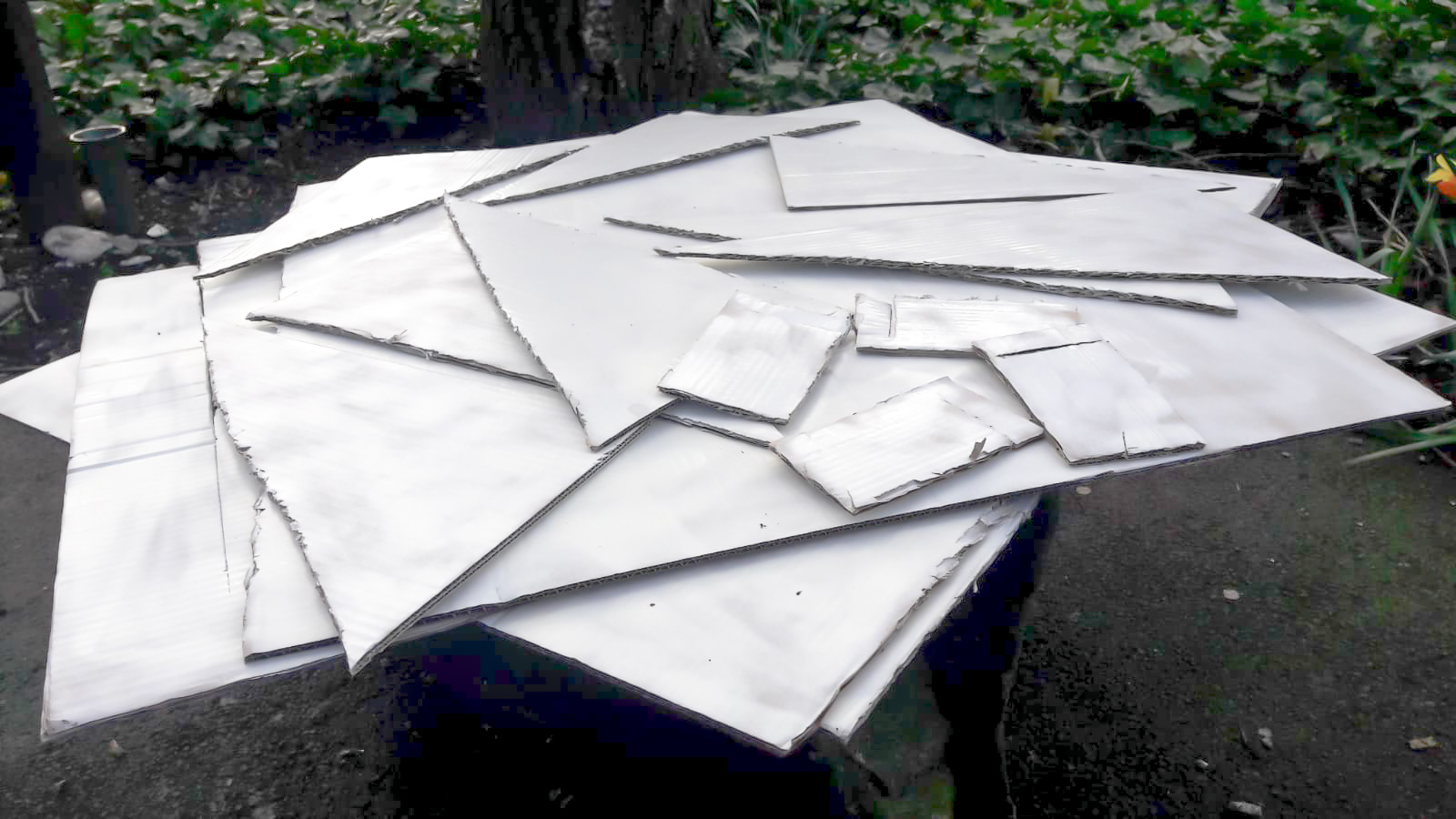
We wanted to create a finished look and get rid of the cardboard look.
My ideas was to use white spray paint as an underlay- this way it will be much easier to paint and will require less layers.

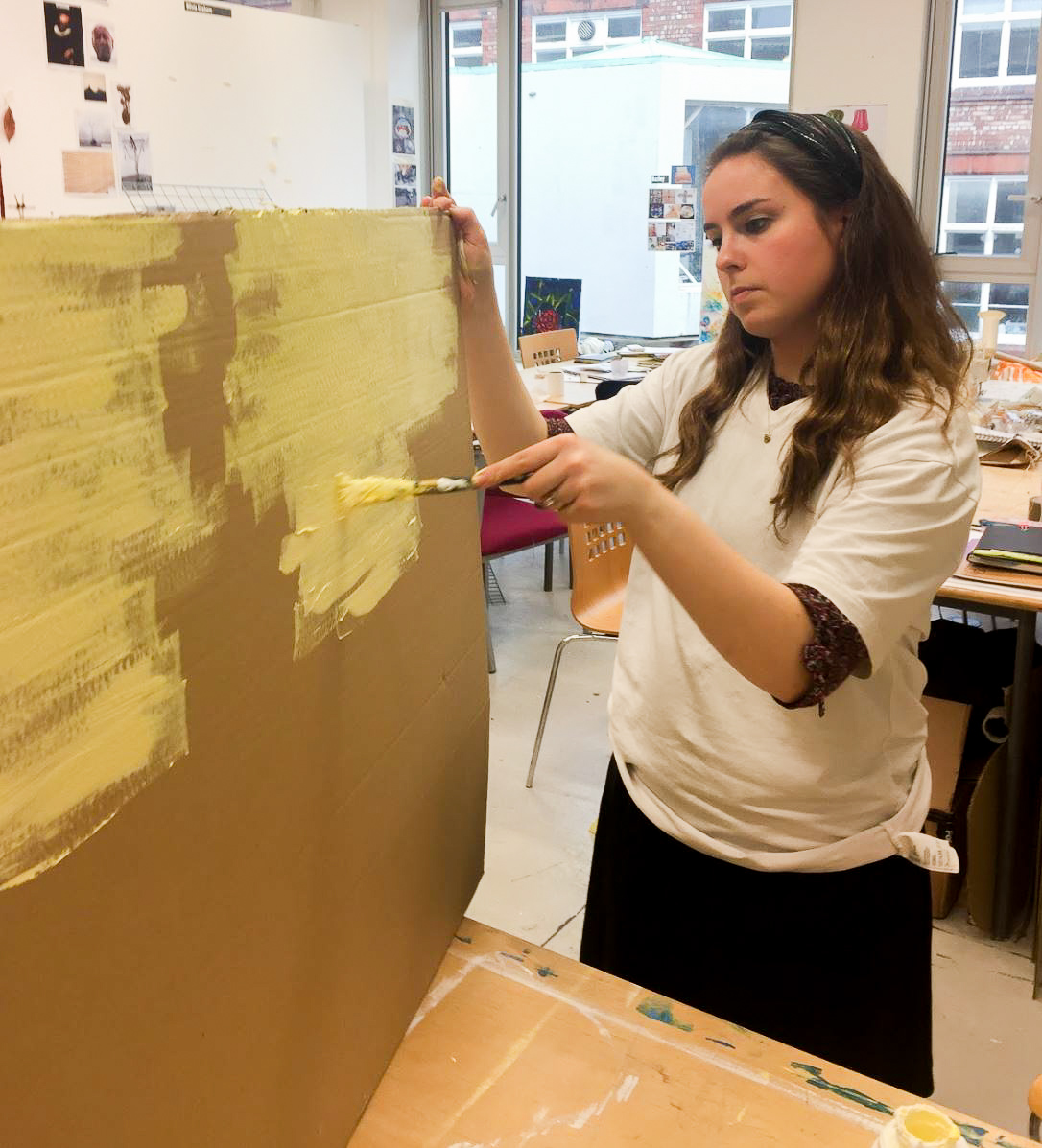
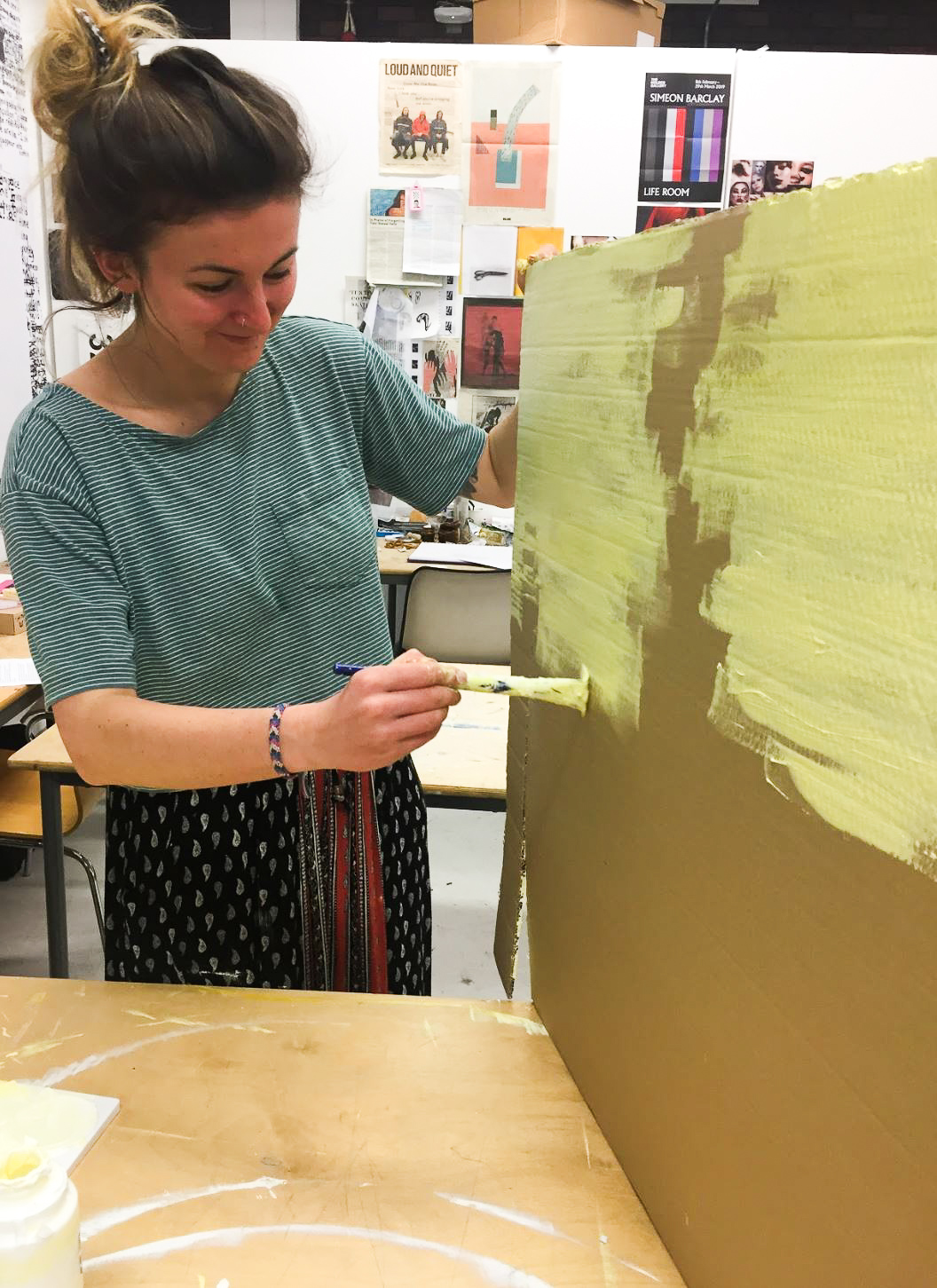
We decided to go for a bright ‘happy’ colour to bring out the colours that we had chosen for the cards.
We went for yellow- this worked out really well as it was bright and attractive, spark curiosity for people to come over and check out our activity.

And finally… the final display set up in the studio. I was happy with the outcome as the bright colours draw you in to immerse you in the activity.

WHO? WHAT? HOW?

PLANNING 

Proposal: 

Some of our initial ideas are as follows:

  • There will be scenario cards: Place, groups/individuals involved, situation, resources available etc.
  • The participants will pick a card of each element that builds a scenario of a potential opportunity where Arts for Health can take place. Visitors could add their own scenario cards to gather ideas for their real-life situations.
  • The aim of this is to then problem solve and come up with different ideas for Arts for Health projects, and initiating conversations on the subject.

           Example:

           The individual/group involved: School children
           Place: In a school
           Situation: A well-known teacher suddenly passed away overnight

           Resources: School Hall, playground,  piano and tambourines

  • There will be prompt cards that are given to match scenarios with research that could help direct and shape possible projects, such as scientific discoveries and different research based on how different methods of art practice has health benefits, ranging from mindfulness to proven studies of reduction of hormones that creates stress.
  • Each participant, whether they want to work individually or in groups, have the ability to problem solve and come up with different creative methods to implement Arts for Health into these scenarios.
  • The projects created will be displayed on the show for others to view, which we hope will encourage more people to take part in the workshop or even to create conversation and thought on the topics covered over the evening’s event.

The aim of this workshop is to encourage bringing Arts for Health processes and ideas into the participants’ lives which they can take away with them and choose if they want to implement these ideas and creative projects into their personal or professional lives.

Extra Idea:

We would also like to have two large boards, (paper or wipe boards) for visitors to write or draw into some sort of category describing how they are feeling, or their opinions on Art for Health as they arrive and again when they leave. Therefore seeing how the visitors’ feelings or views have changed over the events of the evening.

We decided to name the workshop: WHO? WHAT? How?

As the activity is focused on :
Who is involved?  What is the situation? How can we use the resources available to create an Arts for health project to help the participants? 


MAKING

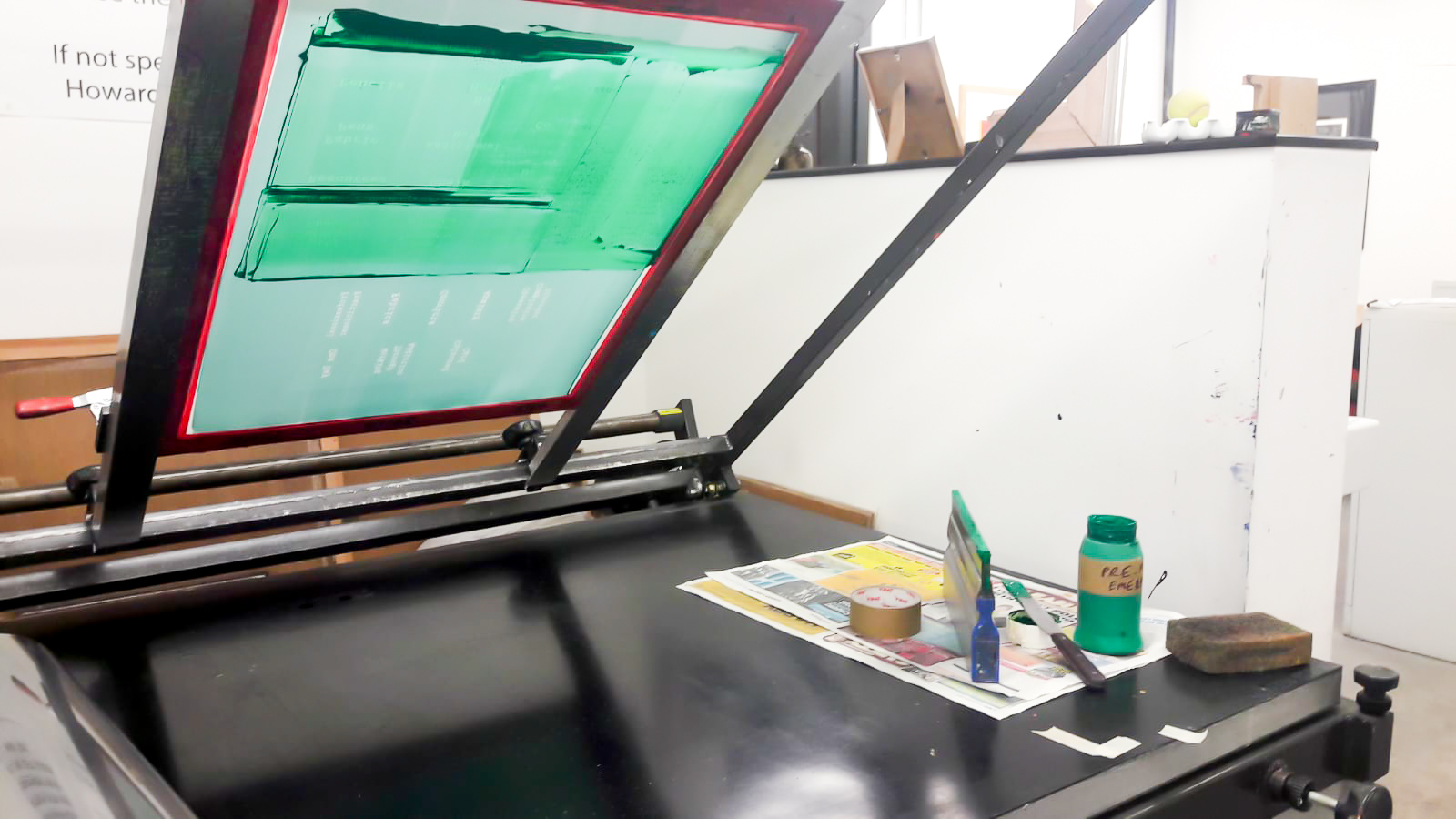
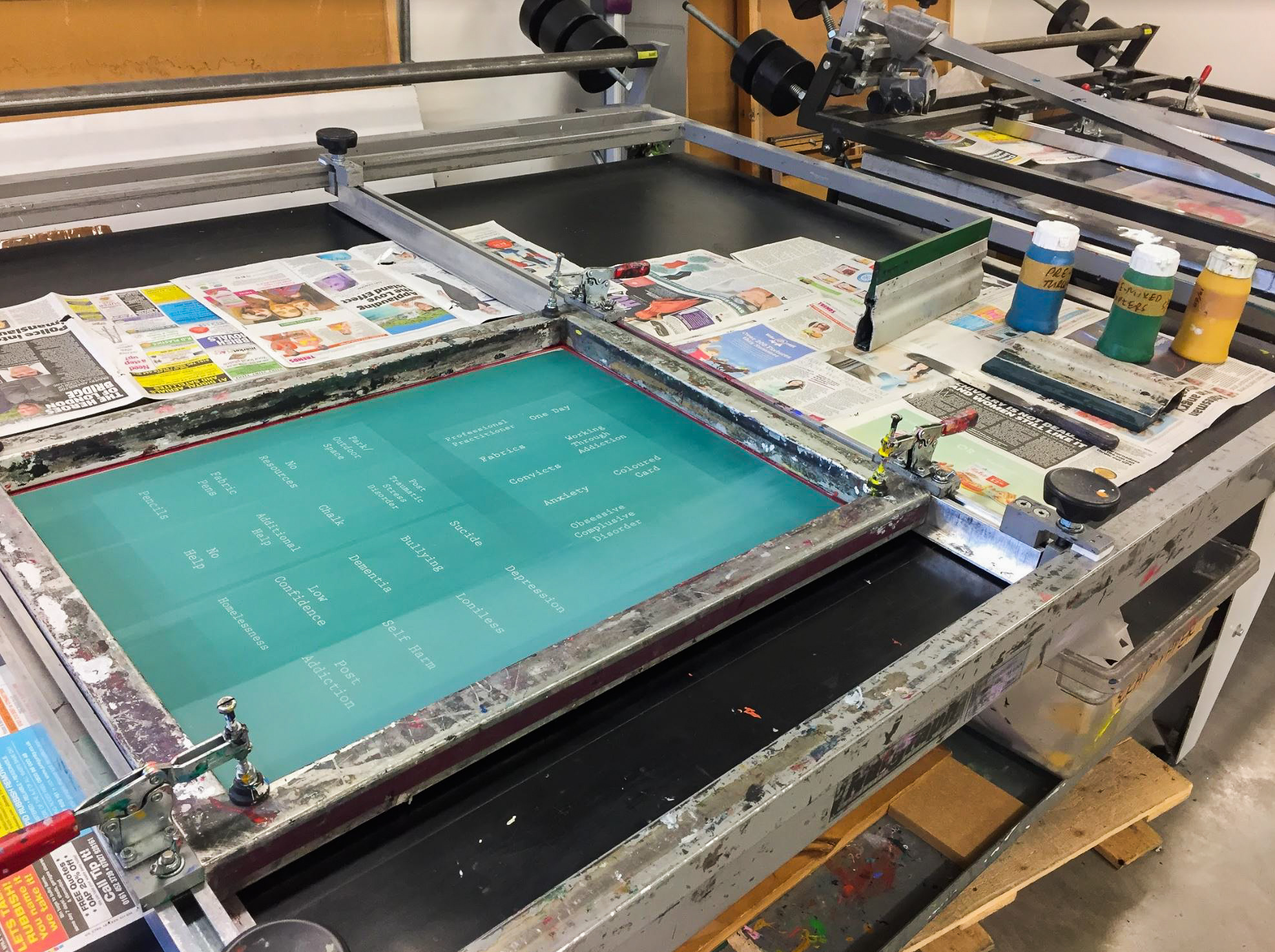
We decided we wanted to get creative and make the cards using screen printing. This was to ensure a good professional outcome to present at the Science and Industry event.

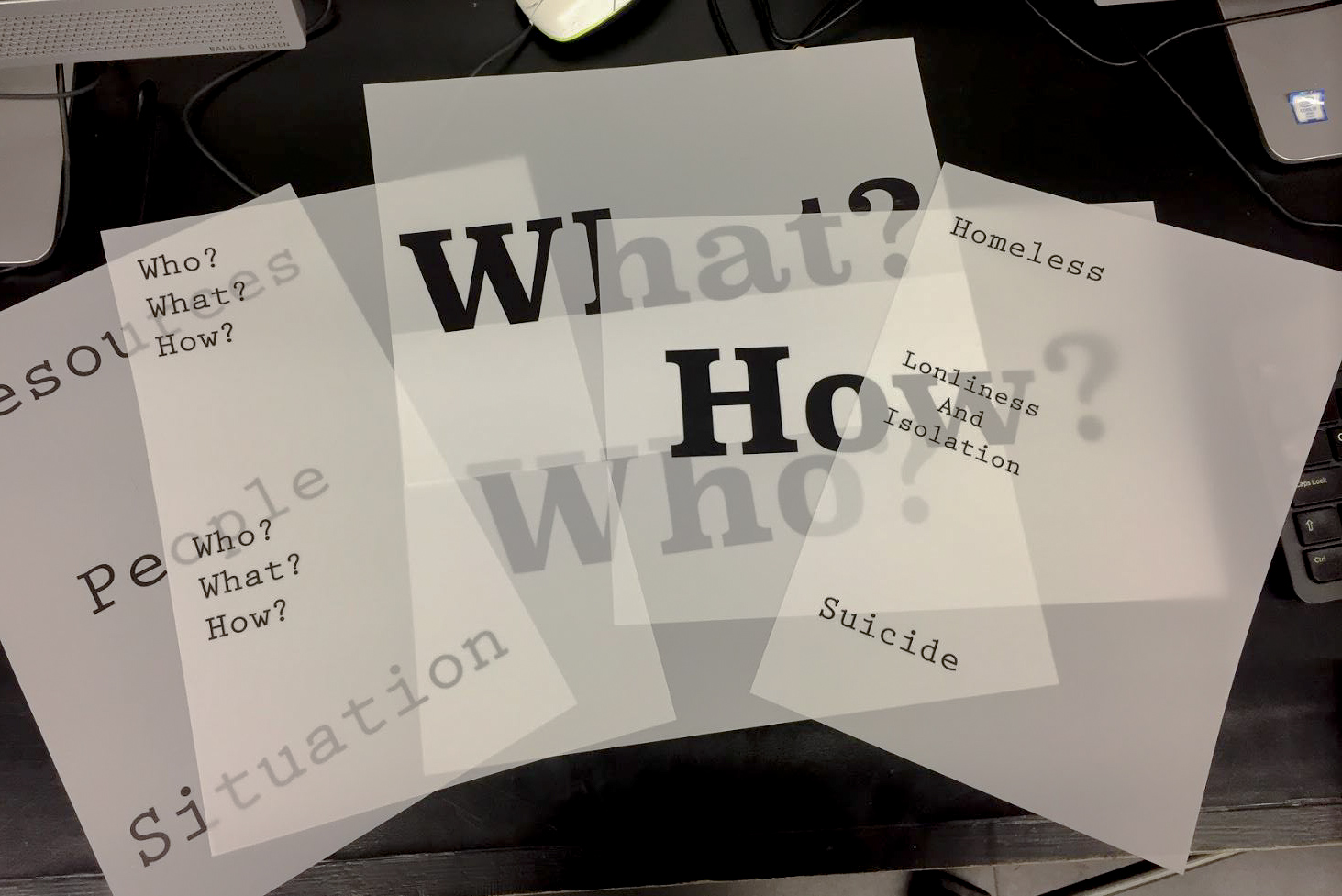
Below are images of the digital layout, printing onto transparent paper to be used to prepare the screens for screen printing.

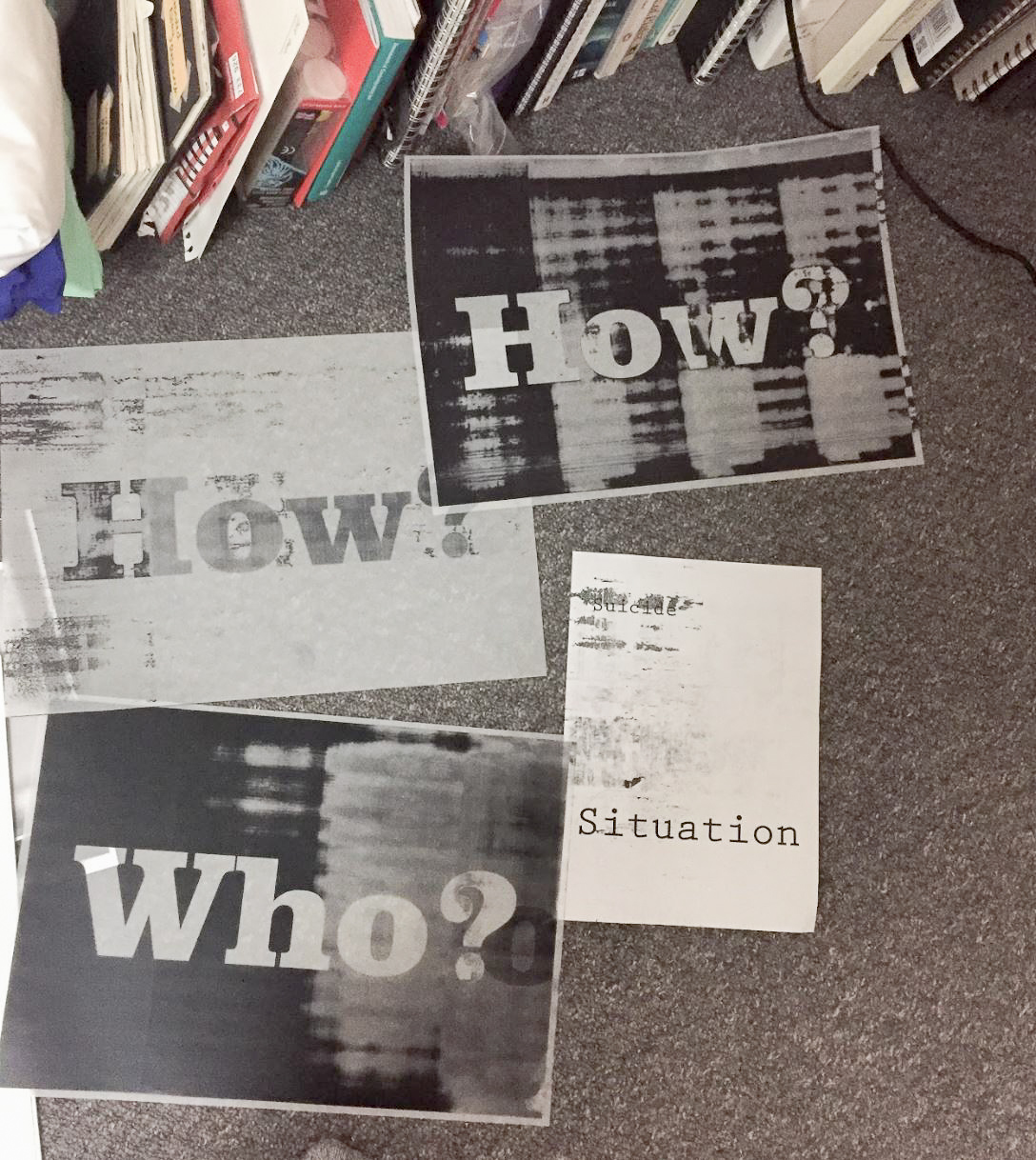
This went smoothly, but the printers printed some dodgy outcomes shown below which was unexpected and not pleasant to deal with when under time pressures. However because we were organised and working ahead of schedule this was easily resolved the next day. It was a good reminder that when doing any work, but specifically creative work, to give myself extra time to manage any unexpected slip up and delays that most likely will occur at any stage of the project. By staying organised it allows these mistakes and slip ups to happen without effecting the outcome of the work.

Making sure each card was going to be the same size was tricky to work out, but Freya managed to size up on the computer using a standard drivers license card size so when we cut each card out individually it will look well put together.

Freya and I had booked in to use the screen printing together, which would ideally allow us to achieve the same result in less time as two people are working on the project rather then one. However, this didn’t materialise how we imagined it would and I stood in and did as much as I could on my own as Freya couldn’t make some of the sessions. This was my first time screen printing and I really enjoyed the process and I hope to develop my skills and use screen printing for more projects in the future.

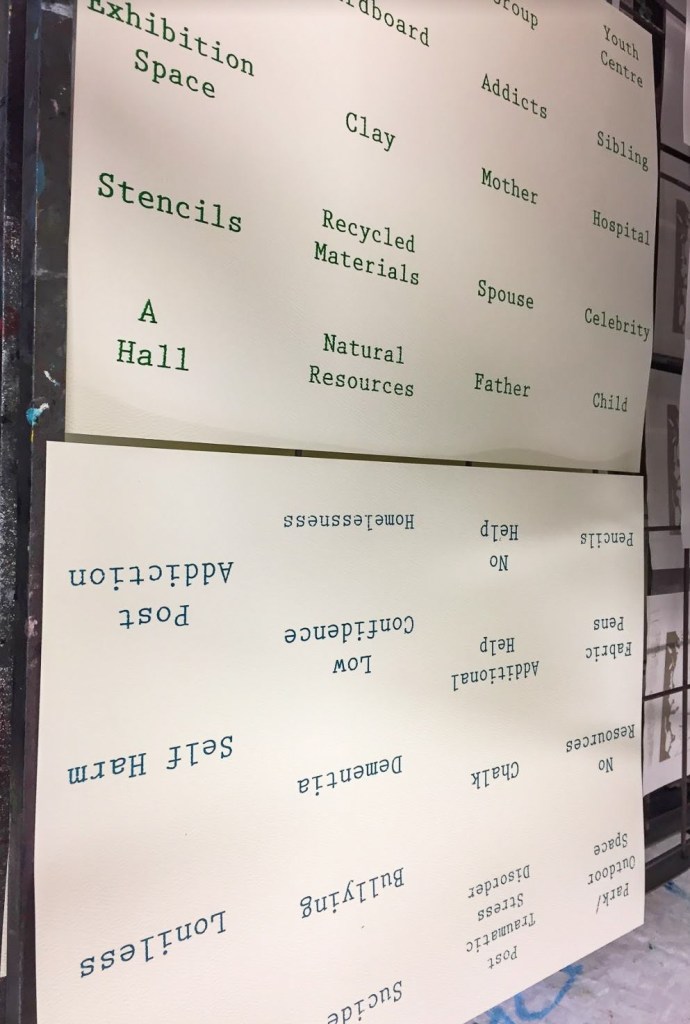
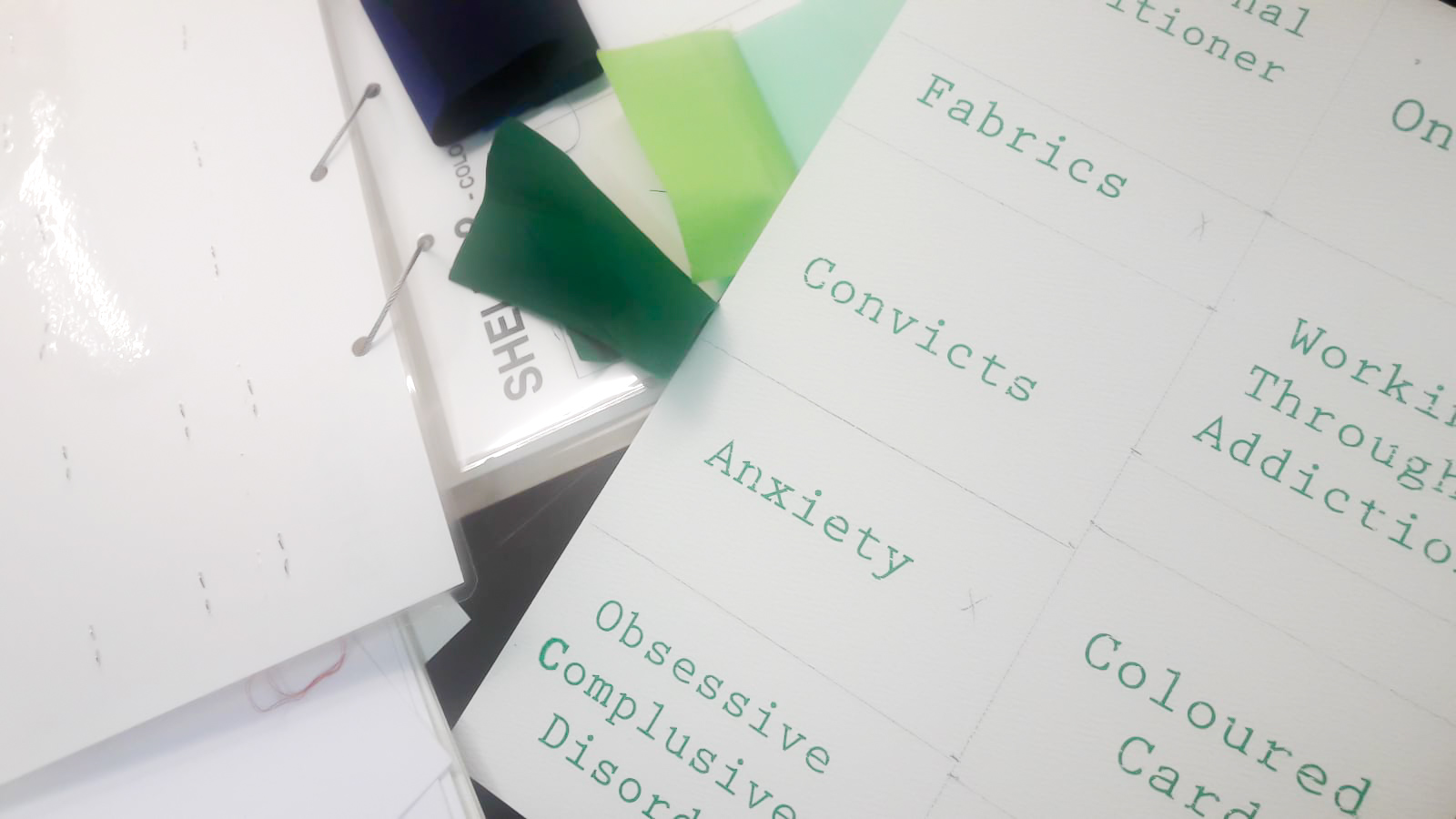
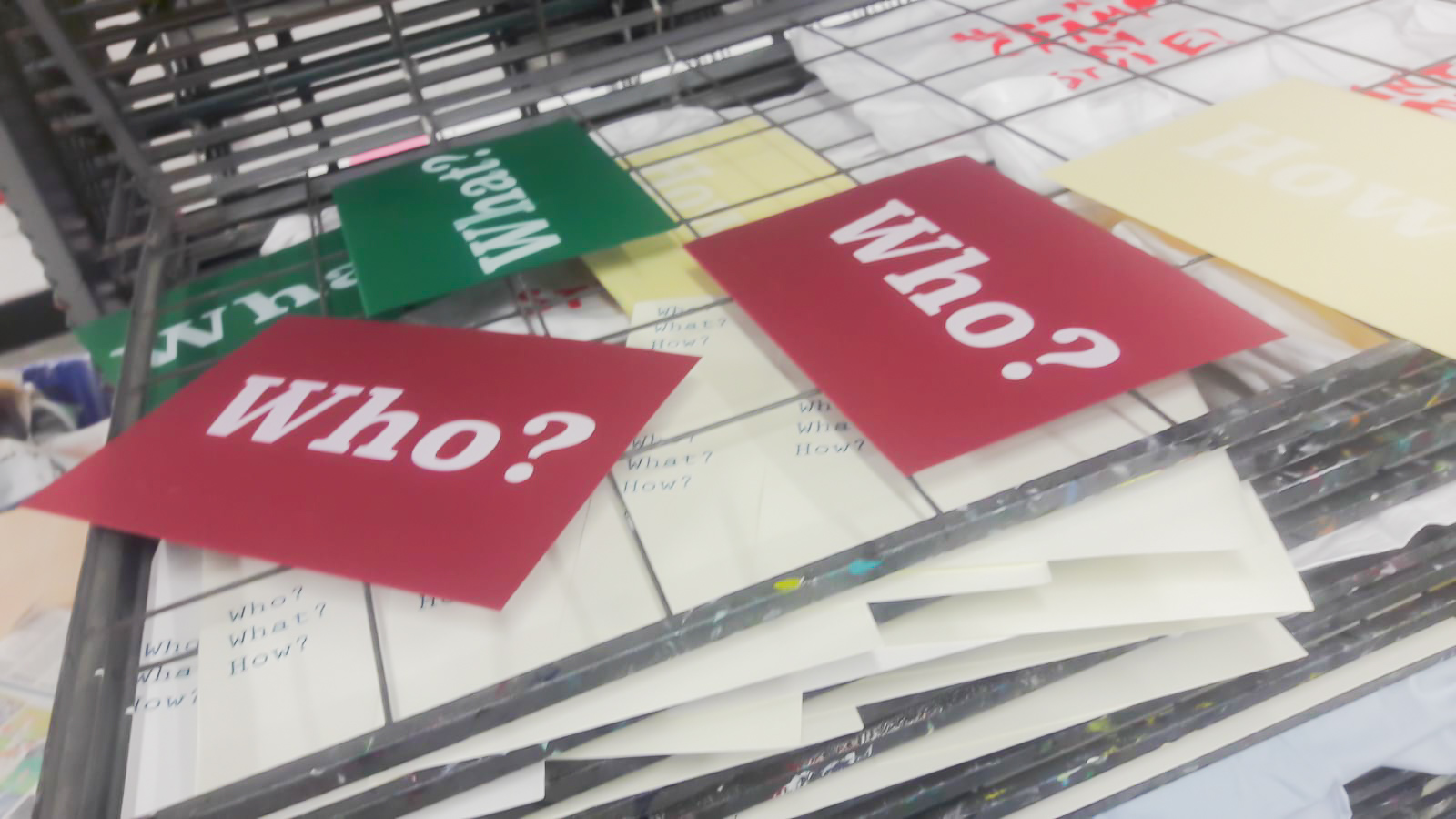
For the WHO? WHAT? HOW? and the different category cards we chose different colours that stood out and complemented each other.

WHO? – red
WHAT? -green
HOW? – yellow

Not all the grouped category words were on the same screen so I had to do a lot of repeated screen prints of the same screen in all the different colours to make sure each word was printed in the right colour for the right category. This was a learning curve to make sure for effective and quicker method to make sure that all the same category words are on the same screens and are all separate.

Whilst screen printing I noticed there were a couple of spelling mistakes and words that can be added or removed. This was a great spot as it would be embarrassing to have these types of mistakes when getting participants to have a go. Another learning curve when doing a collaborative project – make sure to check each others work when it is coming together to make sure that simple things like spelling mistakes can be avoided.

As you can see above, the colours we chose for separate categories WHO?WHAT?HOW?
At this point we were thinking about presentation and how we are going to display everything at the Late event to make it as inviting and engaging as possible.
I was looking into having different coloured table clothes/ or table runners to match the categories… This didn’t materialise as we found that even though it was eye catching – it was also distracting from the colours that stood out on the cards and the words that are the focus, not the colours of the display.

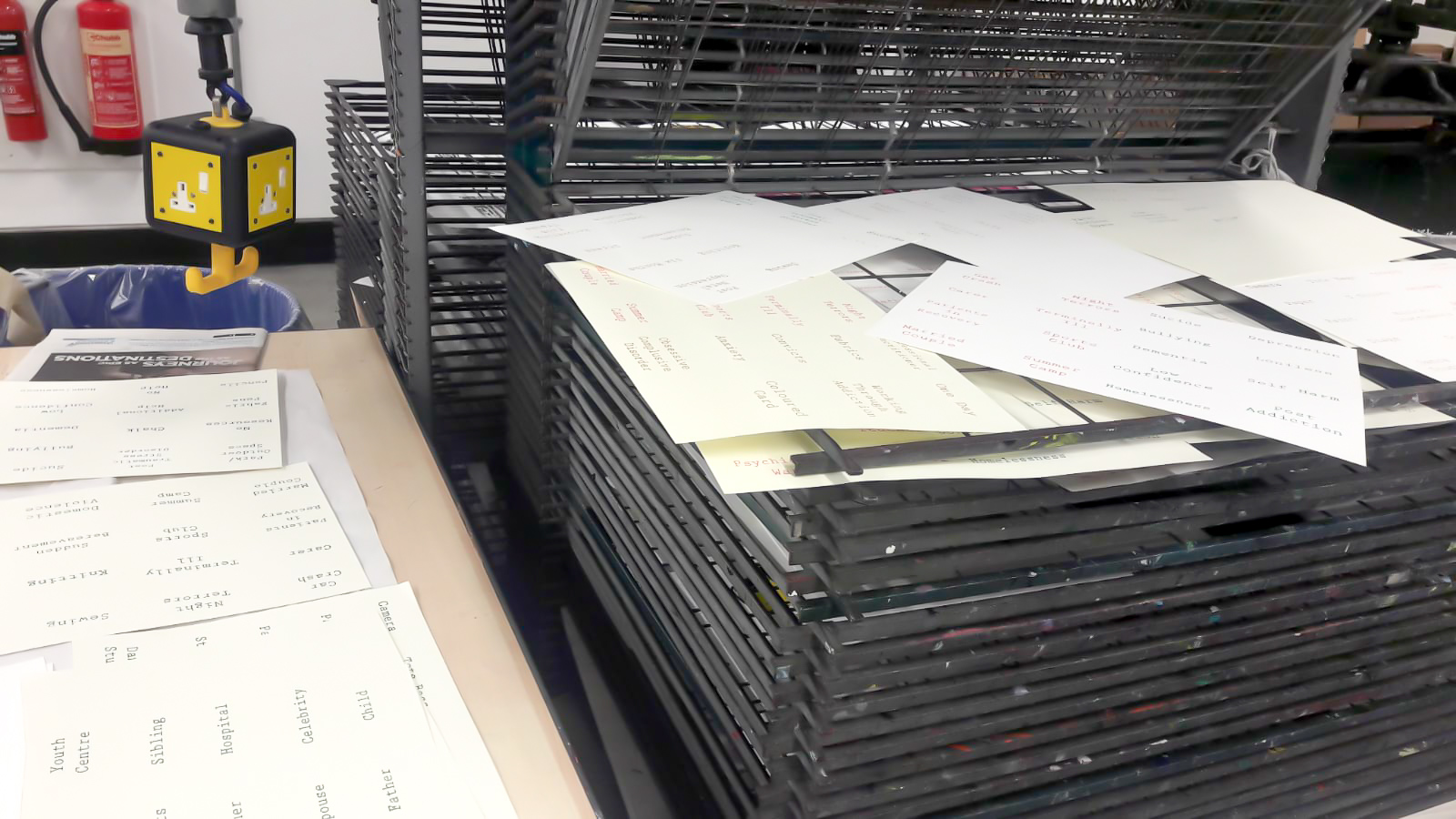
I screen printed the cards on two different types of card: white and cream. This was because I couldn’t decide which one to stick with, so I tried both. This was a good way to present the screen prints to Freya so we could decide together which work better.

This also ended up being a huge benefit as we ended up with two ‘decks’ of cards, meaning we had a backup ‘deck’ to rely on in case we needed it.

Below are the ‘decks’ of cards:

What is arts for health?

I have always had a growing interest in how the arts can be used for health and well being. Over the course of my degree I have decided that I would like to develop myself and my experience to further my studies later on in life to apply to study a post graduate degree in Art therapy.

why?

In second year during Interactive arts, Clive Parkinson, the director of Arts for health came to speak to us to introduce his work and introduce us to Arts for health. This was a field of work that I had never come across before and this sparked an interest and curiosity within me to want to find out more. Arts for health and Art therapy are different practices. They cross over one another, however to practice Art therapy you need to study a masters and become fully qualified to help vulnerable individuals through a counselling therapeutic role. Arts for health differs from this as it is a practice that uses the arts in projects and groups within different health settings. This is a field of work that I want to explore more of…

That’s why the project is called ‘exploring arts for health‘ as its purpose is for me to go on a journey of learning and discovery, finding out about arts for health along the way, as well as gaining experience and networking with organisations and professionals.

Links of research to refer to:

http://www.art.mmu.ac.uk/profile/cparkinson

https://www.psychologytoday.com/gb/blog/arts-and-health/201807/art-therapy-it-s-not-art-class

http://www.artsforhealth.org/resources/VAE_Restoring_the_Balance.pdf

http://www.artshealthandwellbeing.org.uk/what-is-arts-in-health

https://www.nhsconfed.org/-/media/Confederation/Files/Wales-Confed/Literature-review-of-arts-and–health-and-wellbeing.pdf

Science & Industry Museum: Arts and Health: Late

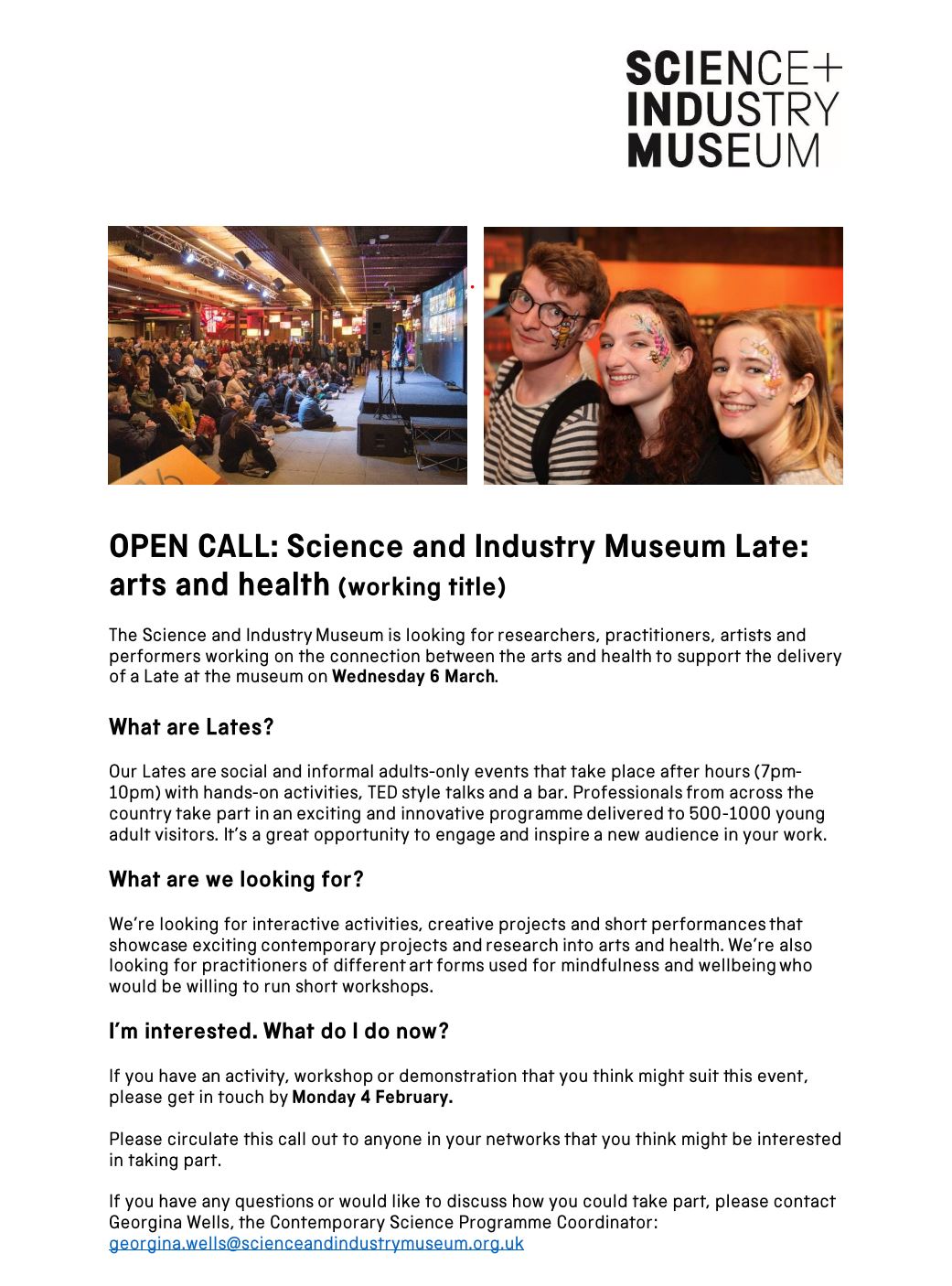
During the early stages of UNIT X, I was forwarded this open call for creatives who are interested in being a part of Late event evening organised by the Science and Industry museum.

This email instantly grabbed my attention as I am extremely interested in Arts for health and I would like to work within the field and further my studies after university in Art therapy.

Freya Gundry, a Fine Art student in 3rd year at MMU, who I met on educator unit X in 2nd year, is also passionate about Arts for health and we were keen to collaborate with this project. This was a great opportunity to collaborate, as I know from previous projects working together that we share common goals and aspirations. We are both driven by genuine desire and curiosity to learn more and get to know Arts for health. I have learnt over the past few years of my interactive art degree that I work the best in a collaborative project with like minded individuals.

Working collaboratively helps to develop and stretch project direction and possibilities as you can:
-Bounce ideas off each other
-share and learn skills
-Broaden understanding and perspective
-critically analyse and get constructive feedback

After receiving the email, and deciding to collaboratively work together, we both did some ideas planning of what we could bring to this event. What proposal ideas did we have? The deadline for the proposal was coming up fast and we needed to think of something on the spot. This was a great way to improvise and go with the phrase “got nothing to loose”. We came up with a workshop to engage participants on the question:

What is Arts for Health?

This was the proposal email I sent:

Tamara Gold <tamaragold95@gmail.com>Jan 29, 2019, 3:02 PM
to georgina.wells, Freya

Hello Georgina,

We have seen the call out for artists for the ‘Arts for Health evening’ at the Late event taking place at the Science and Industry museum on the 6th March, and we have a workshop activity we would like to propose to you as we would love to be a part of this fantastic event!

We are Freya and Tamara, currently in our final years at Manchester school of art, studying fine art and interactive art.

We would love to find out more information about the event, but our ideas so far is to create an interactive problem-solving game that participants can take part in any time during the event. The activity will focus on collaboration and conversation on Arts for Health practice and how it can be implemented in personal and professional lives.
Some of our initial ideas are as follows:

  • There will be scenario cards: Place, groups/individuals involved, situation, resources available etc.
  • The participants will pick a card of each element that builds a scenario of a potential opportunity where Arts for Health can take place. Visitors could add their own scenario cards to gather ideas for their real-life situations.
  • The aim of this is to then problem solve and come up with different ideas for Arts for Health projects, and initiating conversations on the subject.

           Example:

           The individual/group involved: School children
           Place: In a school
           Situation: A well-known teacher suddenly passed away overnight

           Resources: School Hall, playground,  piano and tambourines

  • There will be prompt cards that are given to match scenarios with research that could help direct and shape possible projects, such as scientific discoveries and different research based on how different methods of art practice has health benefits, ranging from mindfulness to proven studies of reduction of hormones that creates stress.
  • Each participant, whether they want to work individually or in groups, have the ability to problem solve and come up with different creative methods to implement Arts for Health into these scenarios.
  • The projects created will be displayed on the show for others to view, which we hope will encourage more people to take part in the workshop or even to create conversation and thought on the topics covered over the evening’s event.
The aim of this workshop is to encourage bringing Arts for Health processes and ideas into the participants’ lives which they can take away with them and choose if they want to implement these ideas and creative projects into their personal or professional lives.
Extra Idea:

We would also like to have two large boards, (paper or wipe boards) for visitors to write or draw into some sort of category describing how they are feeling, or their opinions on Art for Health as they arrive and again when they leave. Therefore seeing how the visitors’ feelings or views have changed over the events of the evening.

Let us know what you think! We would be happy to meet you and discuss further if you are interested.

We would love to be a part of the evening!

Many thanks,

Freya and Tamara

We were fortunate to be a successful proposal and fully suitable for the event and what they were recruiting.

This very spontaneous proposal and project application for the event, after having no background work on Arts for health and workshops, gave me confidence and excitement that I had the creative ability to apply for projects like this in the future and not to hesitate! You never know until you try.

Blog at WordPress.com.

Up ↑