This workshop was delivered to a year 8 group of 13 pupils.
I was informed that this group has low level of ability and are challenging with their behaviour.
I designed this workshop as I was exploring family and identity in my personal practice, working with fingerprints.
Each finger print is unique to each individual, and says a lot about who they are.
This workshop is based on identity and self confidence. Who are you?
Celebrating your uniqueness. This is an important arts for health workshop as young people are faced with a lot of pressures, especially on social media, to fit in. I designed this workshop to explore with the students what makes them unique and different – which is something to be proud of.
The teacher mentioned to me that during the term they had been doing a project themed on superheros. I introduced the class to try and tie their superhero theme with the workshop.
Each superhero has their own unique identity and makeup building who they are as an individual. In this lesson we are going to explore what makes you! what is your make up? your unique individuality?
AIMS & OBJECTIVES
Aims: To explore what makes you unique and individual and “what makes you you?”
Objectives: Thinking of different questions and answers and creating your own fingerprint made up of all the answers and design that makes a visual representation of you and your identity through your fingerprint.
This is my tests to see how the activity will work?
My scanned fingerprint
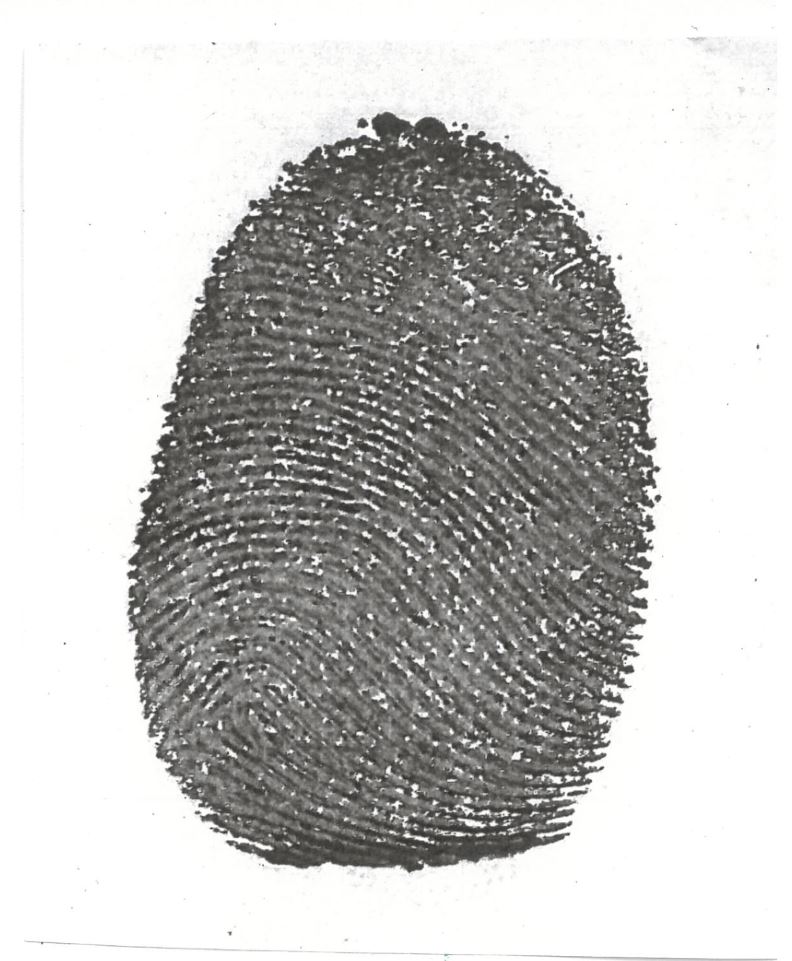
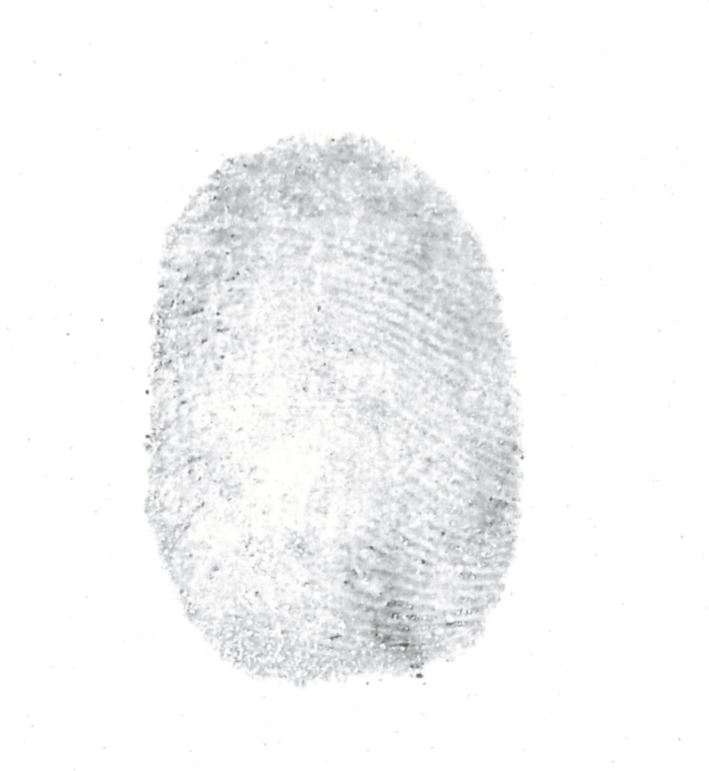
Testing out different coloured inks to see which photocopies the best

Then using tracing paper to write over the lines and answering different questions about myself.
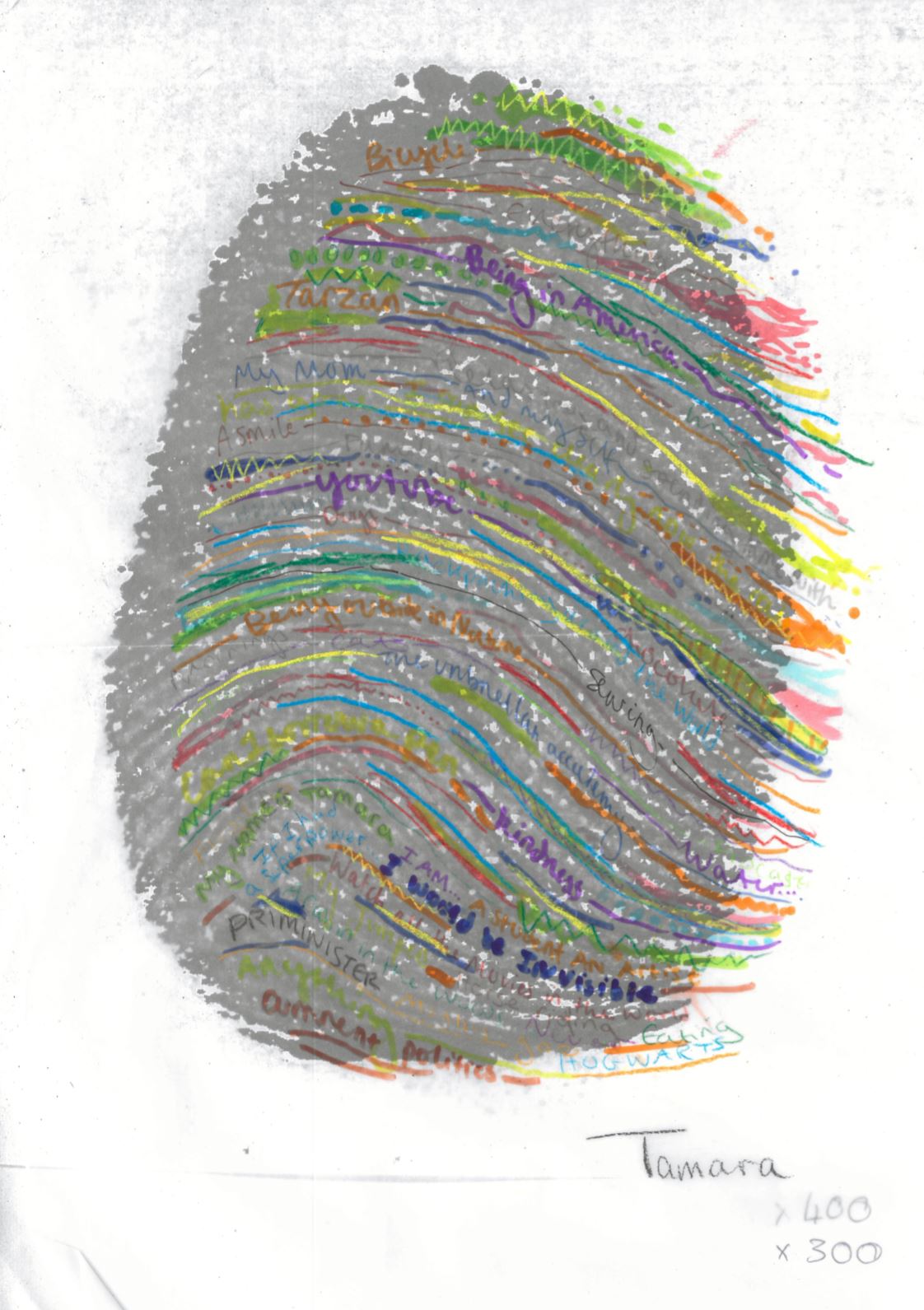
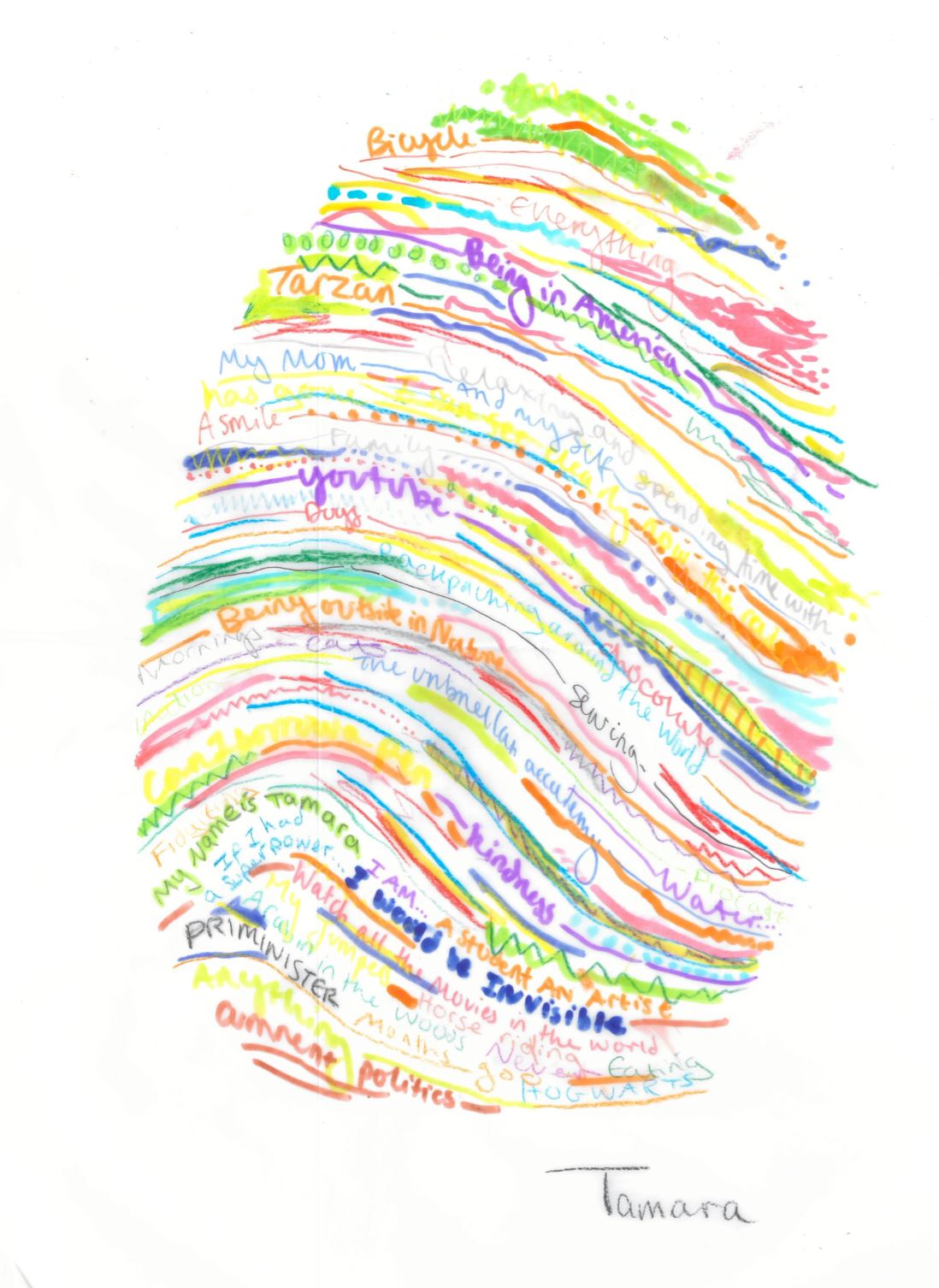
Whilst lesson planning, the head of art department advised me that with this specific group- it is important to make the activity into game, to help keep them engaged and interested, which will help to manage their behaviour.
Plan:
1.Students enter the class and before they sit down – take a print of their fingerprint to photocopy and enlarge on the scanner.
2.Whilst the prints are being enlarged and printed for the workshop, Introduce who we are, and what is arts for health.
Young people can struggle with who they are and their identity, growing up and figuring out who they are. This workshop is to explore this and creatively design a finger print of who you are.
3. Ask the pupils to answer all the questions on a separate piece of paper so they have all their answers ready for when their fingerprint is printed out.
Fingerprints
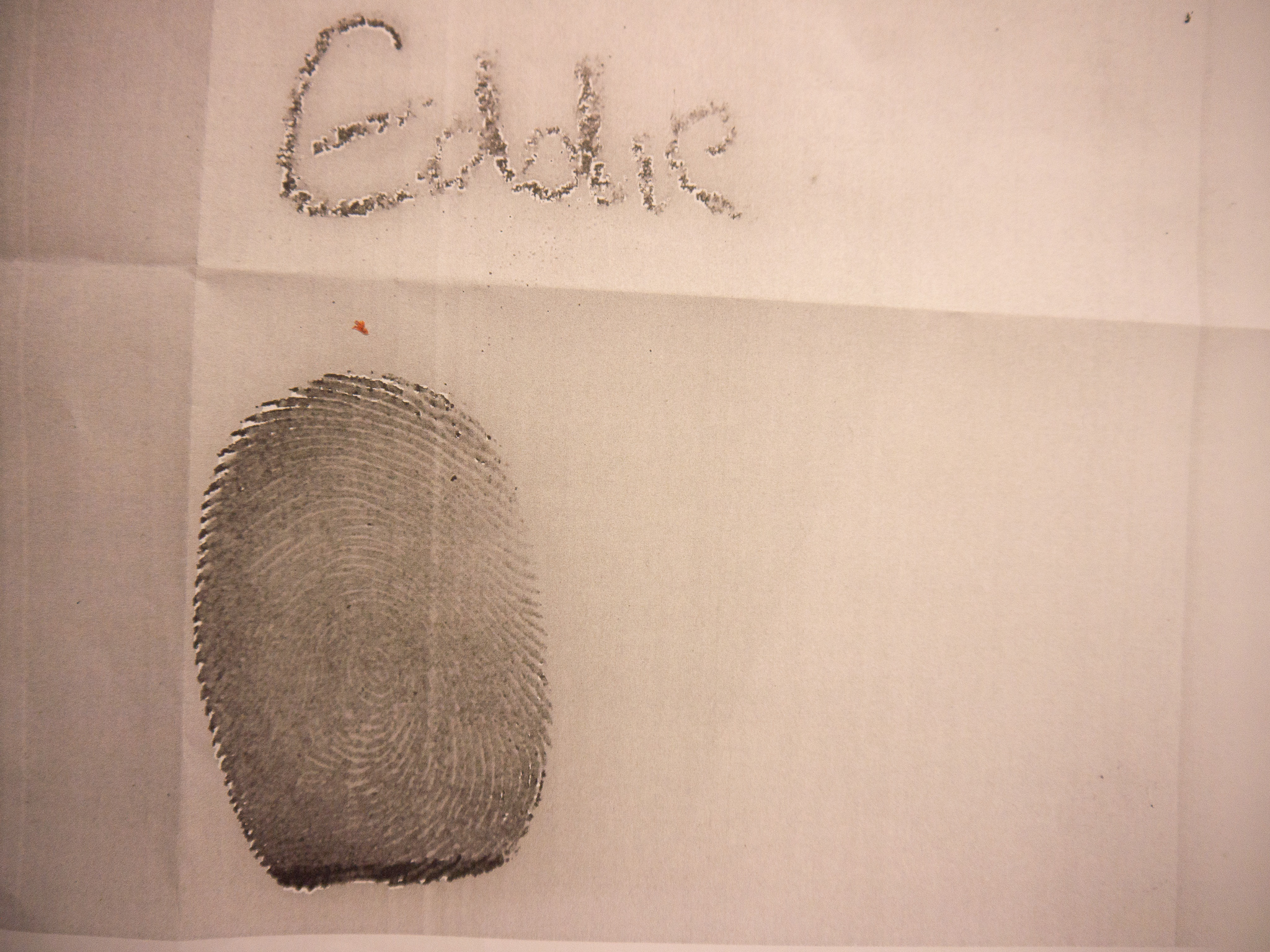
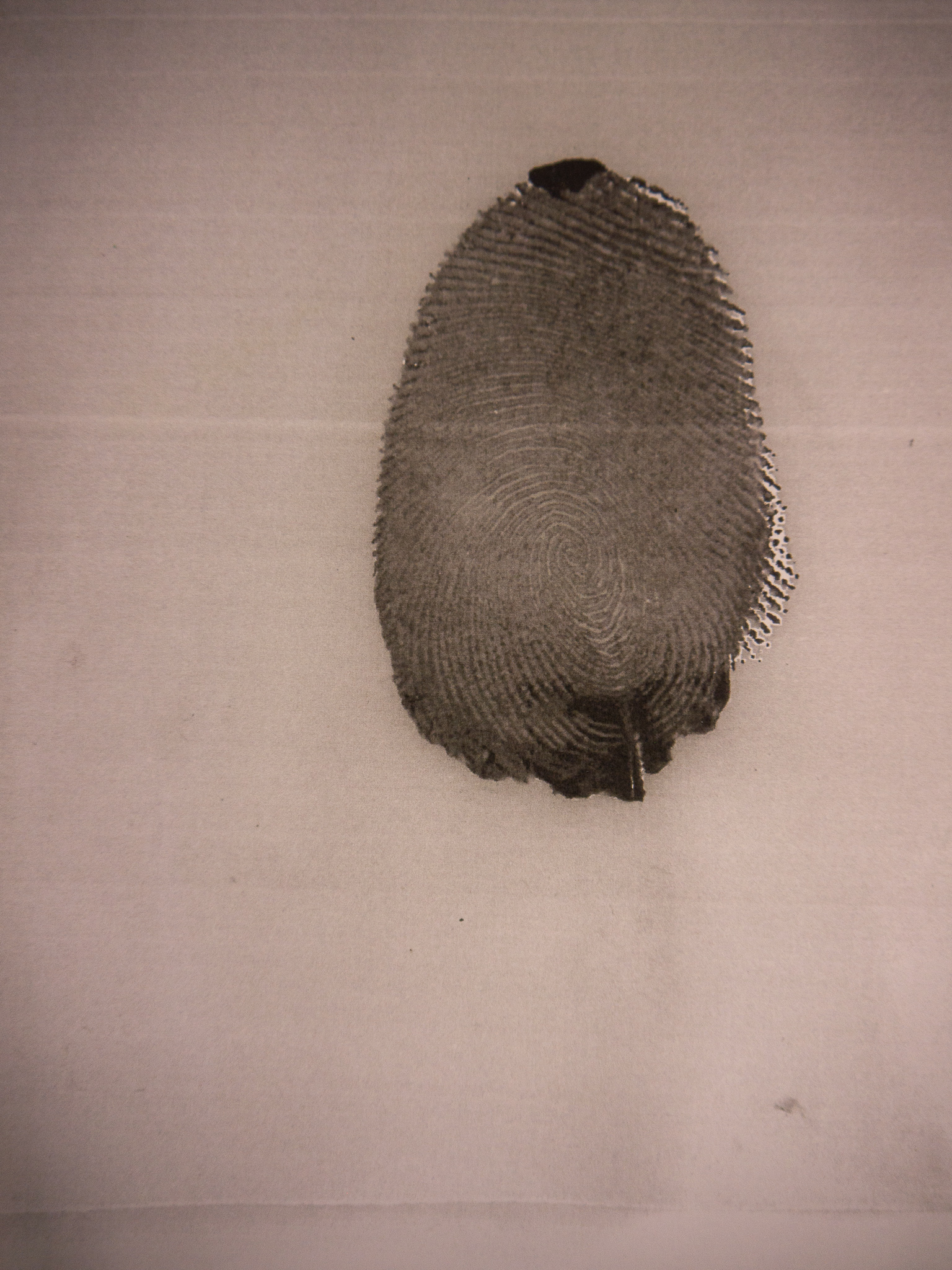
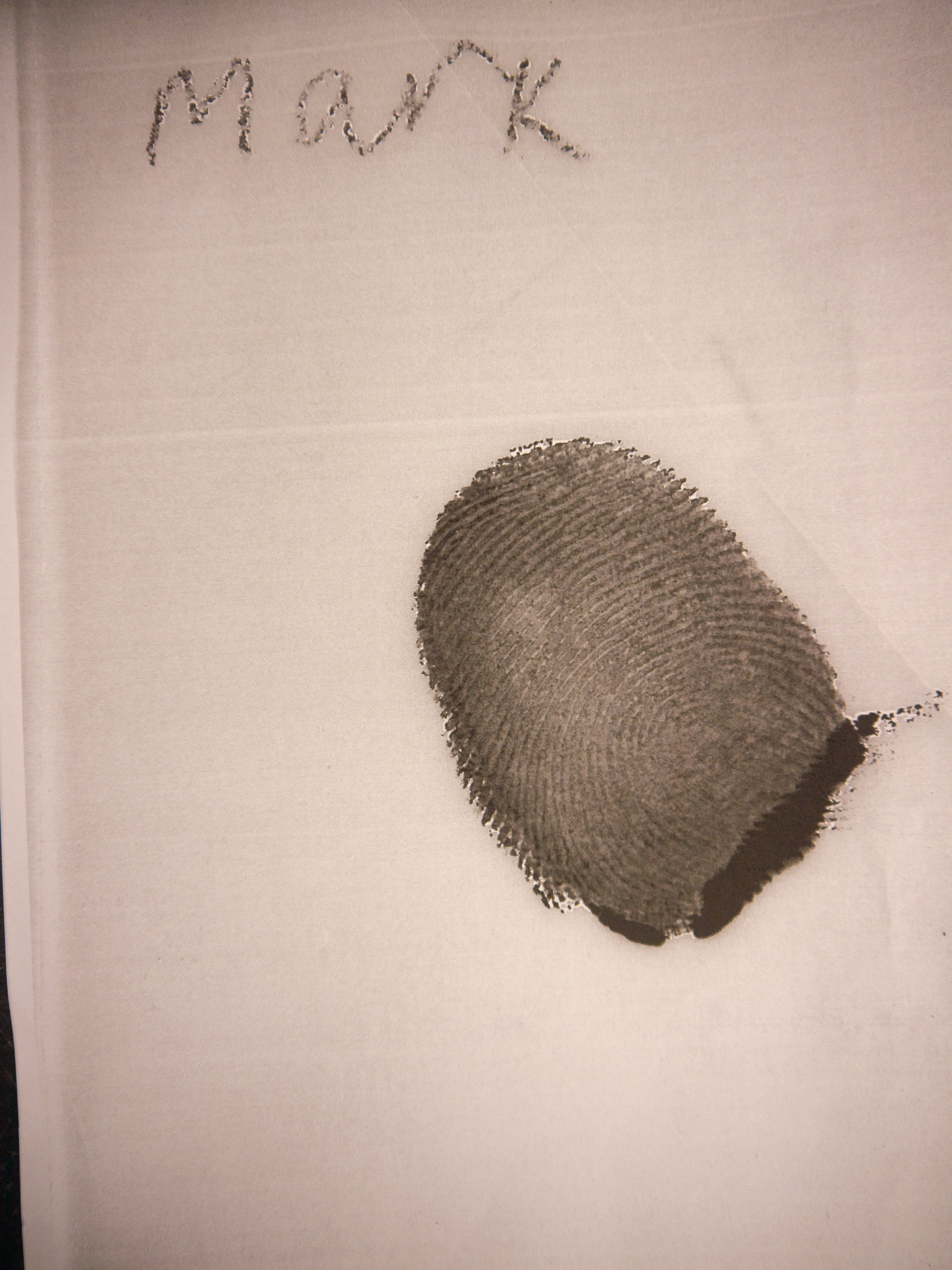
Questions:
-what is your name?
-How old are you?
-What is your favourite subject?
-What are your hobbies?
-If you were a superhero who would you be?
-What would your super power be?
-What is your favourite song?
-Write some of the lyrics
-What is your favourite piece of clothing?
-If you could go on holiday, where would you go?
-What is your favourite sport?
-What is your dream job?
-What skill would you like to master?
-What’s your favourite food?
-What’s your favourite movie?
-What is your signature?
-What small things make your day better?
-When is your birthday?
-What are you most looking forward to during the holiday?
-Whats the best thing that has happened to you this year?
-If you won the lottery, what would you buy?
-Where were you born?
-What are your talents?
-Do you have any pets?
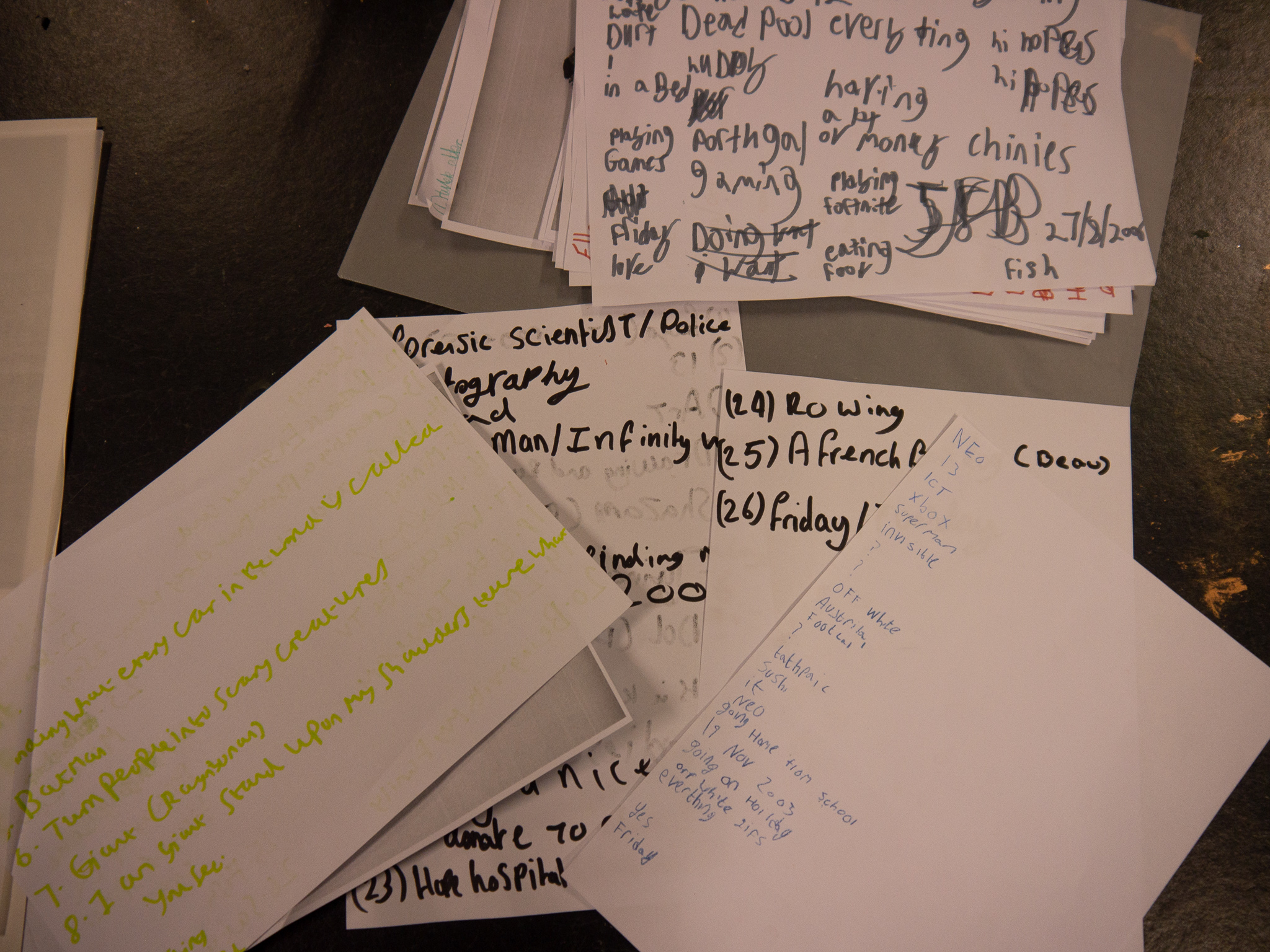
Once all the fingerprints had been copied and enlarged, the students placed tracing paper over the top and started to decorate their fingerprints using their chosen colours and writing their answers along the lines of the fingerprints.
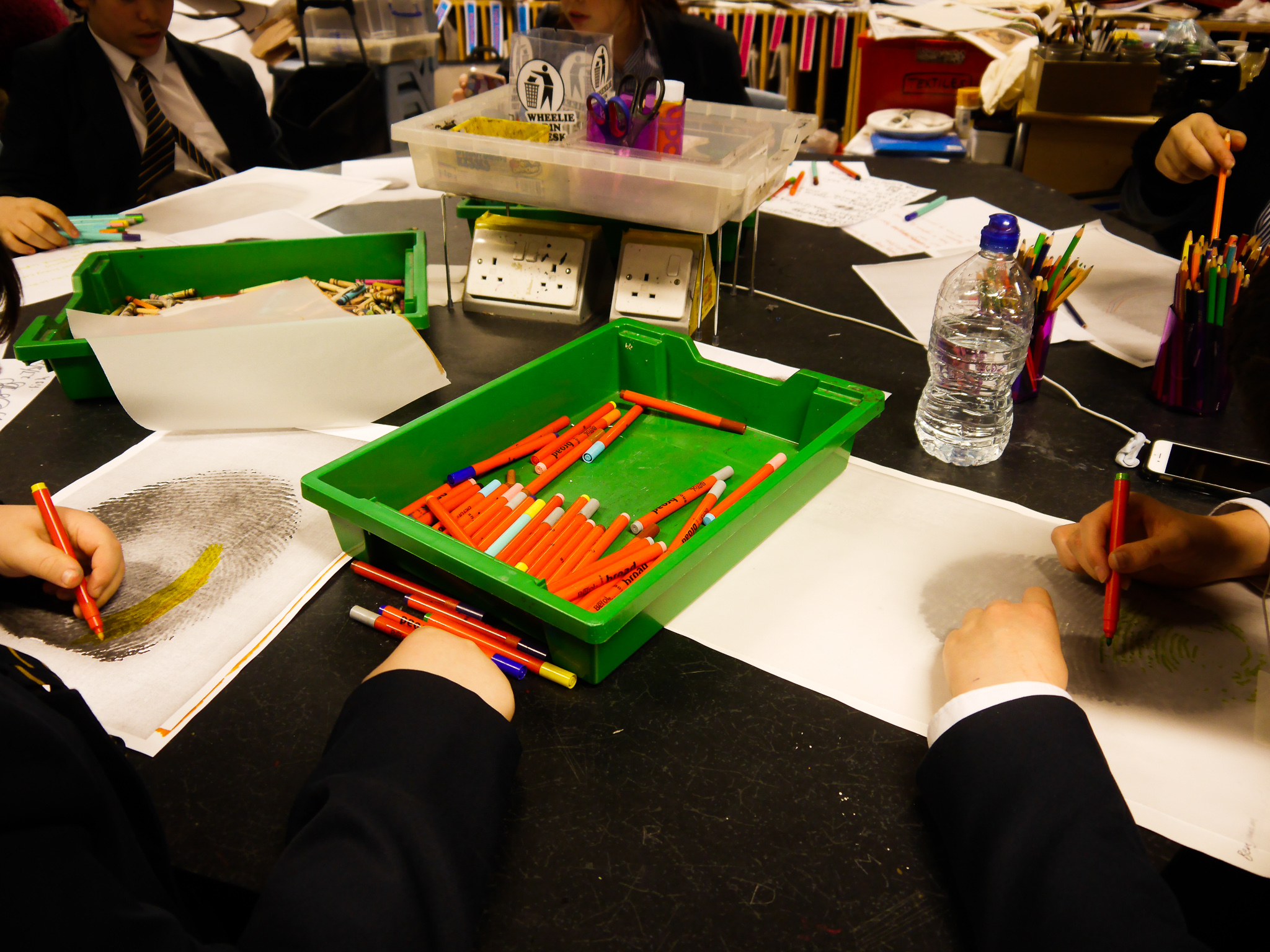
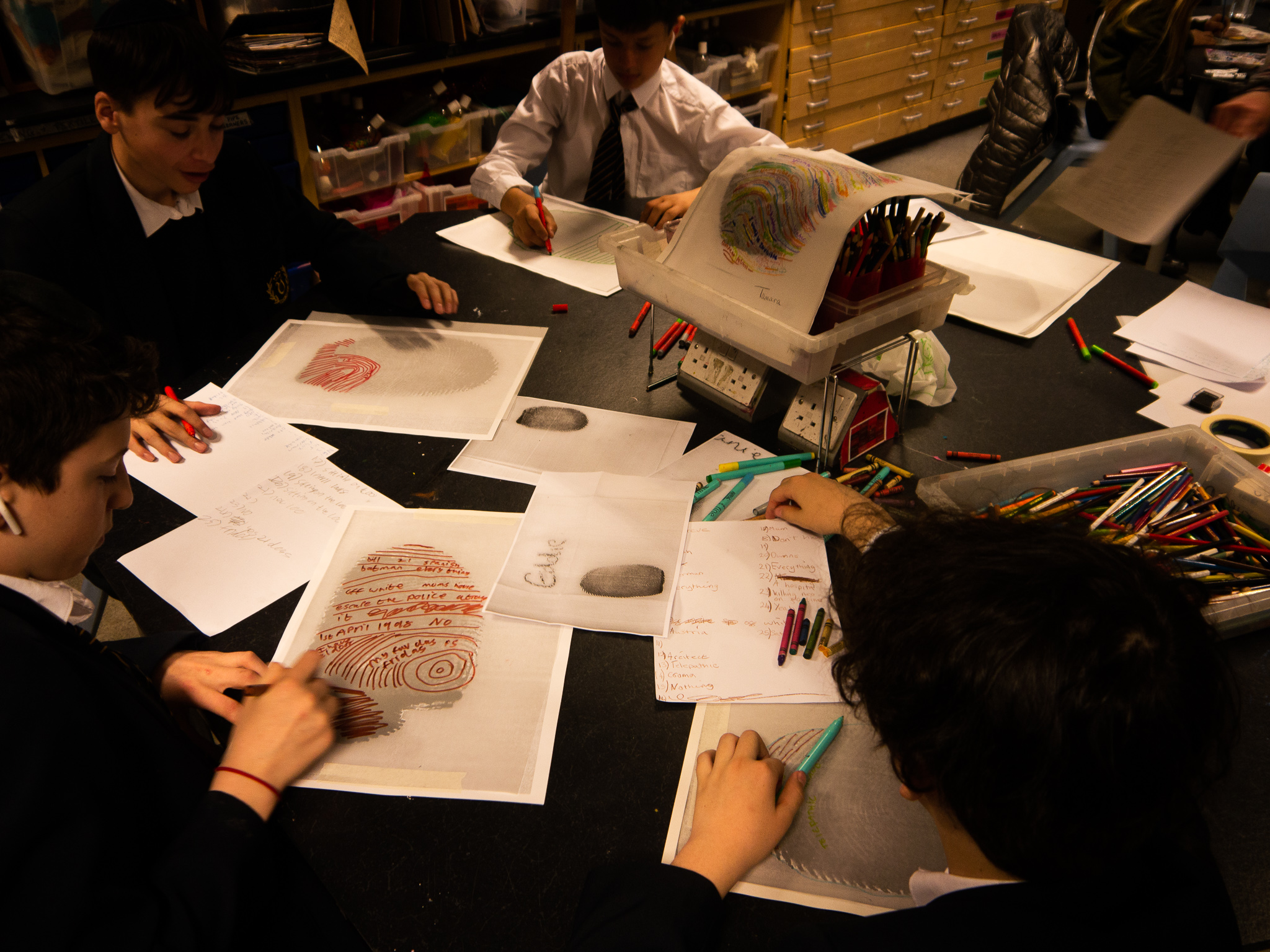
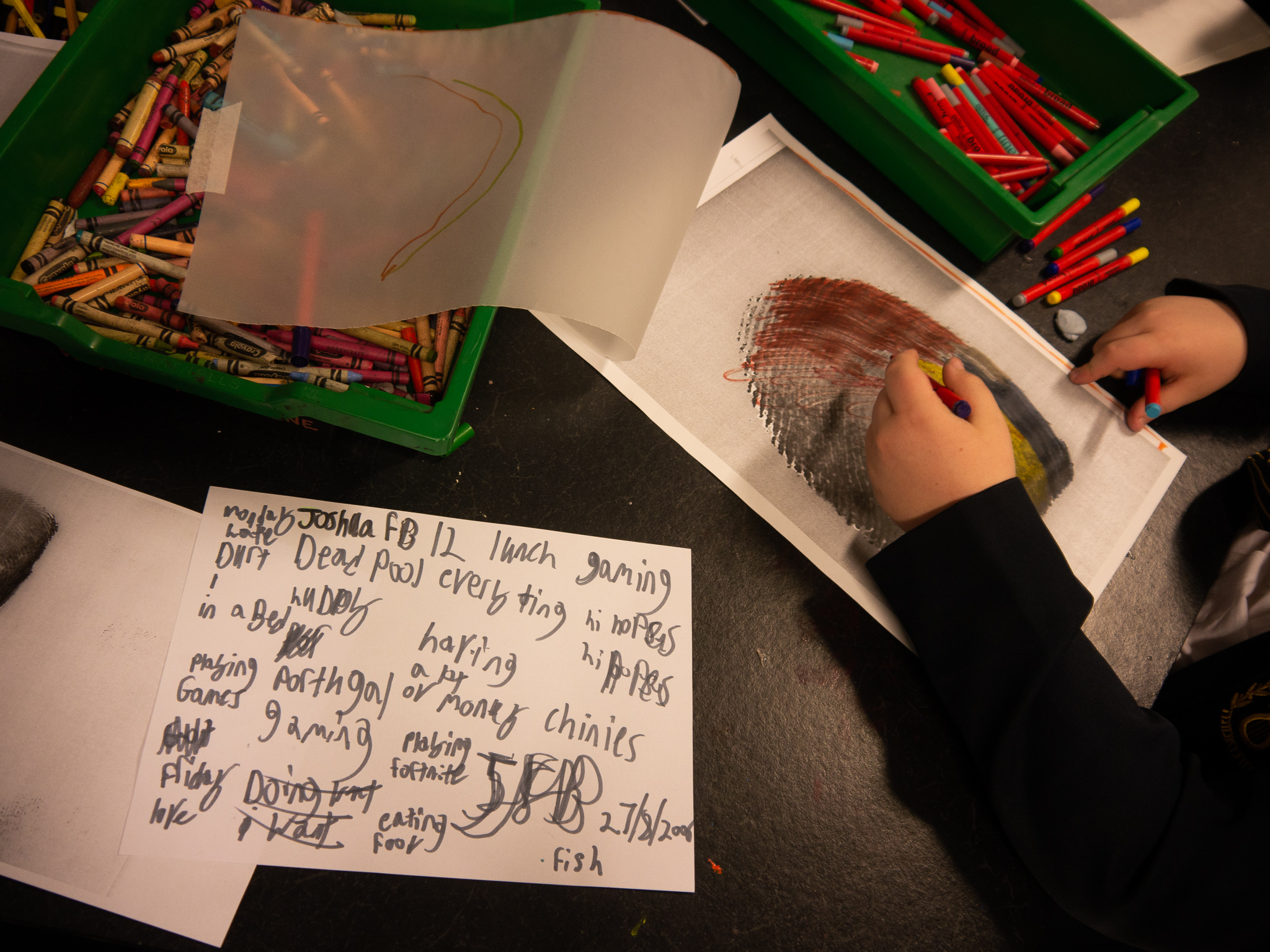
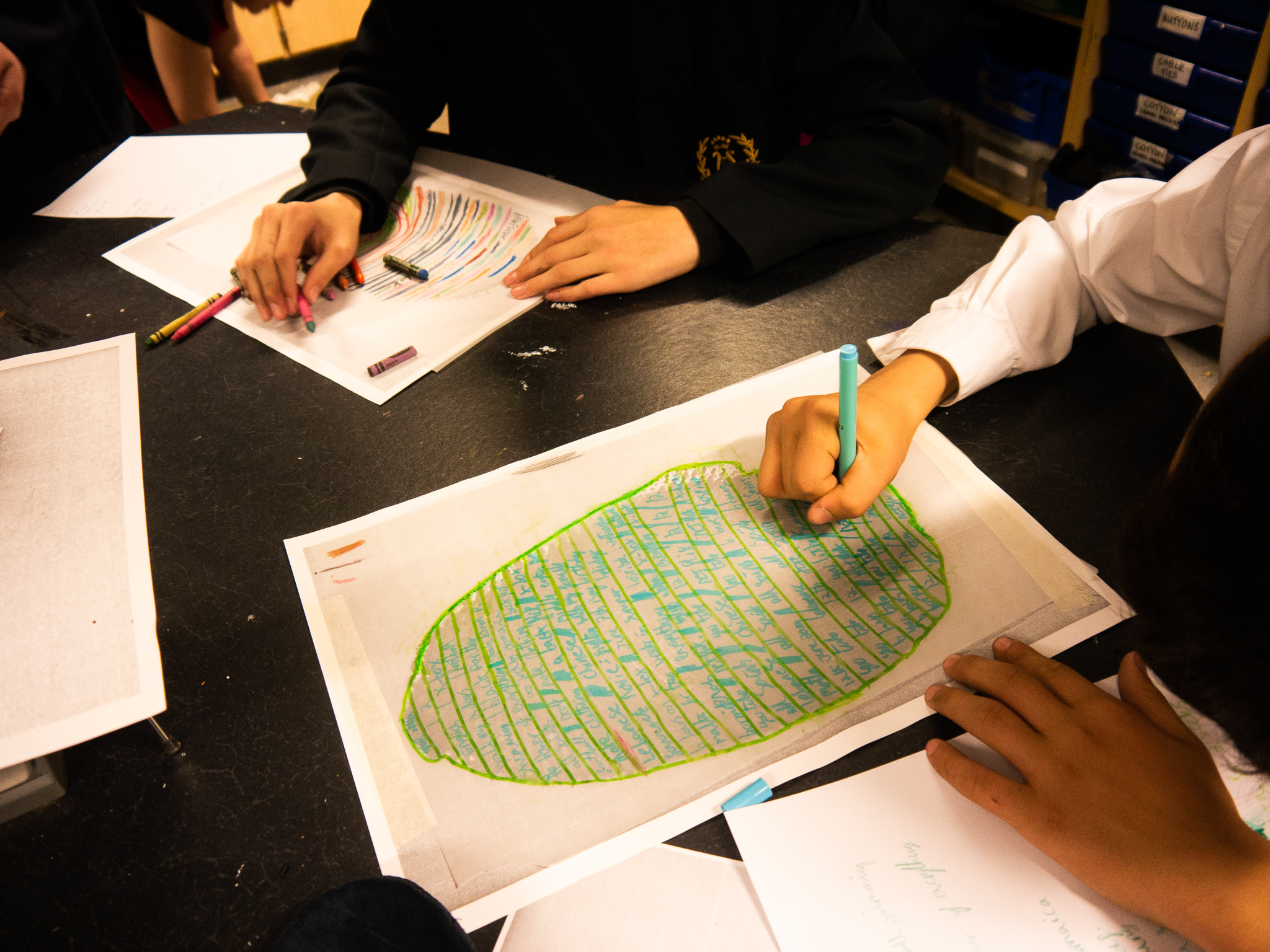
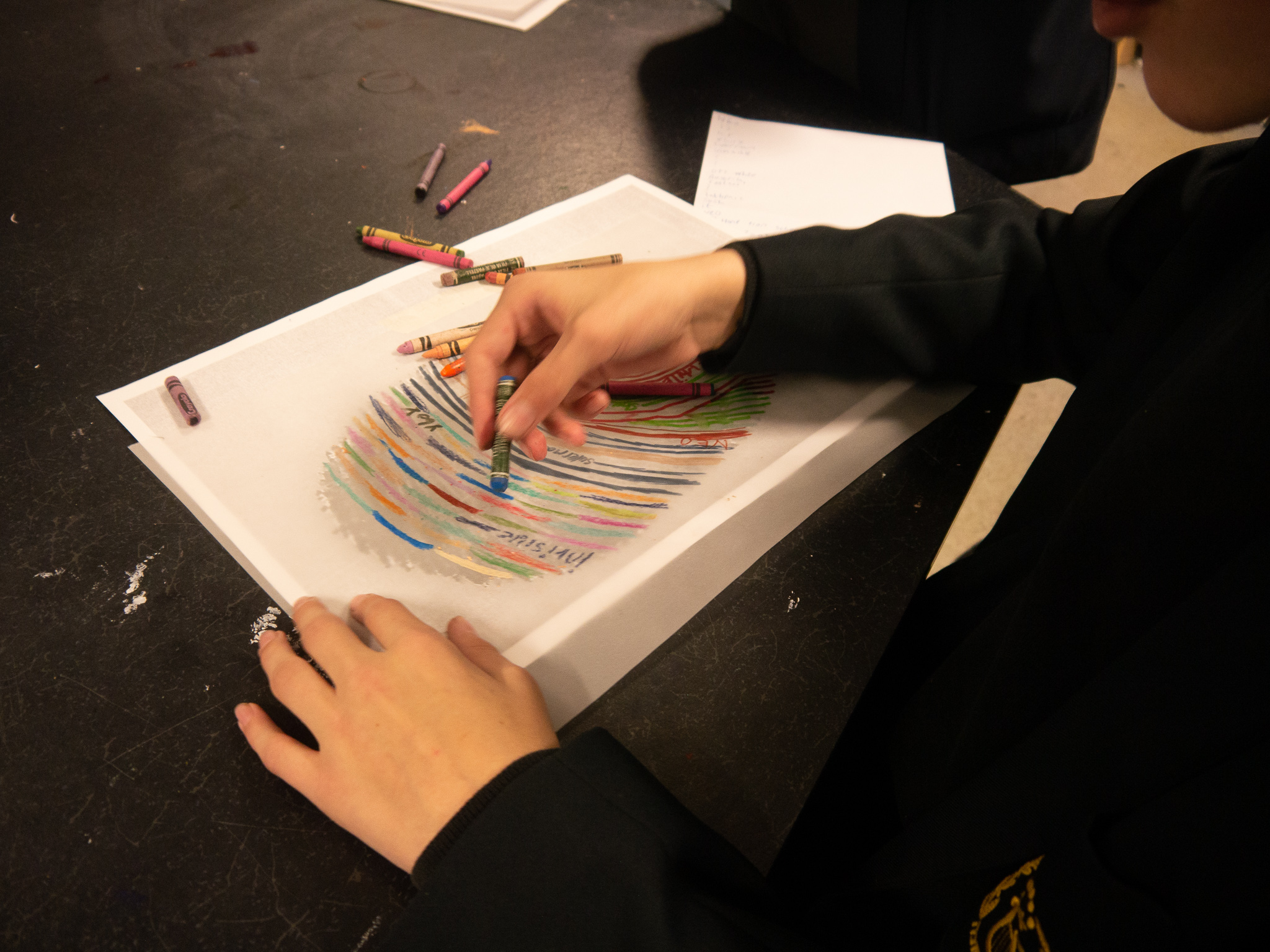
Some of the pupils found it challenging so these students worked directly onto their fingerprint – without the tracing paper.
Feedback session
At the end of the lesson each student placed their work on one table so everyone could view each others work. We then had a group crit. and discussed the different work.
I highlighted how each finger print is unique, each other come is different and unique – just like each individual.
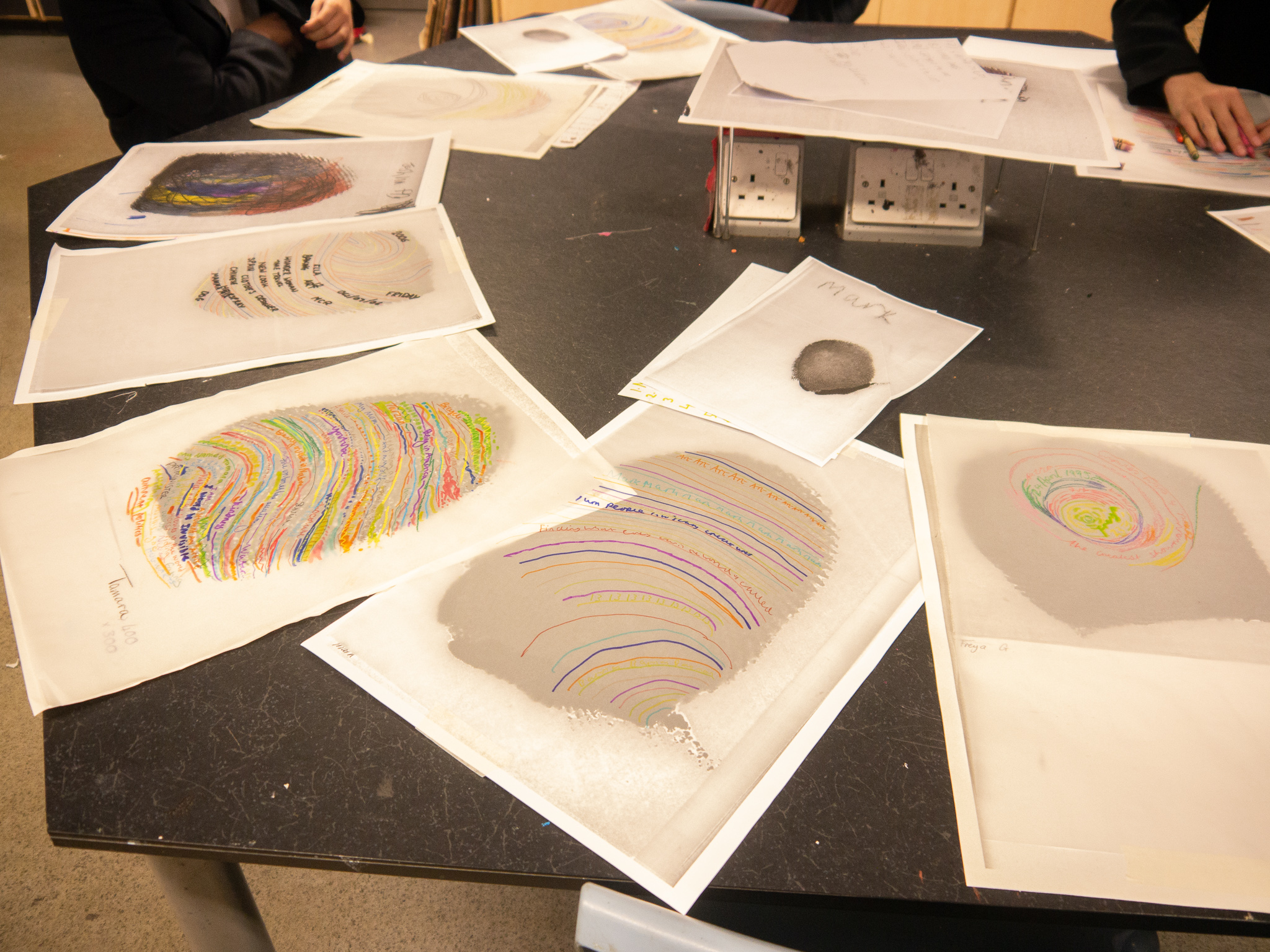
Outcomes
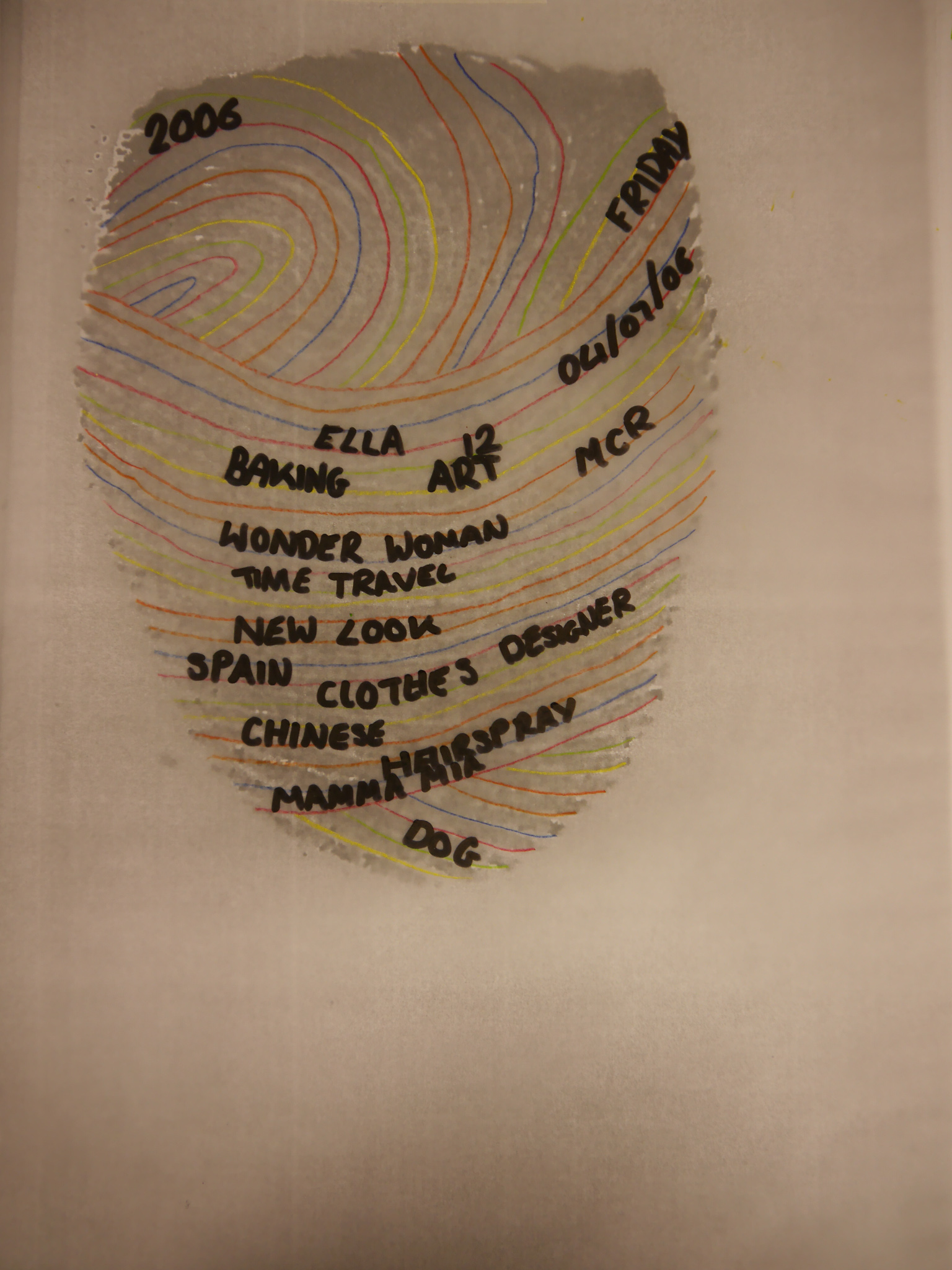
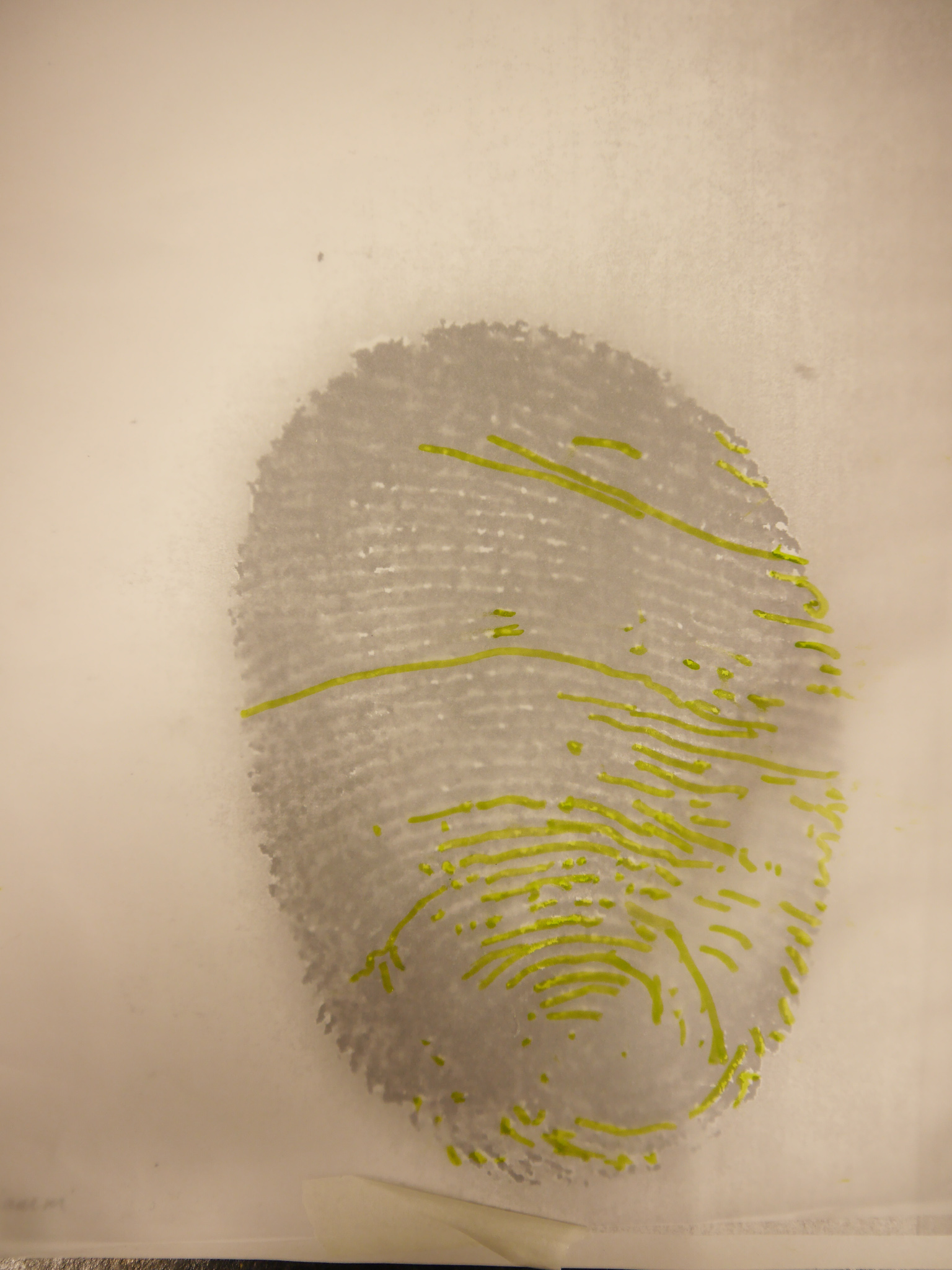
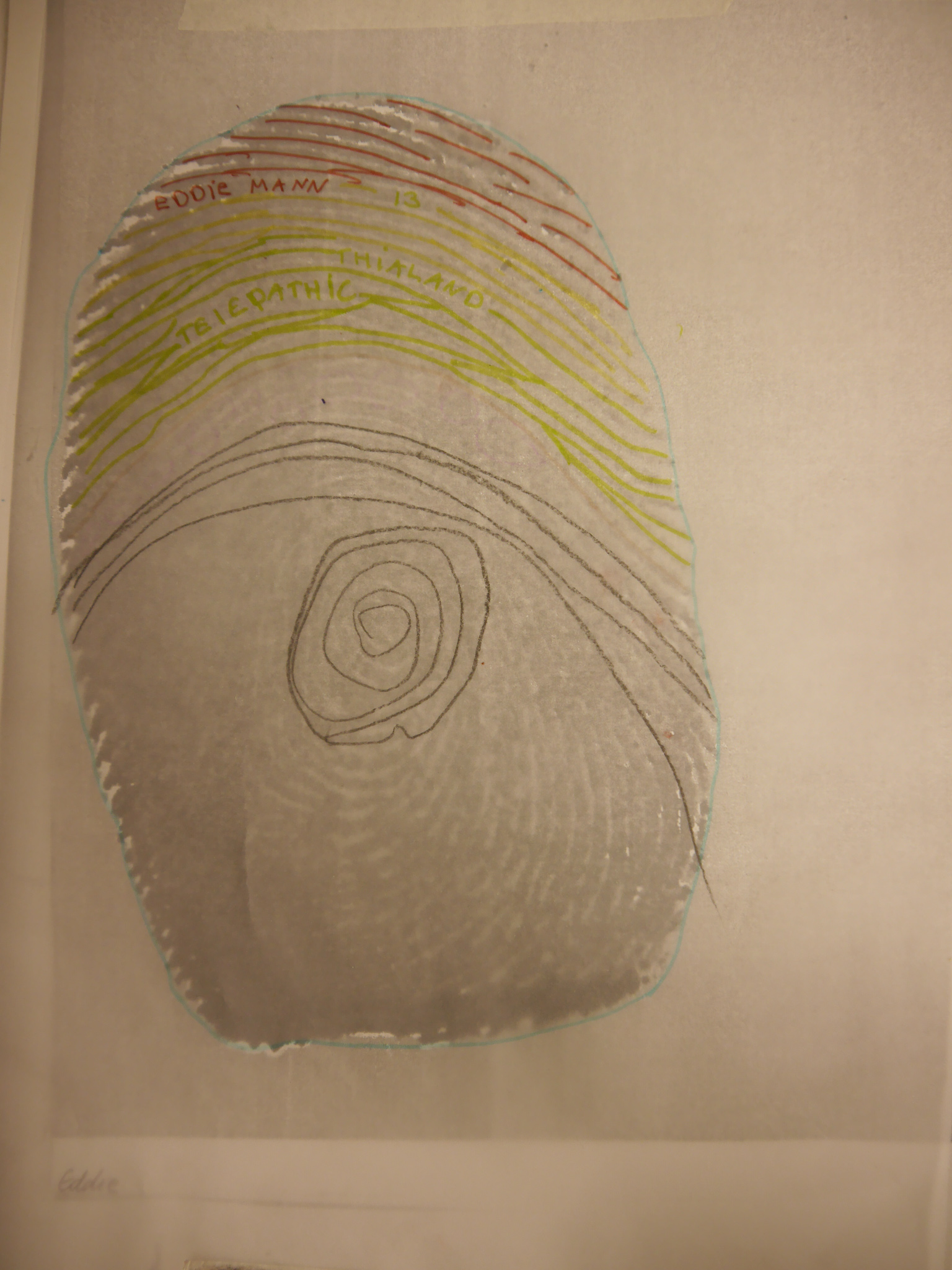
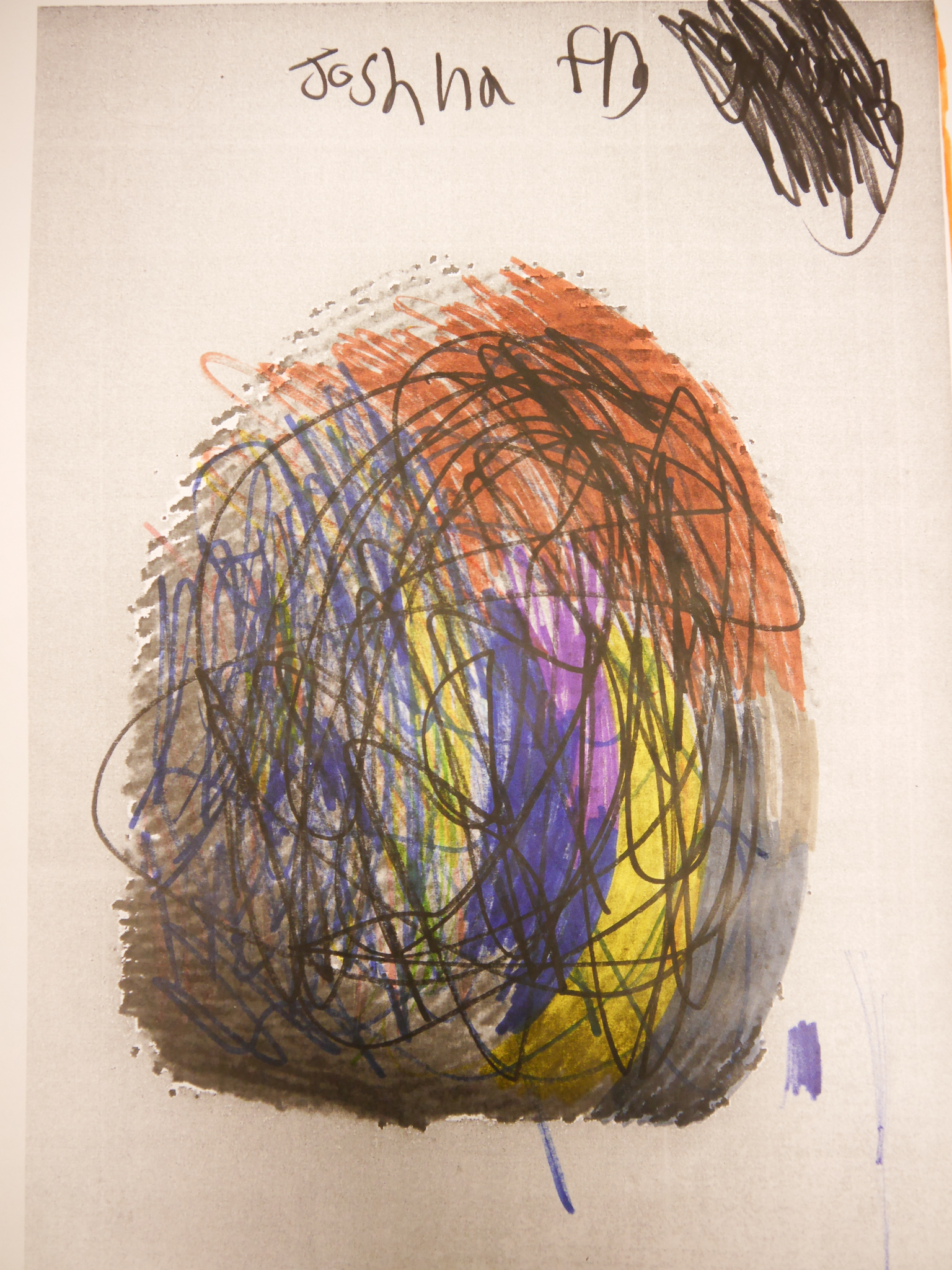
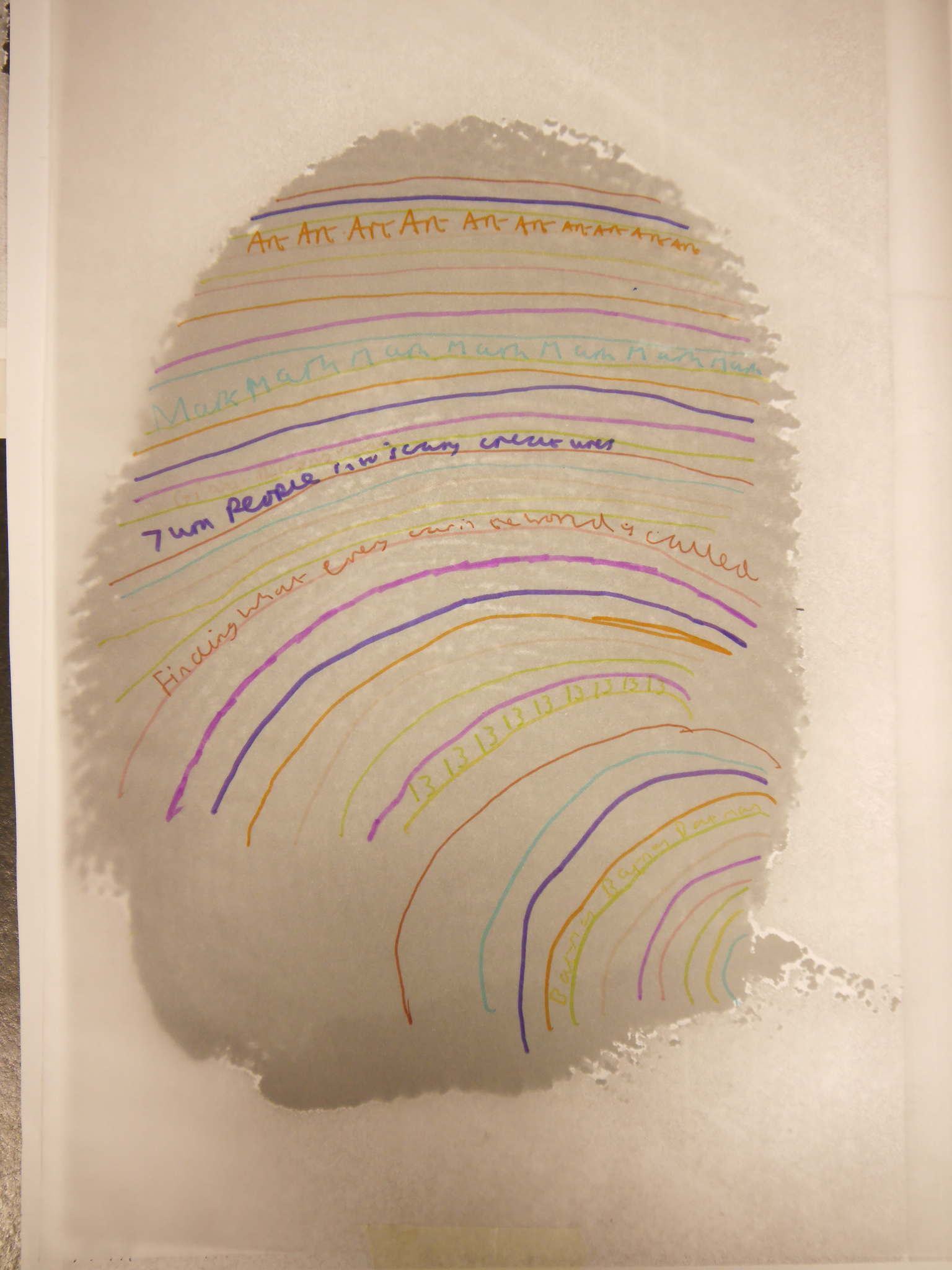
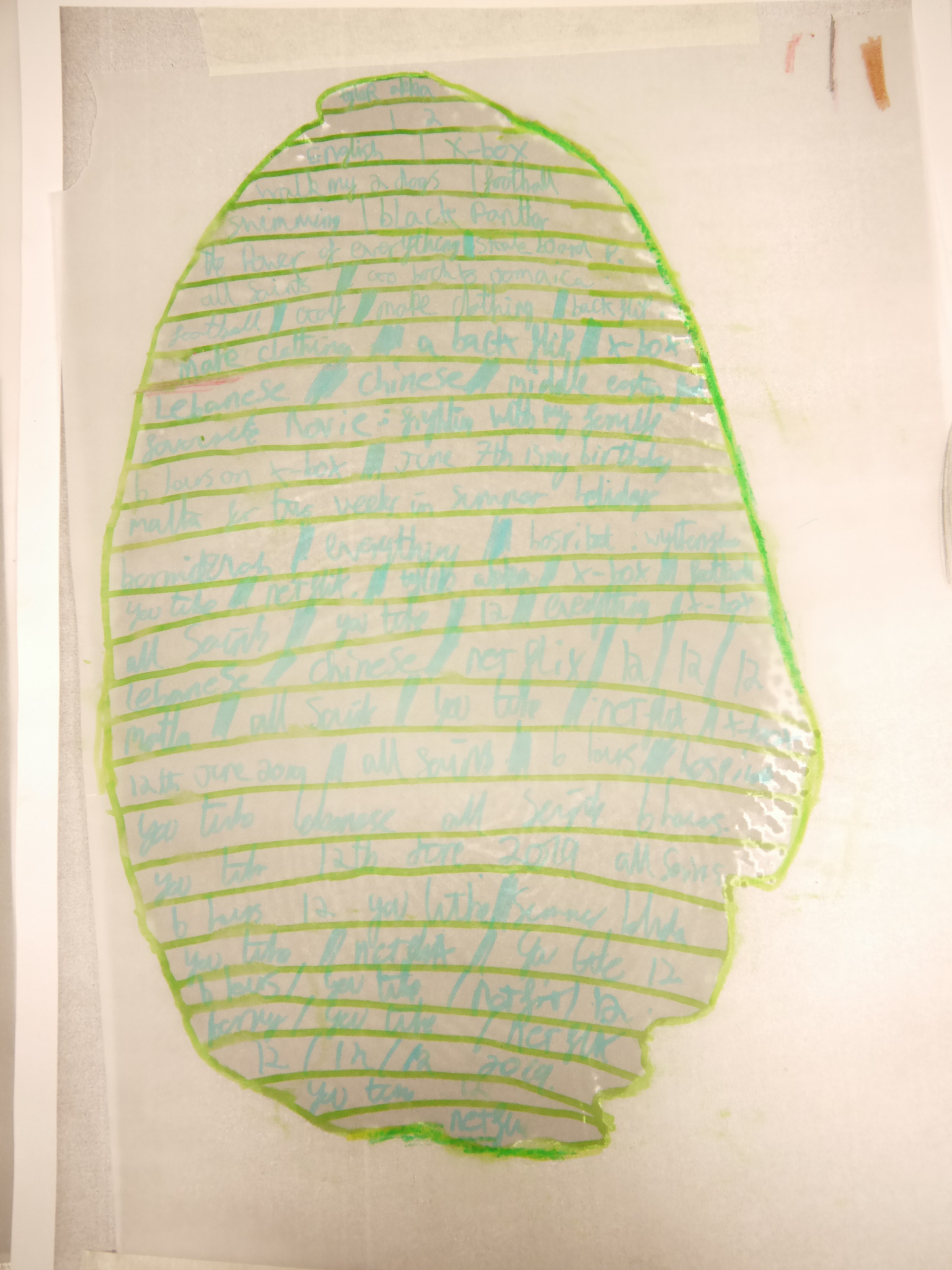
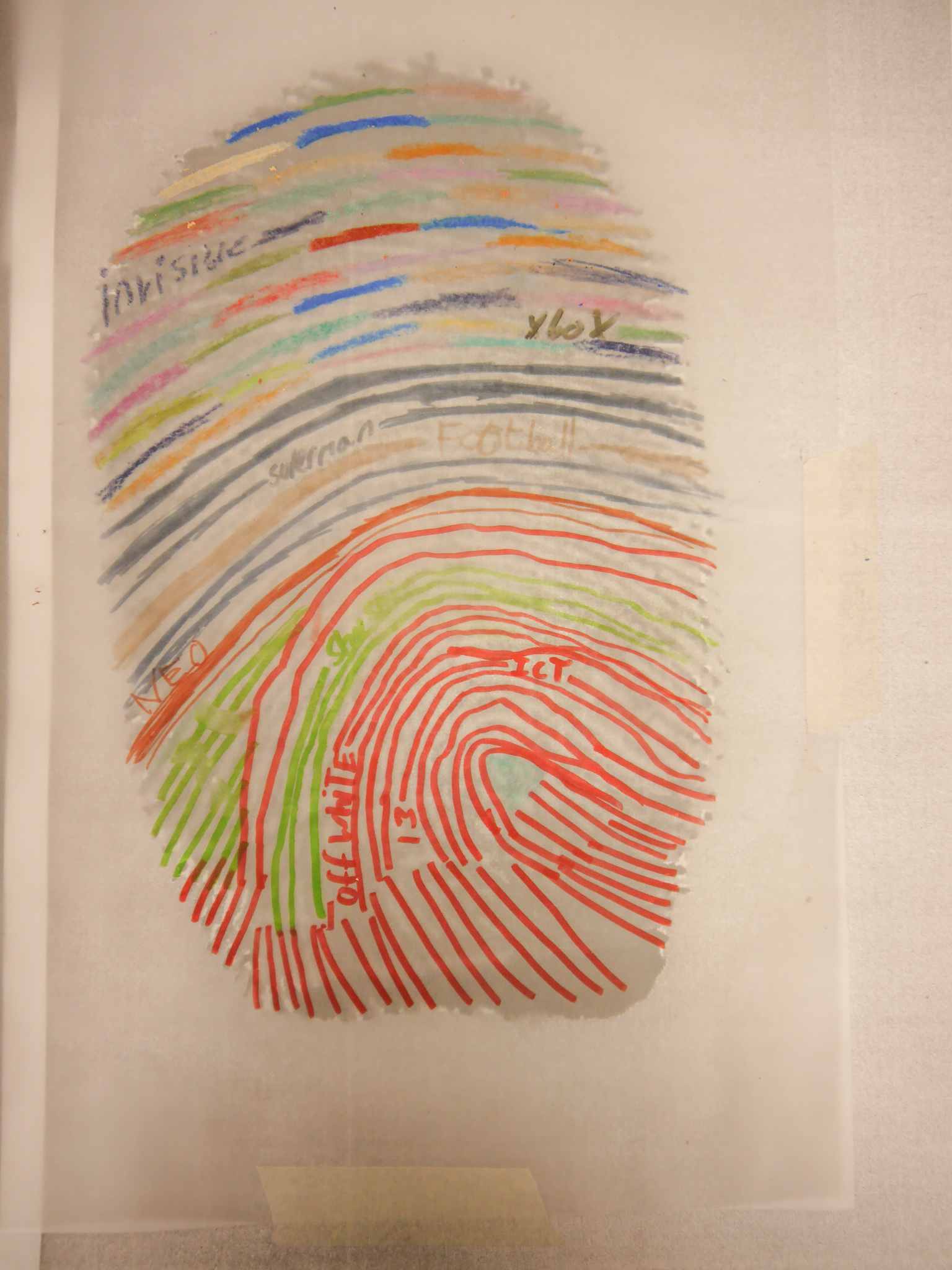
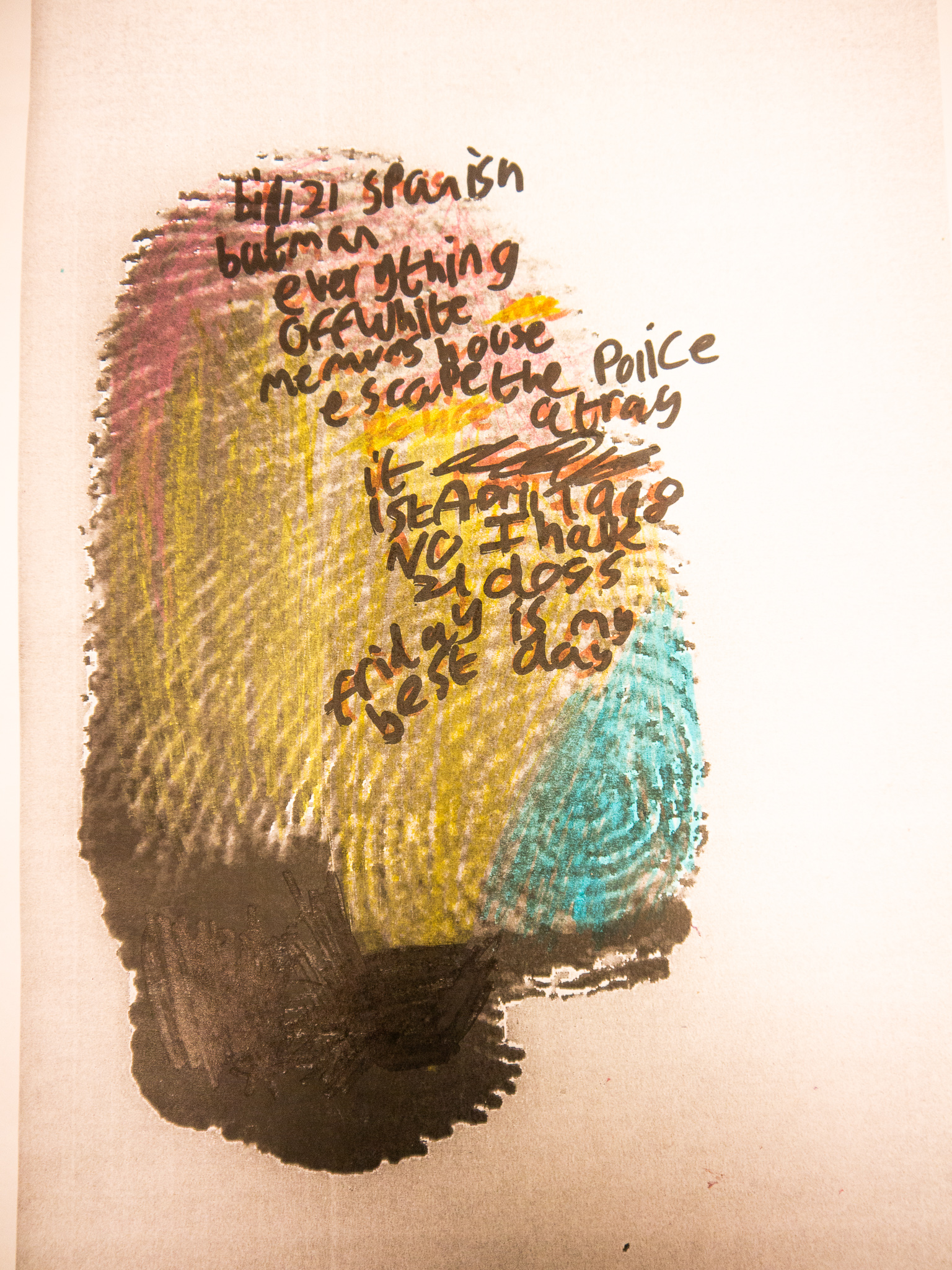
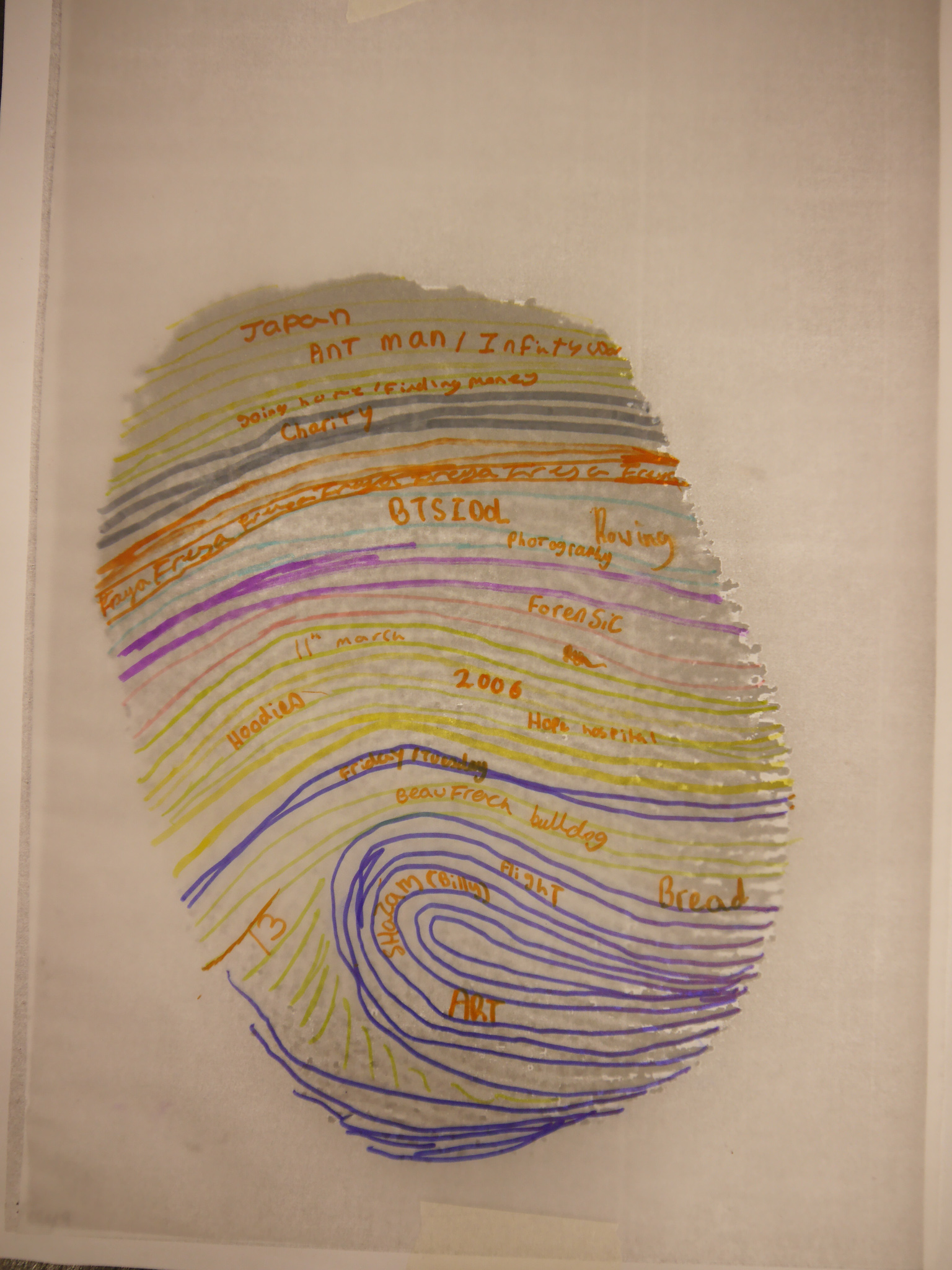
Overall, this was a really nice activity well suited for this specific group of young people. The lesson had to be engaging and simple, and the students enjoyed working on their own individual fingerprints which is something that is quite exciting and personal.
What did I learn? How can this be developed?
This lesson was challenging as some of the pupils were a little silly with their answers. I think it would be a good workshop to develop over a couple of weeks and possibly go into more depth on writing about yourself.
I also think that the students who worked directly on top of their fingerprint had a better and interesting outcome – so it would be important to work out fingerprints and scanning them so they don’t come out too dark. – with more time this could be edited and printed out ready, instead of just enlarging them on the photocopy.
 Exploring Arts For Health
Leave a comment