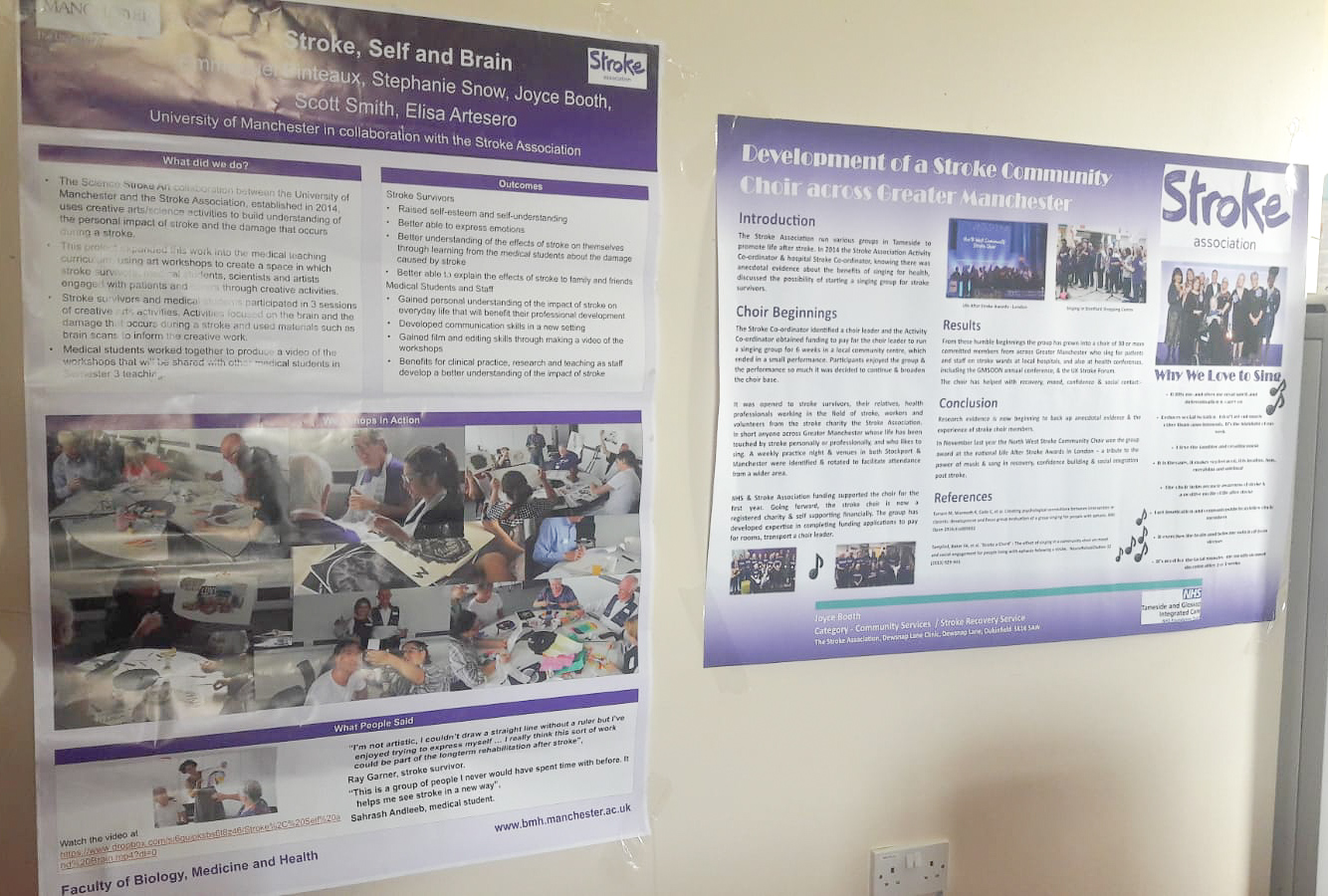
I arranged to meet up with the north west stroke association again to speak to the participants about the project that they were a part of run by Manchester university – Stroke stories: The self through art and science.
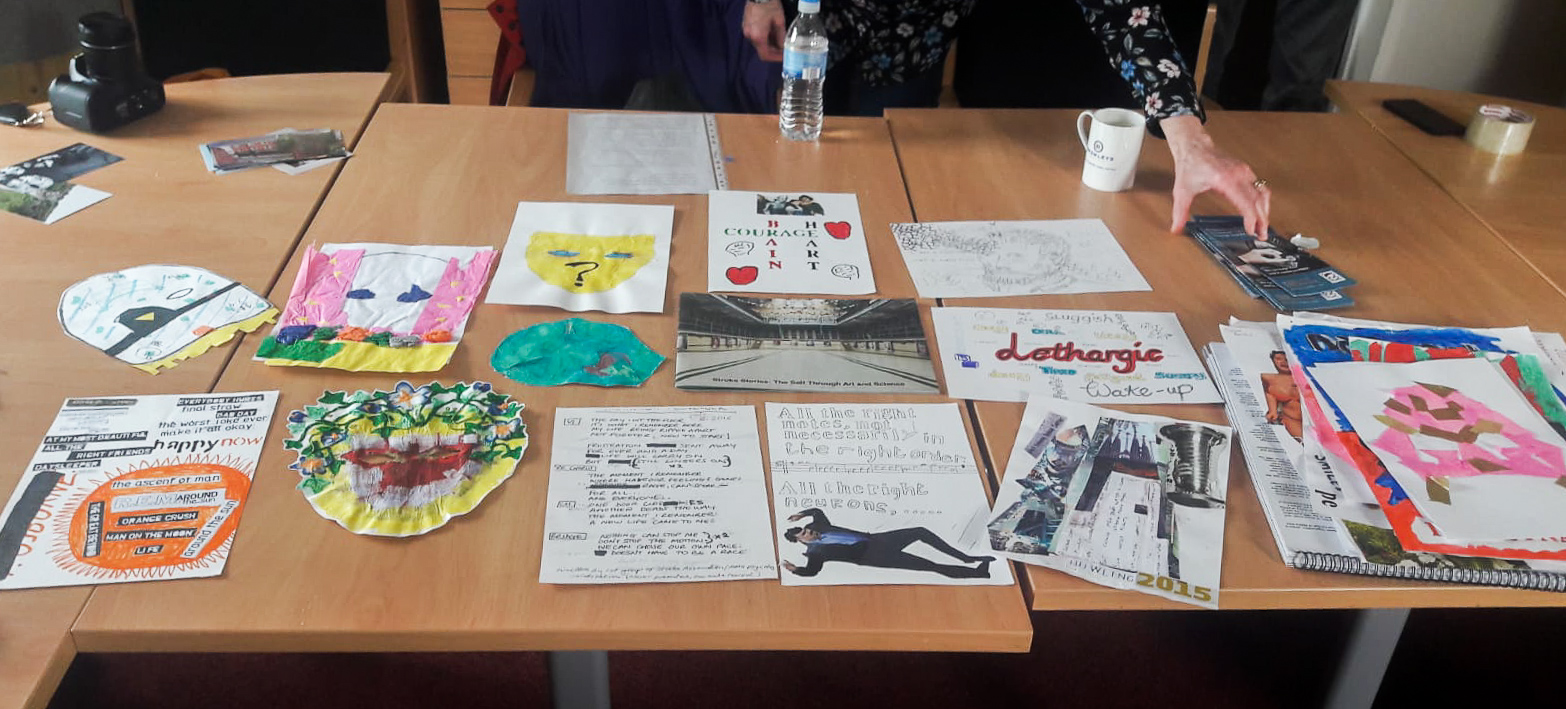
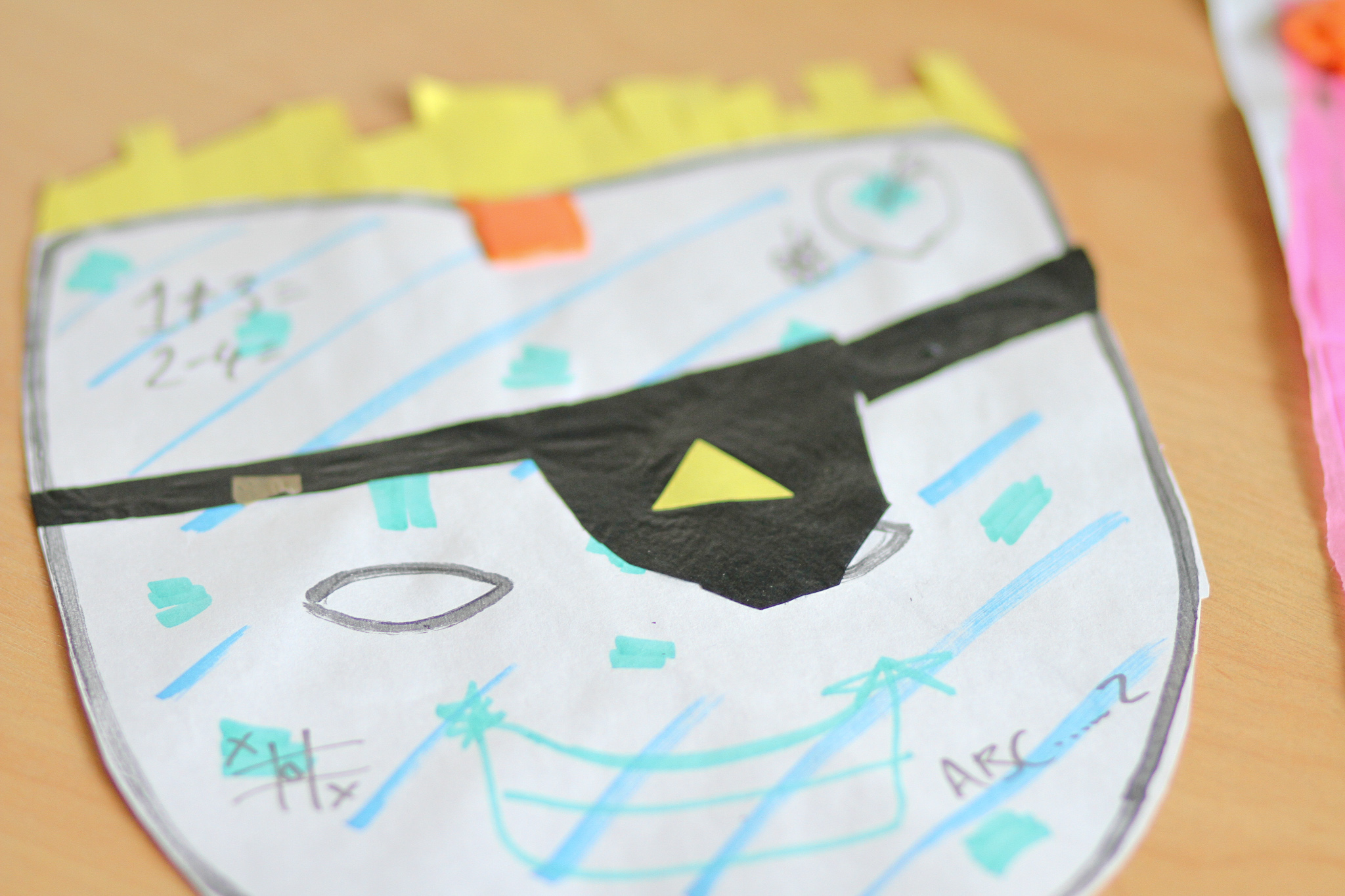
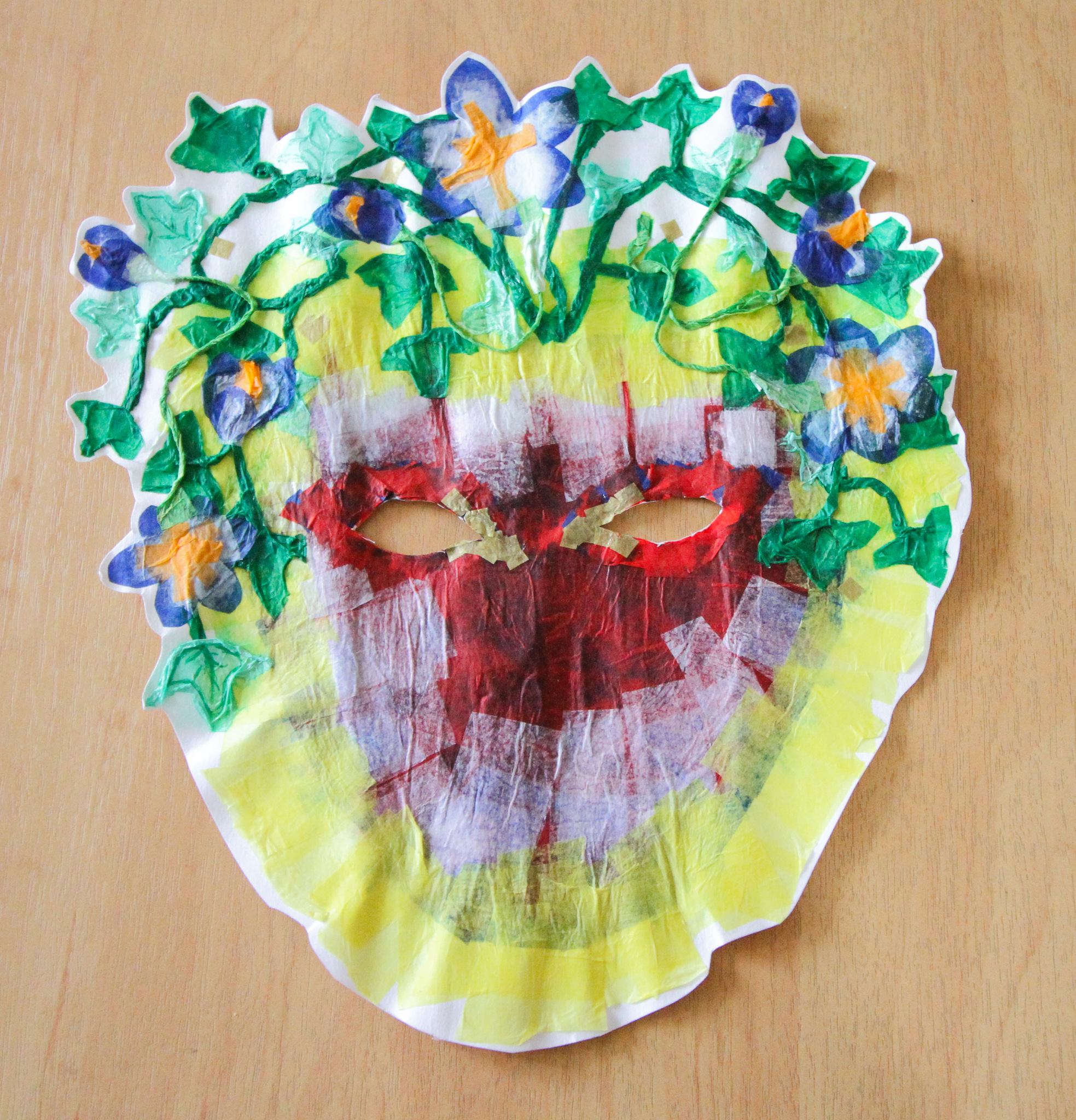
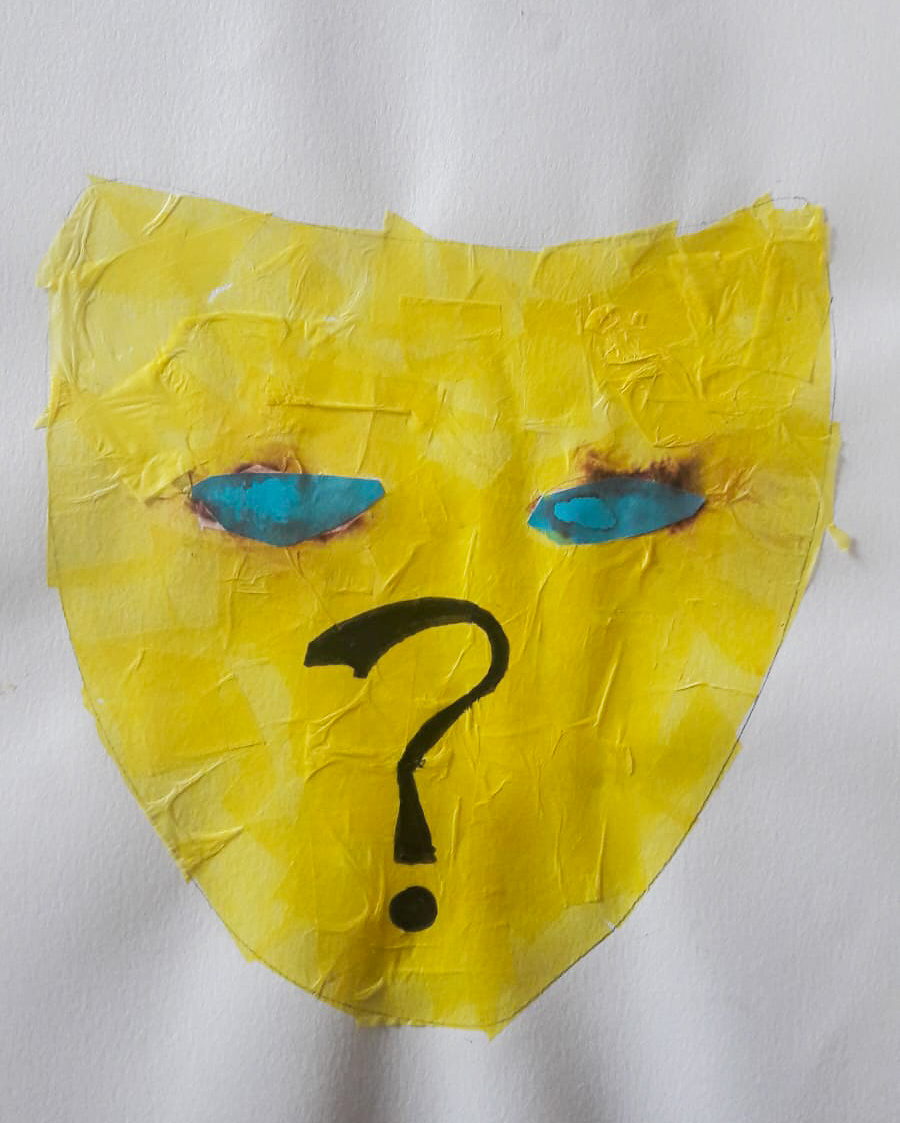
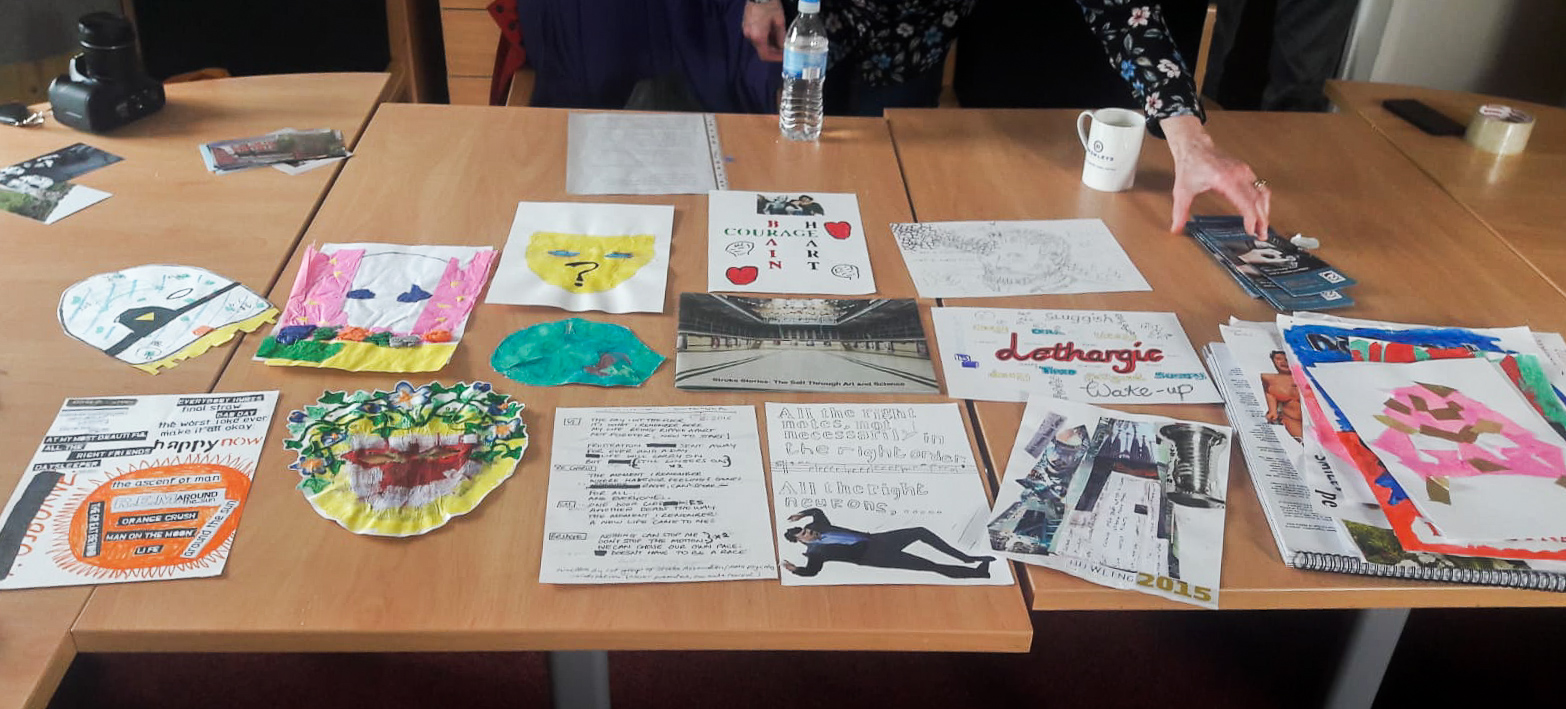
The project involved using collage and basic art materials to create images that visually express how the participants felt within themselves, and adapting to a new life after having survived a stroke.
The university arranged a human library for people to come and meet the stroke survivors to hear their ‘stroke stories’. I am so inspired by this idea of using a human library, hearing face to face about an individuals story and the highs and lows of their journey. Medical research tends to separate the person from the factual medical results, distancing you from the human experience and the psychological effects that their medical condition (such as a stroke) has had on the individual. Creating a human library helps to bring the person and the facts together, allowing people to learn a whole approach, putting the individual first in their experience.
The project was on for 18 months with medical students at Manchester university. They also had a project with speech therapy Students for 3 weeks.
The group worked with brighter sounds, and together wrote a song with an underlying message about how they felt as a stroke survivor which they preformed in Manchester.
After someone survives a stroke they can feel isolated as well as a loss mental and physical abilities. This results in a huge loss of confidence, and having to mourn the loss of the life and person you were before, and to build yourself up again and live a new and different life. The participants expressed, and their appreciation to groups like stroke association as together they can support each other and motivate one another to continue making progress in recover. The group provides them with a safe environment, which they described as a family – helping each other with no judgement. The projects helps them feel less isolated as its a social atmosphere and very welcoming. They explained how doing art projects and singing in the choir helps them grow together, celebrating each others achievements.
The projects encourage the participants to simply “get out of bed” and attend the sessions, which was a huge challenge at the beginning of their recovery. The conversations and interactions helps them to develop and rebuild skills. The social environment and the projects help to build communication, from ways to express how you feel within, and also re-gaining speech. When some of the participants joined the group they had limited speech, but overtime they regain these skills we take for granted, which helps them to build a new found appreciation for the simple things in life.
The participants expressed how encouraging it is for them when they see their friends in the group making improvements, motivating them to carry on being positive and move forward.
A supportive group where everyone is viewed equally and cared for by one another.
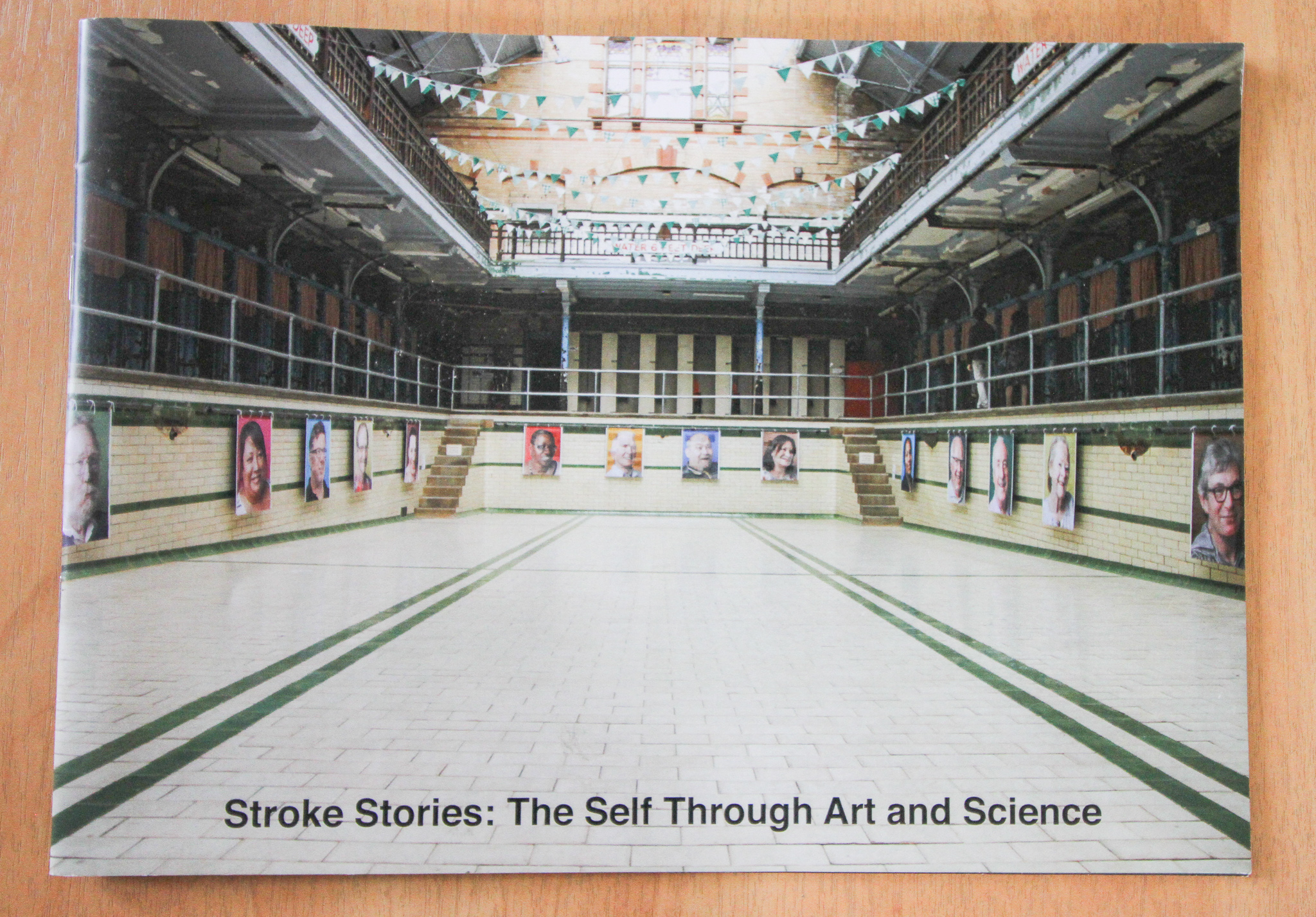
The project Stroke stories: The self through art and science was displayed in Victoria baths. Around the exhibition there was photographed portraits of each participant who took part in the project. The photographs were interactively displayed so the audience could look behind the images to see the artwork created by each individual.
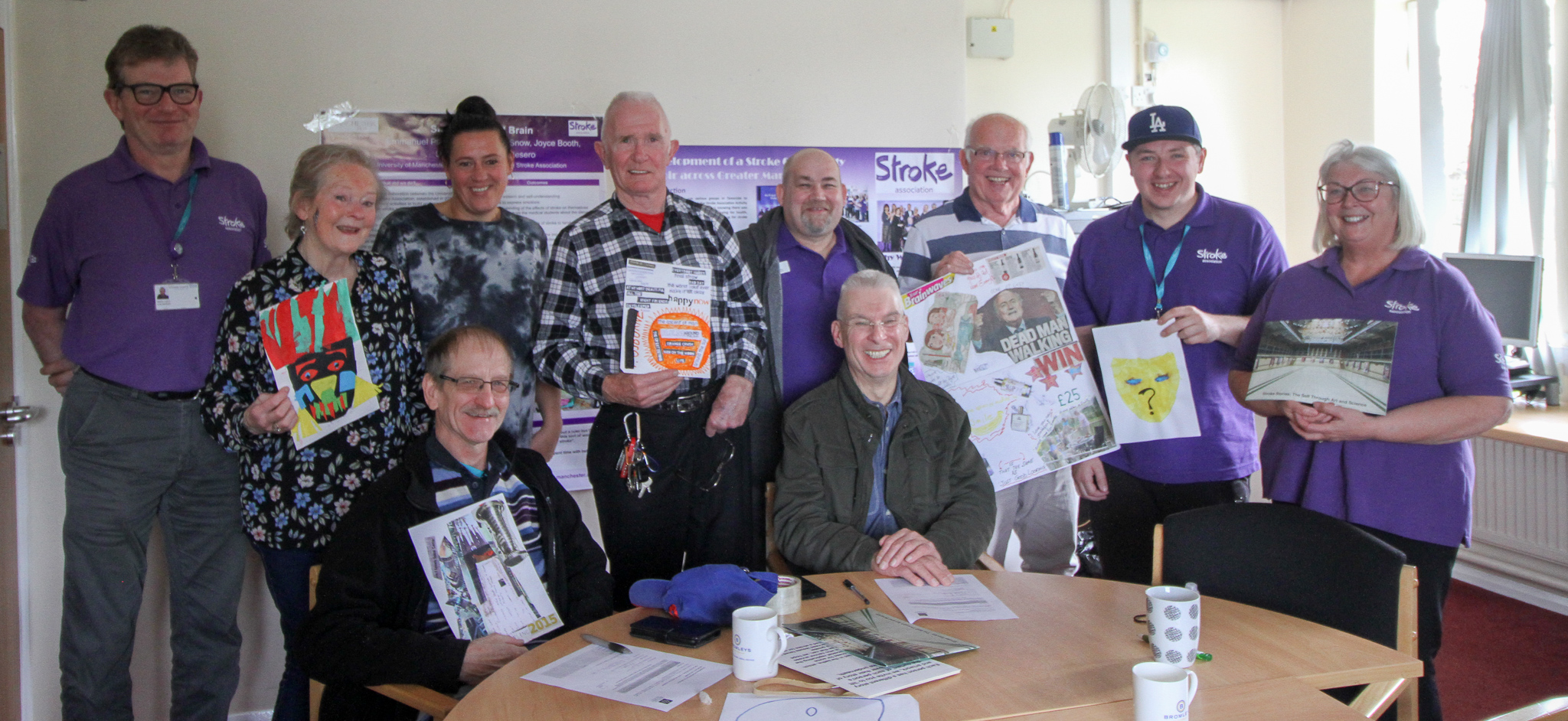
As seen above, the artwork was created using basic art equipment and collage. This was to ensure that the work was easily approachable and inviting for every one involved- using complicated techniques would put people off who consider them selves ‘not creative’ as they may have not been involved in the arts perhaps since their primary education- this is the case for many people. Using a simple approach to convey and express a message is simple and effective, and worked well with the participants involved.
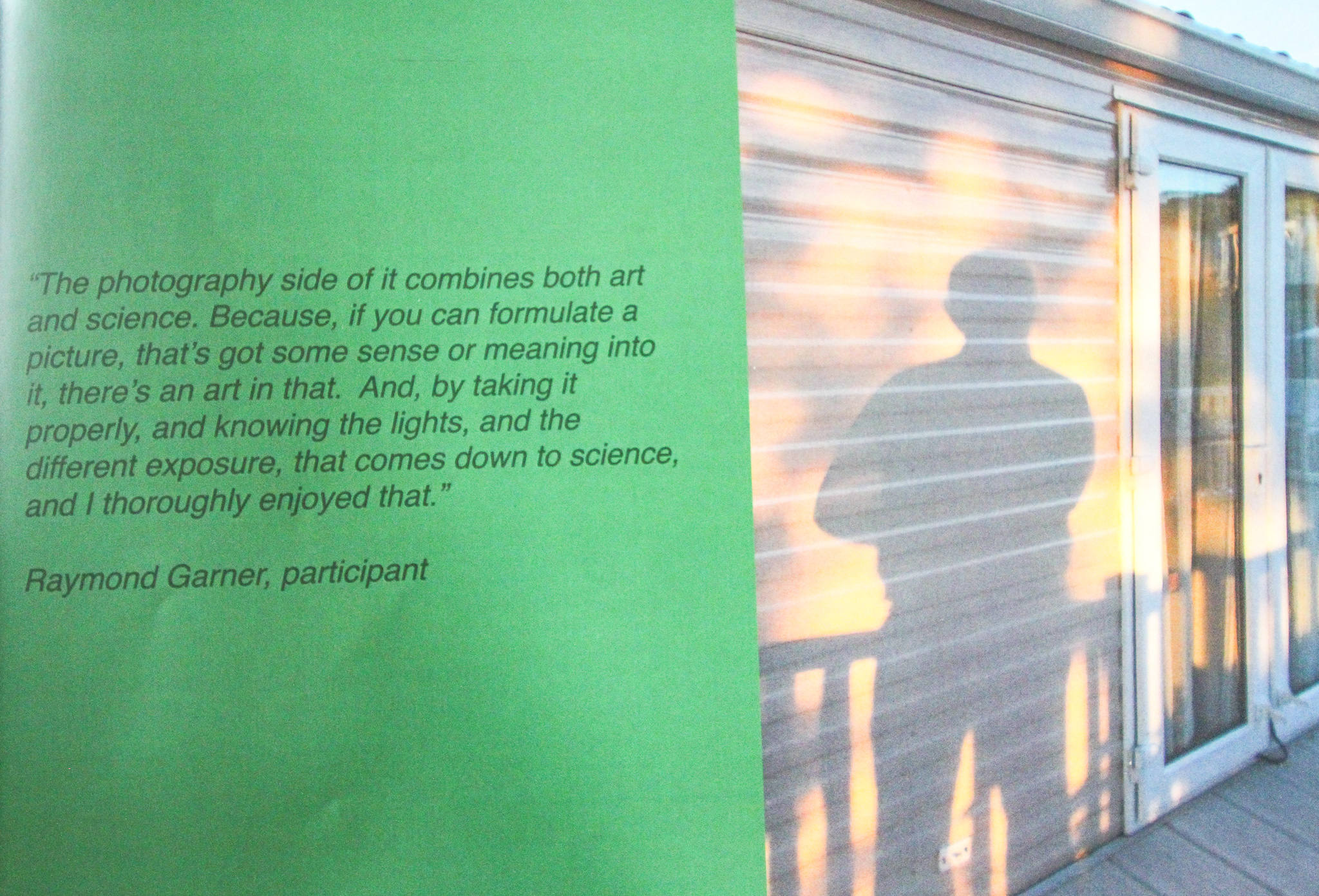
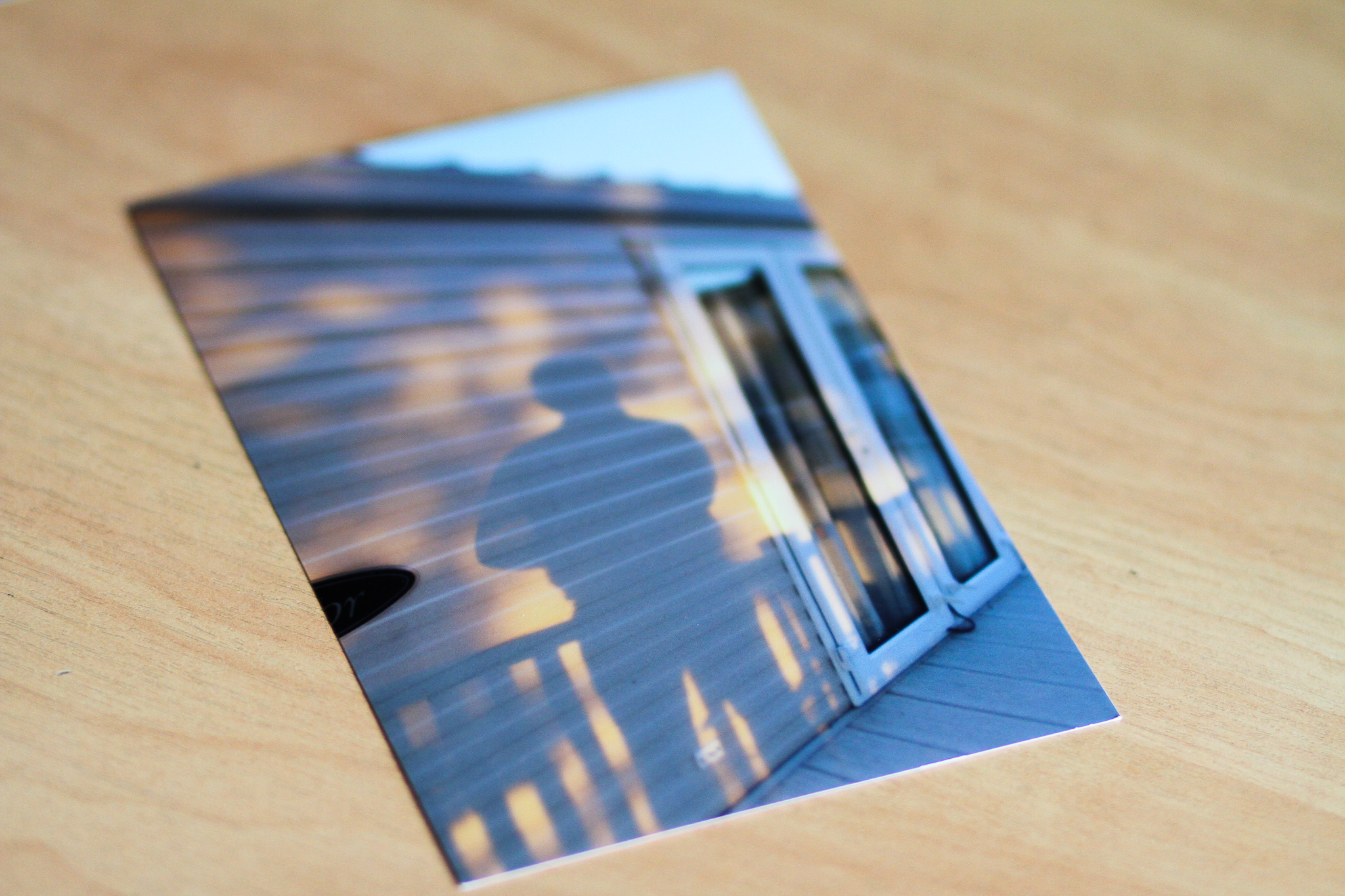
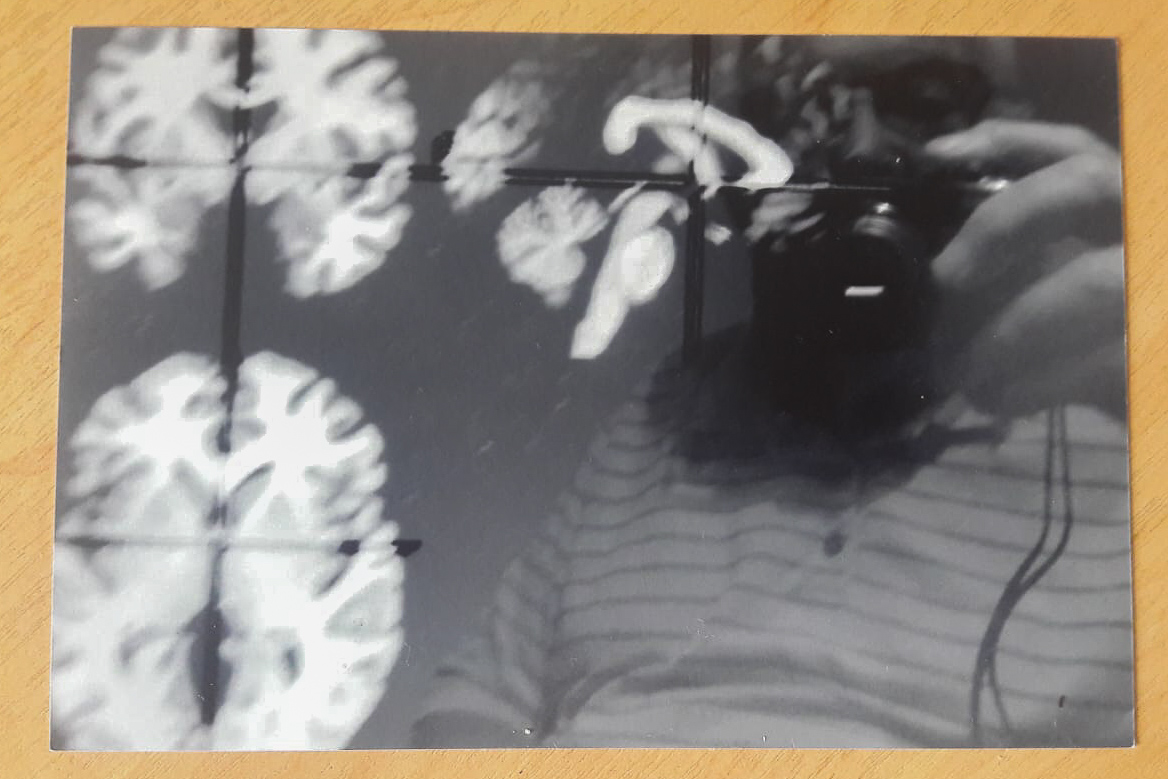
The group also had a photography workshop with one of the artists. As seen below, one of the photographs taken by Raymond Garner, one of the participants who wanted to capture his shadow as a way to tell his stroke story through science and art. Using photography as a technique of communicating, and expressing a story spoke a lot to some of the participants that I met as it brought them a certain ‘realness’ of their own lives, capturing their everyday moments.
The photograph is titled:
‘Shadow of my former self’
https://www.bmh.manchester.ac.uk/connect/social-responsibility/public-patients/stroke-self-brain/
We met together and discussed the projects, shared stories and they presented the artwork that they had made during the projects with the university.
The stroke association decided that they wanted to work with artists, photographers and musicians, not with therapists.
The difference between art therapists and arts for health is something that keeps coming up. Art therapists work with someone based on their diagnosis, where as arts for health projects work with artists, regardless of the participants medical condition. There is a lot of cross over and grey areas between the two. In this project with the stroke survivors the association wanted to work specifically with artists to make sure the sessions were based on general creativity and supporting the participants well being, and not a therapy session.
The sessions included:
Writing – poems and songs
Painting
Ceramics
Singing
All the projects were designed facilitating a creative space for the participants to channel their emotions and to visually or audibly display their work, challenging the audience and generating different perspectives and understandings from each person viewing the work.
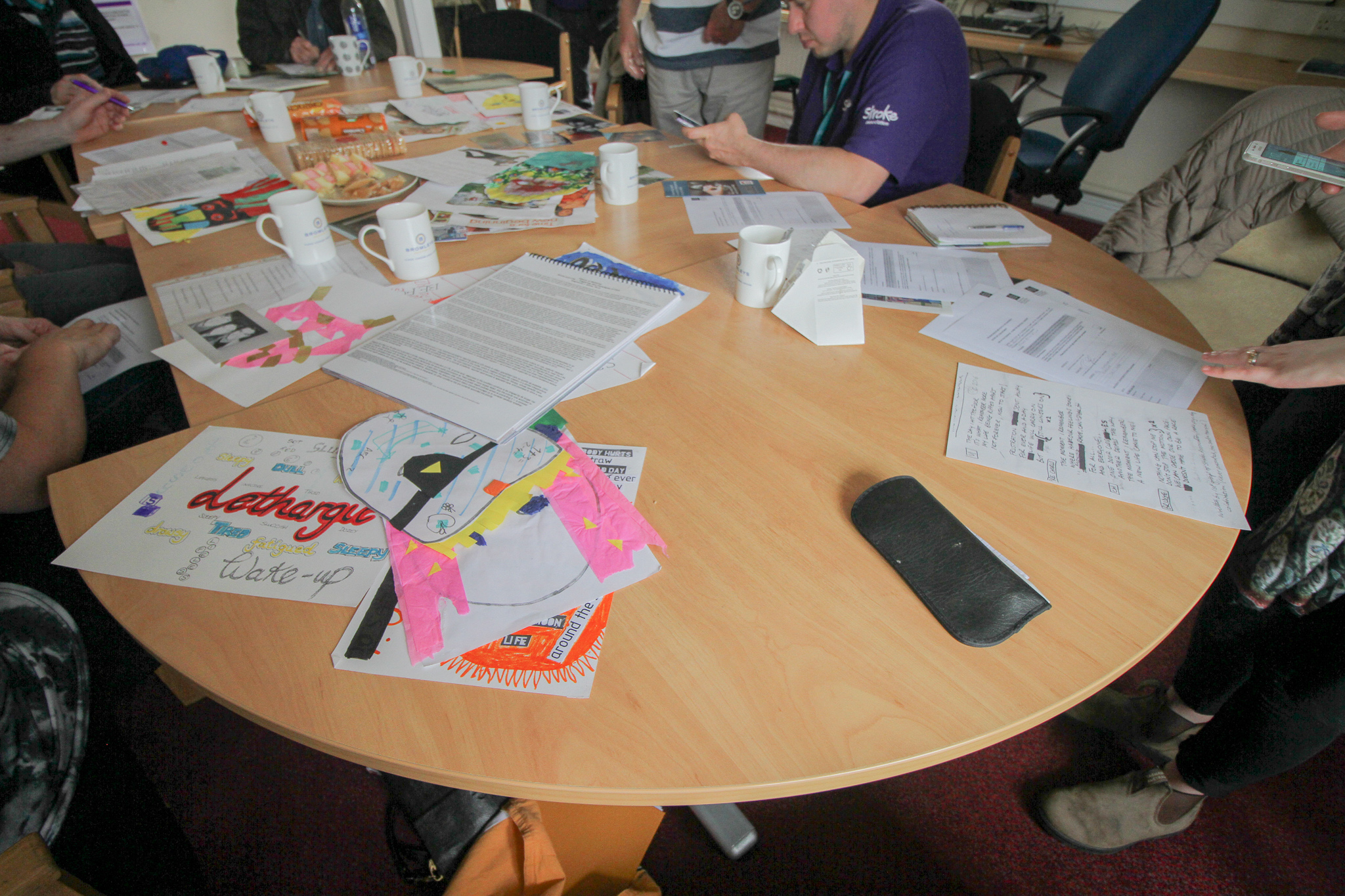
The participants explained to me what it is like to recover from a stroke.
“My mind wants to say one thing, but my mouth doesn’t”
It was clear to see and hear that the artwork allowed them to express what they felt within, and allowed them to say what they couldn’t express.
The participants were highly motivated and passionate about the projects, they expressed to me about how much they ‘looked forward’ to them.
The projects gave them a platform to express their emotions, channel their frustrations and articulate what they struggled to say. It gave them motivation to keep moving forward and not to give up hope in their recovery.
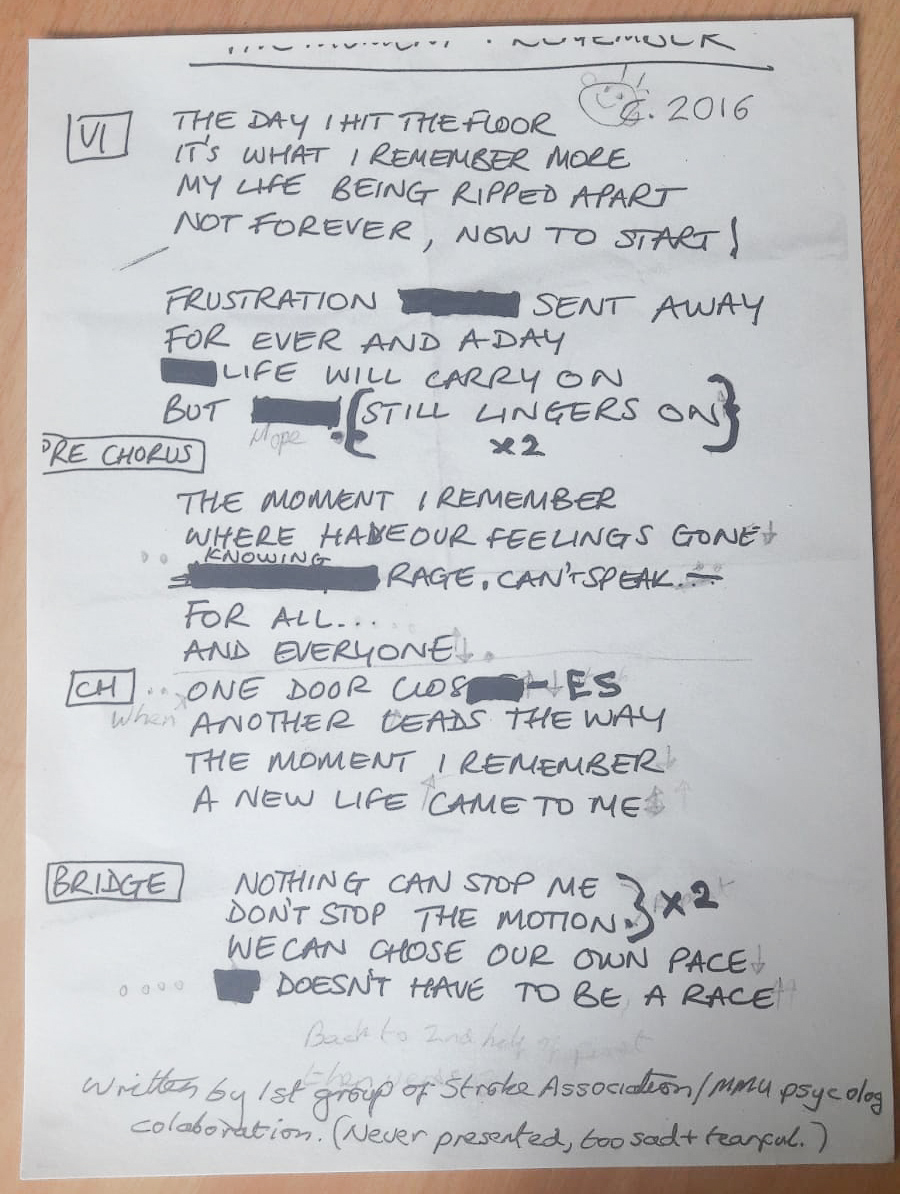
The participants described how their stroke changed their lives in a second, and this had a tremendous impact on their own life, but also on their friends and family.
Recovery involves “re inventing yourself”
The stroke association group has helped them in that process, providing them with support and engaging projects that help aid well being, as well as something different to work towards. Art can be intimidating to a lot of people, and projects like these open up the arts, and help to re discover a new purpose of creating art as a means of something to say.
The warm and friendly welcome from the group was so inspiring and I am glad to have met them. They expressed to me that their lives after a stroke has taught them to live their life now and fulfil every moment, and to embrace every opportunity.
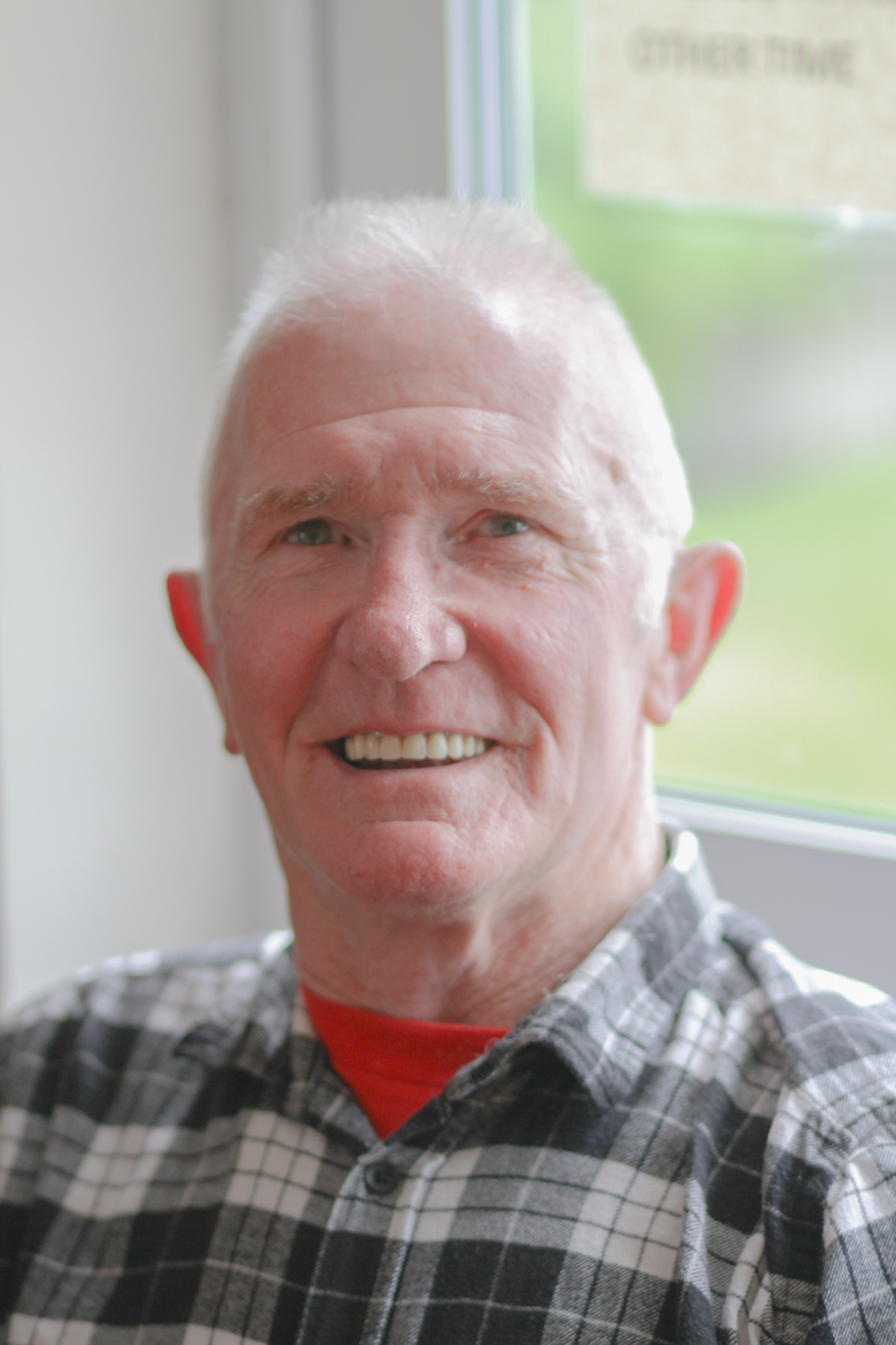
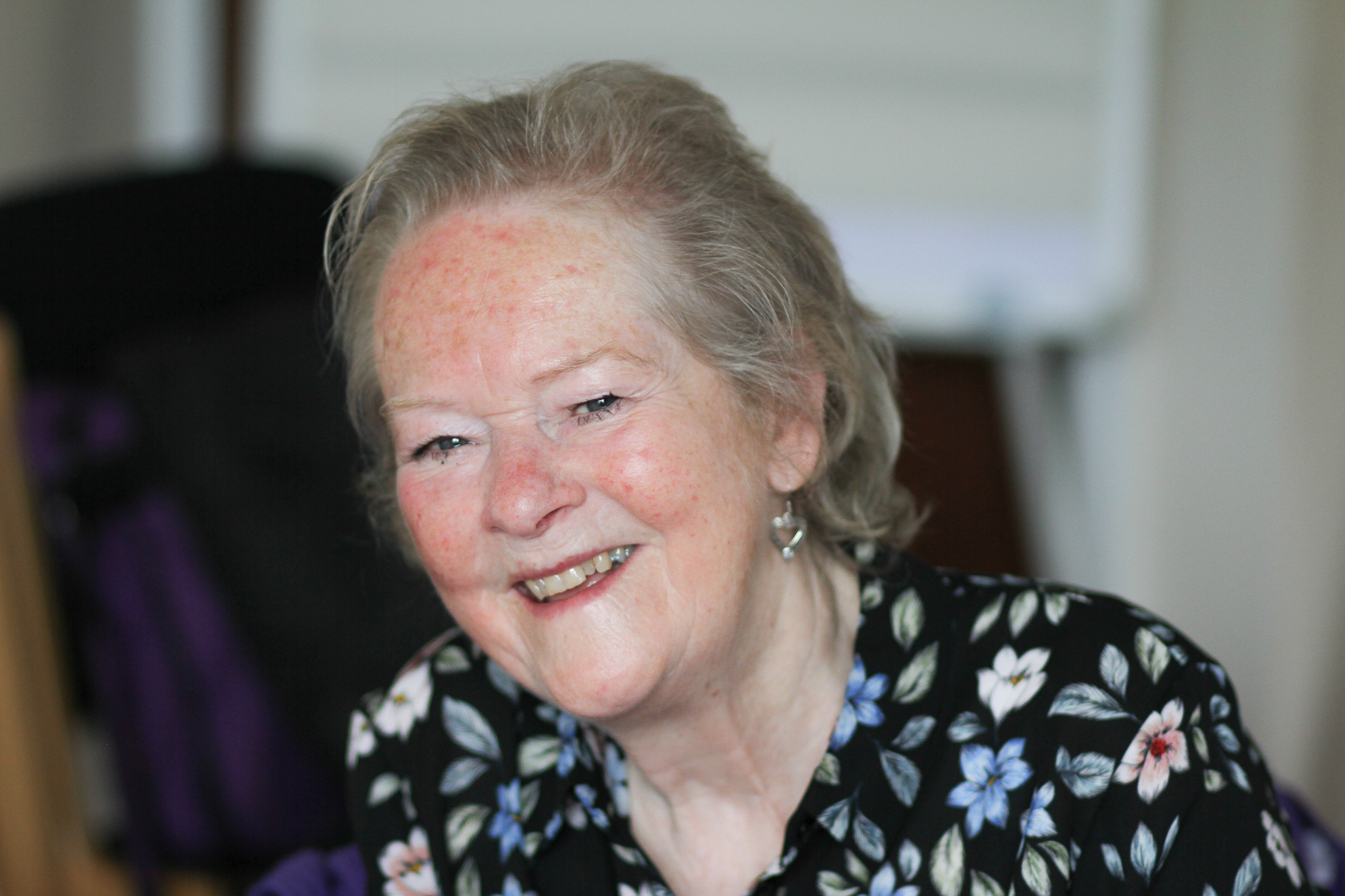
Some of the participants involved: Peter Osborne, Daniel Makin, Mike Trowski, Peter Wright, Mark Prizey, Ann Williams.
 Exploring Arts For Health
Leave a comment